
Used Model Y Long Range vs Performance: Owner’s Comparison
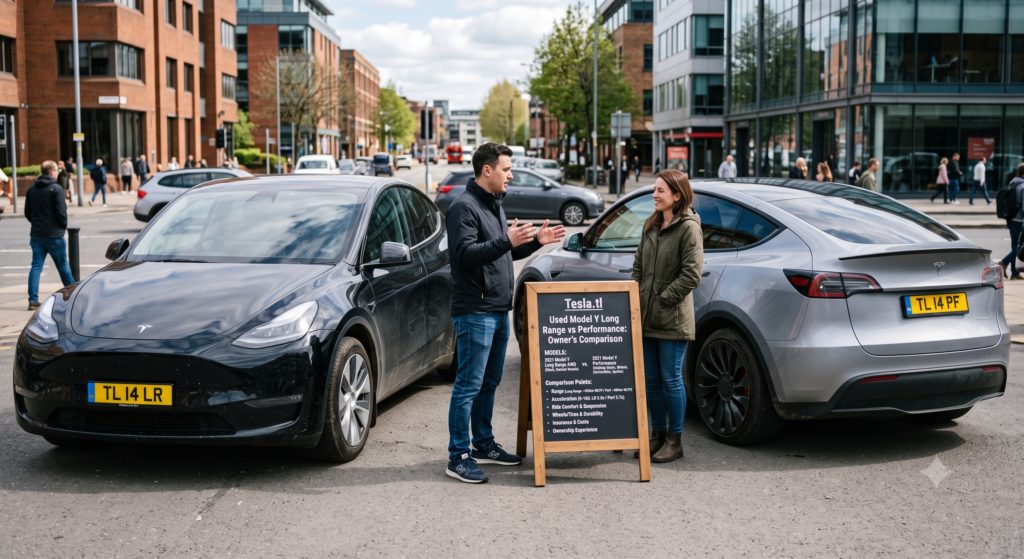
The Tesla Model Y has become the default electric crossover for families, commuters, and tech enthusiasts worldwide, but the moment you begin searching the used market, you face a binary choice that divides owners into two passionate camps: the Long Range or the Performance. Both variants share the same fundamental body shell, the same 75 kWh battery architecture, and the same 15-inch command center that defines the Tesla experience. Yet the divergence in suspension tuning, wheel size, motor output, and daily livability creates two vehicles that feel distinctly different after months of ownership. For buyers in 2026, where both trims are plentiful on the secondary market and often separated by only a few thousand dollars, choosing incorrectly means either leaving capability on the table or sentencing yourself to a ride quality that rattles your patience on every commute.
This owner-level comparison draws from real-world feedback, long-term reliability data, and the specific compromises that emerge after years of daily use. We examine how the Long Range and Performance actually behave in family duty, on road trips, through winter storms, and during the mundane grocery runs that constitute 90% of actual driving. By the end, you will know exactly which badge belongs in your driveway—and which one you will regret when the novelty of acceleration wears off and the tire bills arrive.
What Separates Them: The Hardware Reality
At first glance, the Model Y Long Range and Performance appear nearly identical. They share the same dual-motor all-wheel-drive layout, the same heat pump introduced in 2021, and the same premium interior appointments. But Tesla made meaningful hardware changes to the Performance that permanently alter its character.
The Long Range produces approximately 384 horsepower from its combined front and rear motors, launching from zero to 60 mph in roughly 4.8 seconds when new. It rides on 19-inch Gemini wheels as standard, with an optional 20-inch Induction upgrade, and uses a comfort-biased suspension calibration that prioritizes absorption over agility. The brakes are substantial but conventional, and the steering is tuned for relaxed highway cruising rather than racetrack precision.
The Performance extracts roughly 456 horsepower from the same battery pack by using a more powerful rear motor with upgraded inverter hardware. It drops the 0-to-60 sprint to approximately 3.5 seconds, a figure that still embarrasses many dedicated sports cars. To manage this speed, Tesla fitted a lowered sport suspension, significantly larger Brembo performance brakes, and staggered 21-inch Überturbine wheels wrapped in performance-rated tires. A carbon-fiber rear spoiler adds high-speed stability, while aluminum alloy pedals and a lowered ride height visually distinguish the cabin and exterior.
These changes are not cosmetic. The Performance’s lowered stance reduces body roll through corners but also reduces ground clearance, making it more vulnerable to driveway scrapes, parking block impacts, and snow accumulation. The larger brakes resist fade during repeated hard stops but cost substantially more to service. And the 21-inch wheels, while visually striking, fundamentally degrade ride comfort and increase tire replacement frequency. These are not theoretical concerns—they are daily realities that Performance owners confront every time they encounter broken pavement.
Acceleration: Thrilling, Then Invisible
There is no denying that the Model Y Performance delivers one of the most shocking acceleration experiences available in a family vehicle. The first time you stomp the accelerator from a standstill, the instant torque delivery pins passengers into their seats and triggers a visceral adrenaline response that gasoline crossovers simply cannot replicate. On-ramp merges become effortless, highway passing requires no planning, and the sheer absurdity of a compact SUV moving this quickly never fully loses its charm.
However, long-term owners consistently report the same phenomenon: after the first month of ownership, the novelty fades, and the accelerator pedal spends 95% of its life in the same gentle arc as a Long Range owner. Traffic, speed limits, school zones, and the practical realities of transporting children and cargo mean that the Performance’s extra 1.3 seconds to 60 mph are exercised only occasionally. The capability is always there, lurking beneath your foot, but the contexts in which you can legally and safely deploy it are vanishingly rare.
The Long Range’s 4.8-second acceleration is still faster than 90% of vehicles on the road. It delivers confident passing power, effortless merging, and a satisfying surge when requested. For buyers who are not track enthusiasts or compulsive stoplight drag racers, the Long Range is genuinely quick enough to never feel slow. The Performance’s advantage is measurable on a spec sheet but often irrelevant in daily traffic.
Range, Efficiency, and Real-World Energy Consumption
Both variants draw from the same 75 kWh battery pack, but the Performance’s larger wheels, stickier tires, and more aggressive motor tuning extract a real penalty in range and efficiency. When new, the EPA rated the Long Range at 330 miles and the Performance at 303 miles—a 27-mile deficit. After years of ownership and tire replacements with non-OEM rubber, this gap often widens.
In 2026, a well-maintained used Model Y Long Range with 50,000 miles typically delivers 280 to 300 miles of real-world mixed driving at 100% charge. A comparable Performance with its original 21-inch wheels shows 250 to 270 miles under identical conditions. If the previous owner fitted more efficient all-season tires in place of the factory performance rubber, the gap narrows slightly, but the Performance is inherently less efficient due to its taller gearing, increased rolling resistance, and higher power draw.
For buyers who routinely drive beyond 200 miles in a day, lack home charging, or live in regions with sparse Supercharger density, this 30-mile delta is meaningful. It translates to an extra charging stop on road trips or reduced margin for error during winter months when range drops further. For suburban commuters with nightly Level 2 charging, the difference is largely academic—both variants recharge fully overnight. But the psychological comfort of a larger buffer should not be dismissed; range anxiety is real, and the Long Range provides more breathing room.
Ride Quality: The Dealbreaker for Families
If there is one factor that causes more Performance owners to regret their purchase than any other, it is ride quality. The Model Y Long Range is not a luxury vehicle by traditional standards, but its suspension competently absorbs expansion joints, potholes, and frost heaves. The 19-inch wheels with their generous tire sidewalls provide meaningful cushioning between the road and the cabin. Rear-seat passengers, particularly children in car seats, experience a settled, comfortable ride that is appropriate for a family crossover.
The Performance, by contrast, crashes over the same imperfections. The 21-inch wheels offer almost no sidewall compliance, transmitting every crack and ridge directly into the seat cushions. The lowered sport suspension, while reducing body roll in corners, eliminates the compliance that makes the Long Range tolerable on rough urban streets. Owners in cities with deteriorating infrastructure report that the Performance becomes genuinely fatiguing on daily commutes, with rear-seat passengers complaining of head toss and jostling on seemingly smooth highways.
This is not merely a comfort issue—it affects how you use the vehicle. If your family includes young children, elderly relatives, or anyone prone to motion sickness, the Performance’s ride can transform a pleasant Sunday drive into a nauseating ordeal. The Long Range is simply a better tool for the primary mission of a family crossover: moving people comfortably from one place to another.
Tire Costs: The Hidden Tax on Performance
The Performance’s staggered 21-inch wheel setup is staggeringly expensive to maintain. Factory Pirelli P Zero or Michelin Pilot Sport tires cost $350 to $500 each, and the rear tires are wider than the fronts, meaning you cannot rotate them to equalize wear. Under enthusiastic driving, a full set may last only 15,000 to 25,000 miles. Even with conservative driving, the soft compound and aggressive tread pattern rarely exceed 30,000 miles. A Performance owner replacing tires every two years can easily spend $3,000 to $4,000 on rubber over a five-year ownership period.
The Long Range’s19-inch all-season tires, by contrast, cost $200 to $300 each and can be rotated front-to-rear. They typically last 40,000 to 55,000 miles with normal driving. Over the same five-year period, tire costs might total $1,200 to $1,800. This $2,000+ delta significantly erodes the Performance’s value proposition unless you genuinely exploit its capabilities.
Additionally, the 21-inch wheels are fragile. Their low-profile design offers minimal protection against potholes, and a single bent rim can cost $600 to $900 to replace. Many Performance owners in regions with poor roads eventually downsize to 19-inch or 20-inch wheels, sacrificing the visual impact and some handling precision for daily livability. If you find a used Performance already fitted with smaller aftermarket wheels, this may indicate the previous owner grew weary of the harsh ride and tire costs.
Winter Performance and All-Weather Security
Both the Long Range and Performance utilize the same dual-motor all-wheel-drive system, providing excellent traction in snow, ice, and heavy rain when equipped with proper winter tires. However, the Performance’s lowered ride height creates a practical disadvantage in deep snow. The reduced ground clearance means the front air dam and underbody panels are more likely to plow through snowdrifts, and the low-profile summer performance tires fitted from the factory become downright dangerous below 45°F.
A Performance owner in a northern climate must budget for a full set of winter wheels and tires immediately—an additional $2,000 to $2,500 on top of the purchase price. While Long Range owners should also invest in winter rubber, the 19-inch format offers more affordable winter tire options, and the higher ride height provides more confidence in unplowed parking lots or snowy driveways.
The Long Range’s slightly better winter range efficiency, thanks to its smaller wheels and less aggressive motor tuning, also provides a minor but meaningful advantage during the coldest months when every mile counts.
Don’t risk buying a used Model Y without knowing the real differences between trims. At Tesla.tl, every listing clearly identifies Long Range vs Performance specifications, includes verified battery health reports, and shows actual tire condition and service history. Compare both variants side by side and buy with confidence at https://tesla.tl/.
Braking, Track Use, and Enthusiast Value
The Performance’s upgraded Brembo brakes are not merely marketing fluff. They provide genuinely superior stopping power and heat resistance during repeated hard deceleration. For buyers who plan to attend track days, autocross events, or spirited mountain drives, this hardware is essential. The Long Range’s standard brakes will fade under sustained track use, reducing pedal feel and lengthening stopping distances in ways that compromise safety.
Track Mode software, available only on the Performance, adds another layer of enthusiast appeal. It allows drivers to adjust torque vectoring, traction control intervention, and regenerative braking settings to suit closed-course driving. For those who view their Model Y as a dual-purpose family car and weekend toy, Track Mode transforms the driving experience into something approaching a sports sedan.
However, the honest truth is that very few Model Y owners ever use these capabilities. The vehicle’s high center of gravity, substantial curb weight, and family-oriented mission make it a compromised track machine compared to a dedicated sports car or even a Model 3 Performance. If you are a genuine enthusiast, the Model 3 Performance is a sharper tool. If you need a family crossover, the Model Y Performance’s track credentials are largely theoretical.
Resale Value and Depreciation Trajectories
Depreciation patterns in 2026 reveal that the Long Range holds value more consistently than the Performance. The reason is simple: demand. The Long Range appeals to a broad audience of families, commuters, and fleet buyers who prioritize range, comfort, and lower operating costs. The Performance appeals to a narrower niche of enthusiasts who are willing to sacrifice practicality for speed.
When it comes time to sell, a Long Range typically finds buyers within weeks at market-competitive prices. A Performance, particularly one with worn tires, curb-rashed wheels, or a history of track use, may sit unsold for months unless priced aggressively. The narrower buyer pool means that Performance owners often accept lower offers than they anticipated, eroding the initial premium they paid.
For buyers who plan to own their used Model Y for only two to three years before upgrading, the Long Range is the safer financial bet. For long-term owners who intend to keep the vehicle for eight to ten years, the depreciation difference becomes less significant, though the ongoing tire and maintenance costs remain.
Which One Should You Actually Buy?
The decision ultimately hinges on your priorities, your passengers, and your honesty about how you will use the vehicle.
Buy the Long Range if:
- You transport family members who value comfort over speed.
- Your roads are imperfect, and ride quality affects your daily mood.
- You want maximum range and lower operating costs.
- You live in a region with harsh winters and deep snow.
- You plan to resell within five years and want strong demand.
- You view the Model Y as a practical tool, not a performance machine.
Buy the Performance if:
- You are a genuine driving enthusiast who will exploit Track Mode.
- Your roads are smooth, and ride quality is less critical.
- You can absorb the higher tire, brake, and wheel replacement costs.
- You rarely carry rear passengers sensitive to a firm ride.
- You plan to keep the vehicle long enough that resale timing is irrelevant.
- You simply want the fastest, most capable Model Y and accept the compromises.
Inspecting a Used Performance: Critical Checks
If you choose the Performance, your pre-purchase inspection must go beyond the standard Model Y checklist:
- Verify the wheels are true and free of bends or cracks; replacement Überturbine wheels are expensive.
- Check tire tread depth and brand; cheap replacement tires indicate cost-cutting by the previous owner.
- Inspect brake rotor condition for scoring or warping that suggests track use without proper cooling.
- Test Track Mode functionality through the software menu.
- Verify the suspension has not been damaged by bottoming out on driveway ramps or speed bumps.
- Confirm the battery thermal management has not been stressed by repeated launch control use.
Final Verdict
The used Tesla Model Y Long Range is the rational choice for 90% of buyers. It delivers nearly identical daily utility, superior comfort, lower operating costs, stronger resale demand, and a range advantage that matters in the real world. The Performance is a thrilling machine that satisfies a specific enthusiast itch, but it demands compromises in ride quality, tire budget, and winter practicality that family buyers often regret.
If you are honest about your driving habits and priorities, the choice becomes clear. The Long Range is the better crossover. The Performance is the more exciting toy. Only you can decide which role your garage needs filled.
Ready to choose between the Long Range and Performance? Compare verified Model Y listings with real tire condition reports, battery health data, and trim-specific inspection notes at Tesla.tl. Filter by your exact needs and budget to find the perfect used Model Y. Visit https://tesla.tl/ and start driving electric today.
