
Should You Buy a 2020 or 2021 Used Tesla Model Y?
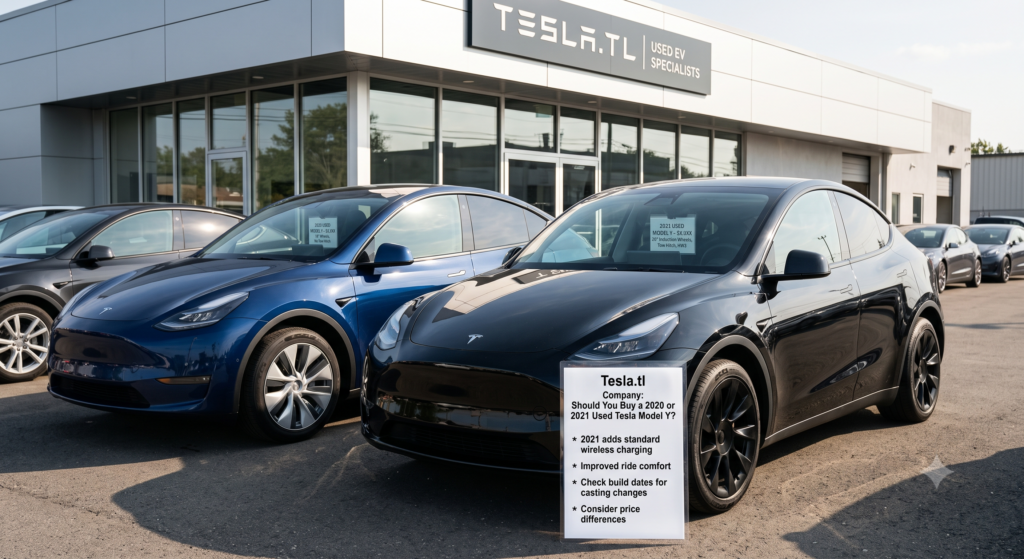
The used Tesla Model Y market in 2026 presents buyers with a seemingly minor choice that carries major consequences for daily ownership: should you buy a 2020 first-year example, or stretch slightly for a 2021 refresh? On the surface, these two model years appear nearly identical. They share the same platform, the same 15-inch touchscreen, the same fundamental silhouette, and the same access to the Supercharger network. Yet beneath that familiar exterior lies a critical hardware divergence that can transform winter driving from a miserable, range-anxious ordeal into a comfortable, efficient experience. The 2021 Model Y introduced the heat pump—a component that single-handedly justifies the price premium for buyers in cold climates—along with meaningful interior refinements and exterior styling updates that have aged more gracefully than the 2020’s early-adopter quirks.
This detailed comparison examines exactly what separates the 2020 and 2021 Model Y, how each has held up after five to six years of real-world use, where the 2020 still offers legitimate value, and why the 2021 has become the default recommendation for discerning used EV shoppers.
The 2020 Model Y: Pioneer with Compromises
The 2020 Tesla Model Y was the inaugural model year, launching in early 2020 after a rushed development cycle that shared the vast majority of its underpinnings with the Model 3 sedan. As a first-year vehicle, it carried all the excitement of a brand-new Tesla crossover combined with the predictable teething issues that accompany any fresh production line. Build quality varied significantly depending on when in 2020 the vehicle was manufactured; early spring 2020 examples often exhibited panel-gap inconsistencies, misaligned hatch closures, and interior trim pieces that did not quite match the fit and finish Tesla would achieve just twelve months later.
Mechanically, the 2020 Model Y relied on a resistive cabin heater rather than a heat pump. In temperate weather, this distinction is irrelevant. The resistive heater warms the cabin quickly and effectively, and the Long Range dual-motor variants delivered strong range and confident all-wheel-drive traction. However, the 2020’s lack of a heat pump becomes a critical weakness the moment temperatures drop below freezing. The resistive heater draws enormous amounts of energy from the 75 kWh battery pack, slashing real-world range by 25% to 35% in winter conditions. A 2020 Long Range that shows 280 miles in summer might struggle to deliver 190 miles in a Michigan or Minnesota January, forcing frequent charging stops and constant mental arithmetic on road trips.
Beyond the heater, the 2020 Model Y shipped with the older interior aesthetic: chrome window trim, a glossy piano-black center console that scratched within weeks of ownership, and single-pane front door glass that allowed significant wind noise at highway speeds. These are not mechanical failures, but they are daily annoyances that make the 2020 feel distinctly dated compared to even a base 2021.
That said, the 2020 Model Y is not without merit. By 2026, these vehicles have depreciated into the mid-to-upper $20,000 range for Long Range examples with moderate mileage, making them the cheapest entry point into Model Y ownership. The dual-motor powertrain, Autopilot hardware, and battery architecture are fundamentally sound. For buyers in warm climates who rarely face freezing temperatures, the missing heat pump is a non-issue, and the lower purchase price frees up budget for aftermarket upgrades like ceramic coating, better tires, or a home charging installation.
The 2021 Model Y: The Heat Pump Changes Everything
The 2021 Tesla Model Y represents the single most meaningful mid-cycle improvement in the vehicle’s history. While Tesla did not formally label it a refresh, the cumulative changes introduced during the 2021 model year fundamentally addressed the 2020’s biggest weaknesses and elevated the Model Y from a promising but compromised crossover to a genuinely mature family vehicle.
The headline upgrade was the heat pump, borrowed from the Model 3 refresh that debuted in late 2020. Unlike the resistive heater in the 2020, which generates warmth by passing electricity through a heating element, the heat pump works like a reverse refrigerator, scavenging thermal energy from the ambient air and the vehicle’s powertrain to warm the cabin. The result is a dramatic reduction in winter energy consumption. A 2021 Long Range in freezing conditions might lose only 15% to 20% of its summer range compared to the 2020’s brutal 30% or more penalty. For cold-climate buyers, this is not a minor efficiency gain—it is the difference between a usable winter crossover and a range-anxious liability.
The 2021 also introduced the chrome-delete exterior, replacing the shiny window trim and door handles with satin black accents that have proven far more durable and modern-looking over time. The center console was completely redesigned with a sliding privacy cover, integrated wireless charging pads for two smartphones, and a shift to textured materials that resist scratches and fingerprints. Front occupants gained double-pane acoustic glass on many builds, significantly reducing wind noise and giving the cabin a more premium, isolated feel on the highway. USB-C ports replaced the older USB-A connections, and the rear seats received minor structural improvements for better long-term durability.
Build quality in 2021 was measurably more consistent than in 2020. Tesla had accumulated a full year of Model Y production data, refined its assembly robotics, and addressed the worst of the hatch alignment and panel-gap issues. A 2021 Model Y with 50,000 miles typically feels tighter, quieter, and more solid than an equivalent-mileage 2020, even when both have been maintained identically.
Interior and Feature Differences in Detail
For buyers comparing these two model years side by side in 2026, the interior differences are immediately apparent and genuinely affect daily satisfaction.
The 2020’s piano-black center console is a magnet for dust, fingerprints, and micro-scratches. Within months of ownership, most 2020 consoles looked worn and cheap despite the vehicle’s premium price when new. The 2021’s textured, sliding-cover console not only looks better but provides actual storage privacy and wireless charging that works reliably without aftermarket add-ons.
The chrome-delete exterior on the 2021 has aged far better than the 2020’s bright chrome, which shows water spots, pitting, and discoloration after years of exposure. While this is purely cosmetic, it affects curb appeal and resale value; a 2021 simply looks more current parked next to a 2020.
The double-pane front glass introduced on the 2021 is a feature that cannot be retrofitted economically. It reduces wind noise by a noticeable margin at 70-plus mph, making the 2021 a more relaxing highway cruiser. For buyers who spend significant time on interstates or who are sensitive to cabin noise, this alone can justify choosing the newer year.
Battery Health and Real-World Range in 2026
Both the 2020 and 2021 Model Y Long Range variants launched with 75 kWh NCA battery packs, and both have aged through similar numbers of charge cycles by 2026. In terms of pure battery degradation, there is no meaningful difference between the two model years assuming comparable mileage and climate history. A well-maintained example from either year should retain 85% to 90% of original capacity, translating to roughly 260 to 280 miles of real-world range at 100% charge in temperate weather.
However, the effective winter range diverges sharply due to the heating systems. The 2021’s heat pump preserves more of that battery capacity for actual propulsion rather than cabin heating. In practice, this means a 2021 Long Range might deliver 220 miles in January where a 2020 Long Range delivers only 180 miles under identical conditions. Over a full winter season, the 2021 requires fewer charging stops, experiences less range anxiety, and maintains more predictable trip planning.
For Performance variants, the same dynamics apply. Both years offer brutal acceleration and upgraded brakes, but the 2021 Performance benefits from the heat pump and interior refinements while sharing the same tire-wear and ride-quality compromises as the 2020.
Known Issues Specific to Each Year
2020 Model Y Weaknesses:
- Resistive heater energy consumption in cold weather.
- Rear hatch alignment issues causing water leaks and wind noise on early builds.
- Piano-black console scratching and wear.
- Front upper control arm bushing wear (shared with 2021, but often more severe due to earlier component batches).
- Heat pump absence permanently limits cold-weather efficiency.
2021 Model Y Weaknesses:
- Heat pump reliability in extreme cold: early heat pump implementations occasionally failed to operate in temperatures below -10°C (14°F), requiring software updates and, in rare cases, hardware replacements. Verify that any 2021 you consider has received the relevant service bulletins.
- USB-C port failures: some early 2021 builds suffered from loose or non-functional USB-C connections in the center console.
- Same suspension wear: the 2021 did not fundamentally redesign the rear suspension, so control arm and bushing inspections remain essential.
Pricing Expectations in 2026
As of mid-2026, the price gap between 2020 and 2021 Model Y examples has stabilized at a level that reflects the 2021’s meaningful upgrades without making the 2020 irrelevant.
- 2020 Model Y Long Range: $27,000–$33,000
- 2020 Model Y Performance: $32,000–$38,000
- 2021 Model Y Long Range: $31,000–$37,000
- 2021 Model Y Performance: $36,000–$42,000
The 2021 commands roughly $3,000 to $5,000 more than a comparable 2020 with similar mileage and condition. For warm-climate buyers, this premium may feel difficult to justify. For cold-climate buyers, it represents one of the best value propositions in the used EV market.
Don’t risk buying a 2020 or 2021 Model Y with hidden suspension wear or degraded battery cells. At Tesla.tl, every listing includes verified service history, battery health diagnostics, and detailed inspection reports so you know exactly what you are getting before you negotiate. Browse inspected 2020 and 2021 inventory and buy with confidence at https://tesla.tl/.
The Verdict: Which Year Should You Buy?
The choice between a used 2020 and 2021 Model Y is ultimately determined by your climate, budget, and tolerance for dated interior materials.
Buy the 2020 if: you live in a warm or temperate climate where winter range is irrelevant, your budget is capped below $30,000, and you are willing to accept the piano-black console and chrome exterior. The 2020 is a fundamentally sound electric crossover that delivers the core Model Y experience at the lowest possible price. Plan to spend $200 on a console wrap and $1,500 on tires within the first year.
Buy the 2021 if: you experience freezing winters, value cabin quietness, prefer a more modern interior aesthetic, or plan to keep the vehicle for five or more years. The heat pump alone justifies the premium for anyone in the northern United States, Canada, or northern Europe. The chrome-delete exterior, sliding console cover, and double-pane glass create a vehicle that feels significantly more refined and will age better both mechanically and cosmetically.
For the majority of buyers in 2026, the 2021 Model Y is the safer, smarter, and more satisfying choice. It addressed the 2020’s most glaring weaknesses without introducing new compromises, and it remains relevant in a market where newer competitors are constantly raising the bar. However, if you are a warm-climate bargain hunter who views cars as appliances rather than statements, the 2020 still delivers exceptional utility per dollar.
Ready to choose between a 2020 and 2021 Model Y? Compare verified listings side by side with real battery health data, heat pump verification, and interior condition reports at Tesla.tl. Filter by model year, trim, and climate history to find the perfect used Model Y for your region. Visit https://tesla.tl/ and start driving electric today.
