
Is a Used 2016 Tesla Model X Reliable Enough in 2026?
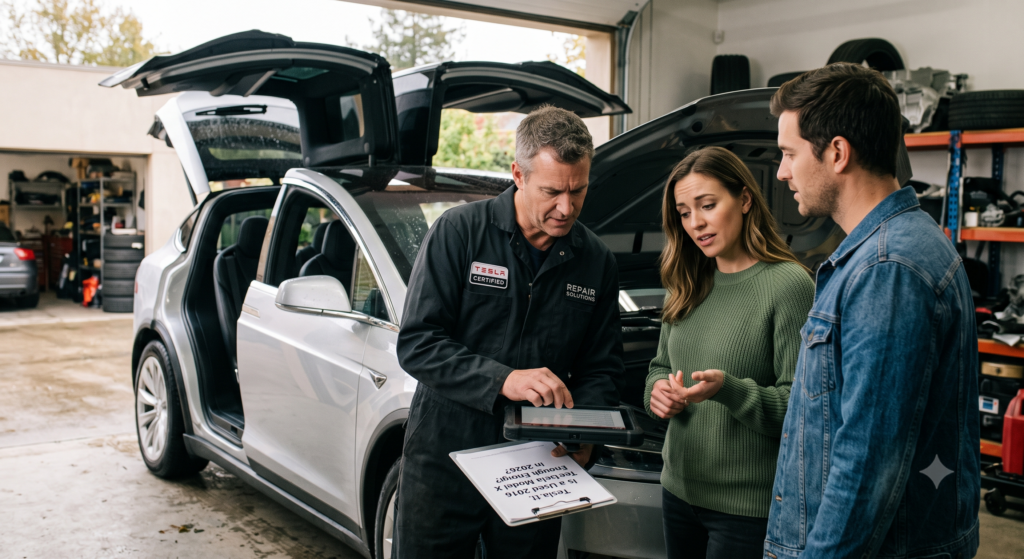
The 2016 Tesla Model X occupies a uniquely precarious position in the used electric vehicle market of 2026. As the very first model year of Tesla’s ambitious flagship SUV, it carries the dual burden of being both a pioneering technological statement and a rolling compendium of first-generation manufacturing defects. Ten years after its initial rollout, the 2016 Model X has depreciated into a price bracket that makes it genuinely tempting for large families, Tesla enthusiasts, and bargain hunters who dream of owning a seven-seat electric SUV with Falcon Wing doors for the price of a well-equipped economy sedan. But temptation without information is dangerous, and the 2016 Model X is perhaps the single most complex and potentially expensive used Tesla you can buy. The question is not whether it is cheap enough—it almost certainly is—but whether it has aged gracefully enough to serve as a reliable daily driver in 2026 without transforming your garage into a service bay and your bank account into a repair fund.
This comprehensive analysis examines the 2016 Model X with unflinching honesty. We explore the specific weaknesses that defined this inaugural year, how those weaknesses have manifested after a decade of real-world use, which problems can be safely managed and which ones should send you running, and whether any configuration of the 2016 Model X is worth the gamble for a pragmatic buyer.
Understanding the 2016 Model X: A Pioneer with Birth Defects
The 2016 Model X was not simply a new model year—it was Tesla’s first genuine attempt at a mass-production SUV, and the company bit off far more than it could comfortably chew. Elon Musk later admitted that the Model X’s complexity, particularly the Falcon Wing doors, nearly bankrupted the company during its ramp-up. The 2016 production run was plagued by delays, supplier issues, and a learning curve so steep that early build quality varied dramatically from one vehicle to the next. Some early 2016 examples were essentially hand-assembled beta products that were sold to customers who were wealthy enough and patient enough to tolerate constant service visits.
By 2026, these vehicles have aged through multiple battery cycles, countless door openings, and the accumulated thermal stress of a decade’s worth of summers and winters. The 2016 Model X was available primarily in two configurations: the 90D with a 90 kWh battery and dual-motor all-wheel drive, and the more powerful P90D with Ludicrous Mode. A smaller number of 75D variants were also produced later in the year with a 75 kWh pack. All three variants share the same fundamental architecture, the same door mechanisms, and the same susceptibility to the issues that defined this era.
The critical reality for 2026 buyers is that a 2016 Model X is not a used car in the traditional sense. It is a vintage technology product wrapped in an aluminum body. Its reliability is not measured solely in miles driven but in how well its previous owner maintained a system of sensors, actuators, and software that was never fully mature even when new.
The Falcon Wing Doors: A Decade of Wear
If there is one single factor that determines whether a 2016 Model X is viable in 2026, it is the condition of the Falcon Wing doors. By now, these doors have completed thousands of open-and-close cycles—far more than Tesla’s original engineering projections likely assumed for daily family duty. The 2016 door mechanisms were the earliest and most problematic iteration of this design, and they suffer from a well-documented roster of age-related failures.
The ultrasonic sensors that detect obstacles have likely drifted out of calibration or suffered physical damage from road debris, ice, and repeated impacts. The torsion springs that assist the door motors have weakened, causing the doors to open more slowly or strain audibly. The rubber seals that keep water out of the cabin have hardened, cracked, and lost their compression memory, leading to leaks that can damage the interior trim, floor electronics, and low-voltage battery compartment. The door actuators themselves, which were already a warranty nightmare in 2016, are now well beyond their expected service life.
A 2016 Model X with original, unrevised door mechanisms in 2026 is a vehicle that will require imminent and expensive attention. If both doors need actuator replacements, seal refreshes, and sensor recalibration, the bill can easily exceed $5,000 to $8,000 at a Tesla Service Center. Independent shops can sometimes rebuild the actuators for less, but the Falcon Wing door is not a component that general mechanics understand, and specialized Tesla repair facilities that can handle them are still relatively rare and expensive.
However, there is a glimmer of hope. Many 2016 Model X vehicles had their doors repaired and revised multiple times under warranty during the first four years of their lives. A well-documented service history showing repeated door work is actually a positive sign, because it means the vehicle has likely received updated components that are more durable than the original 2016 parts. When evaluating a 2016 Model X, demand exhaustive door service records. If the seller has no records, assume the doors are original and price the vehicle accordingly—or walk away.
Battery Health: The 90D Reality Check
The 2016 Model X was offered with the 90 kWh battery pack as its primary long-range option, alongside the smaller 75 kWh pack that appeared later in the model year. The 90D was rated for approximately 257 miles of EPA range when new, while the 75D offered roughly 237 miles. After ten years and potentially 80,000 to 120,000 miles, these figures tell a very different story in 2026.
The 90 kWh pack used in the 2016 Model X has developed a reputation for slightly accelerated degradation compared to the 85 kWh pack it replaced and the 100 kWh pack that followed. This is not catastrophic, but it is measurable. A 2016 90D with average mileage and temperate climate history typically retains between 82% and 87% of its original capacity by 2026. This translates to 210 to 225 miles of real-world range at 100% charge in ideal conditions. In winter, with the cabin heater working to warm a massive interior volume and the battery preconditioning for cold weather, that figure can drop to 160 to 180 miles.
For a family SUV that may be loaded with passengers, cargo, and roof accessories, these numbers are genuinely limiting. A 170-mile winter range means that a 140-mile round trip to a ski resort becomes a careful exercise in energy conservation, with no margin for detours or headwinds. The 75D is even more constrained, often showing 160 to 180 miles in temperate weather and 120 to 140 miles in freezing conditions. For buyers who need a genuine road-trip vehicle, the 2016 Model X battery situation requires honest acceptance of its limitations.
That said, the 90 kWh pack in the Model X is covered by Tesla’s 8-year, infinite-mile battery and drive unit warranty for vehicles of this era. If the battery has degraded below 70% capacity, Tesla is obligated to repair or replace it under warranty—provided the vehicle has a clean title and has not been declared salvage or rebuilt. For buyers in 2026, this warranty is a critical safety net, but it is also a ticking clock. The 8-year period from 2016 expires in 2024 for early builds, meaning many 2016 vehicles are already out of warranty coverage. Verify the exact in-service date before assuming warranty protection still applies.
Don’t risk buying a 2016 Model X with failing Falcon Wing doors or a battery that’s already outlived its warranty. At Tesla.tl, every listing includes verified door service history, battery health diagnostics, and warranty status checks so you know exactly what you are inheriting. Browse inspected 2016 Model X inventory and buy with confidence at https://tesla.tl/.
MCU1: The Screen That Will Fail
Every 2016 Model X shipped with MCU1, the original Media Control Unit powered by an NVIDIA Tegra processor with an embedded 8GB eMMC memory chip. By 2026, this chip has almost certainly reached the end of its write-cycle life if it has not already been replaced. The symptoms are familiar to anyone who has followed early Tesla ownership: a touchscreen that takes 30 seconds or more to boot, yellow border discoloration around the edges, random reboots while driving, unresponsive touch inputs, and eventual total black-screen failure.
A failed MCU1 is not merely an inconvenience in a Model X. The touchscreen controls virtually every vehicle function: climate control, navigation, suspension settings, door controls, and even the glove box release. When the screen dies, the vehicle becomes deeply frustrating to operate. Tesla offered an MCU2 retrofit that replaces the entire unit with a modern Intel-based system, but the upgrade costs $1,500 to $2,500 depending on whether it is performed at a service center or by an independent specialist.
For used buyers, the MCU situation creates a clear fork in the road. If the 2016 Model X you are considering has already received the MCU2 upgrade, you are looking at a vehicle whose infotainment system will remain functional and responsive for years. If it still has the original MCU1, you must either negotiate the upgrade cost into your purchase price or accept that you will eventually face a $2,000 repair bill. Many sellers of 2016 vehicles are unaware of this issue or hope buyers will not ask. Always verify the MCU generation before making an offer.
Air Suspension: Ten Years of Pressure
The 2016 Model X features an air suspension system that was ambitious for its time but has proven to be a long-term weakness. After ten years of holding up a 5,400-pound vehicle, the air struts are prone to leaks, the compressor is susceptible to overheating and internal wear, and the ride-height sensors can drift or fail entirely. A 2016 Model X that sags overnight, raises slowly when started, or displays “Air Suspension Needs Service” warnings is not experiencing a minor glitch—it is announcing imminent and expensive failure.
Replacing the air struts on a Model X is more labor-intensive than on a Model S because of the vehicle’s weight and the complexity of the all-wheel-drive layout. A single front air strut replacement can cost $1,200 to $1,800 at a Tesla Service Center, and a full four-corner refresh can approach $5,000 to $7,000. The compressor, if it has been overworked due to leaking struts, adds another $1,300 to $2,000 to the bill.
Some 2016 Model X owners have proactively replaced their air suspension components under warranty or during scheduled service, and these vehicles are significantly more attractive on the used market. When inspecting a 2016 example, ask specifically about suspension service history. If the seller has replaced struts or the compressor within the last two years, you are buying a vehicle with renewed life in its underpinnings. If everything is original, budget for a near-future overhaul.
Other Age-Related Weaknesses
Beyond the headline issues, the 2016 Model X suffers from a collection of smaller but still costly problems that accumulate over a decade.
Front Door Handles Like the early Model S, the 2016 Model X uses retractable motorized door handles that are prone to microswitch failure and gear mechanism wear. While less infamous than the Falcon Wing doors, the front handles can still fail to present, leaving you unable to enter the vehicle without using the smartphone app or the physical key fob. Each handle replacement costs $800 to $1,200.
Panoramic Windshield The Model X’s massive panoramic windshield is stunning but expensive. A replacement due to rock chip cracking can exceed $1,500, and the seal around the glass can degrade, causing wind noise and water leaks that are difficult to trace and repair.
Third-Row Comfort and Wear If you are considering a 6-seat or 7-seat configuration, physically inspect the third row. The upholstery and mechanisms have endured a decade of use, and the third-row seatbelts, latches, and ISOFIX anchors can show significant wear. The second-row seats in early 2016 builds were also less robust than later revisions, with some owners reporting premature cushion compression and mechanism looseness.
Wind Noise and Seal Degradation The Model X’s complex door geometry and massive glass area create multiple opportunities for wind noise. After ten years, the door seals, window seals, and roof seals have all compressed and hardened. Excessive wind noise at highway speeds is not merely an annoyance; it indicates that water intrusion and interior damage may already be occurring.
When the 2016 Model X Is Worth the Risk
Despite the daunting list of potential issues, there are specific scenarios where a used 2016 Model X is genuinely a smart purchase in 2026.
The Mechanically Savvy Enthusiast If you are comfortable with automotive repair, have access to a competent independent Tesla shop, and view vehicle maintenance as a hobby rather than a burden, a 2016 Model X can be an absolute bargain. You can acquire a vehicle with supercar-adjacent acceleration, genuine seven-seat capacity, and undeniable road presence for less than the price of a new compact crossover. The key is entering the purchase with a dedicated repair fund and the skills to manage the inevitable issues.
The Low-Mileage Garage Queen Some 2016 Model X vehicles were purchased as second or third vehicles by wealthy owners who drove them sparingly and serviced them obsessively. A 2016 P90D with 30,000 miles, a complete service history, an MCU2 upgrade, and recently replaced door actuators is a very different proposition from a high-mileage fleet vehicle. These low-mileage examples are rare but worth seeking out.
The Family with a Dedicated Service Budget If you need a large electric SUV for carpool duty, have home charging, and can allocate $3,000 to $5,000 annually for maintenance and repairs, a 2016 Model X delivers an experience that no other vehicle at its price point can match. The Falcon Wing doors still delight children, the interior space is genuinely generous, and the safety ratings remain excellent.
When You Should Walk Away
Conversely, there are clear red flags that should cause you to reject any 2016 Model X, regardless of how low the price drops.
Salvage or Rebuilt Title Tesla actively revokes Supercharger access for salvage-title vehicles, and many internal systems may be permanently disabled. The complexity of the Model X makes proper rebuilds nearly impossible for all but the most specialized shops. Do not buy a rebuilt 2016 Model X unless you are a professional restorer.
Original MCU1 with No Upgrade Plans A 2016 Model X with a failing or failed touchscreen is a vehicle you cannot fully operate. If the seller refuses to discount the price to account for an immediate MCU2 retrofit, walk away.
Falcon Wing Doors with No Service History If the doors are original, slow, noisy, or showing error codes, and the seller has no records of prior repairs, you are looking at an imminent $5,000+ bill. Unless the vehicle is priced to reflect this, it is not a bargain.
Battery Below 80% State of Health A 90D showing less than 200 miles of range at 100% charge in temperate weather has degraded abnormally. While it may still be under warranty depending on the in-service date, the hassle of pursuing a warranty claim on a decade-old vehicle is significant.
Final Verdict
The 2016 Tesla Model X is not a reliable vehicle in the traditional sense. By 2026, it is a vintage luxury SUV that requires ongoing attention, a healthy repair budget, and a tolerance for occasional inconvenience. It is not a Toyota that you can buy and forget for 10,000 miles. It is a complex, aluminum-intensive, software-dependent machine that was never fully baked even when new and has now aged into a state where multiple systems are simultaneously approaching the end of their design lives.
However, for the right buyer, the 2016 Model X is also one of the most compelling values in the automotive world. It offers performance, space, and technological theater at a price that undercuts even mid-range economy EVs. If you approach it as a project car with daily-driver potential rather than a turnkey transportation appliance, and if you verify that critical upgrades like MCU2 and door actuator revisions have already been completed, it can deliver years of memorable family motoring.
For buyers who need dependable, low-maintenance transportation, the answer is simple: no, the 2016 Model X is not reliable enough. Buy a Model Y Long Range and sleep soundly. But for enthusiasts, bargain hunters, and families with the budget and patience to manage its quirks, the 2016 Model X remains a uniquely thrilling way to move seven people in electric silence—provided you know exactly what you are signing up for.
Ready to find a 2016 Model X that has already survived its teething problems? Search Tesla.tl for listings with verified MCU2 upgrades, documented door service history, and battery health reports. Filter by mileage, trim, and condition to find the rare well-maintained example that justifies the gamble. Visit https://tesla.tl/ and drive the most distinctive electric SUV ever built.
