
Used Tesla Warranty Transfer: What You Need to Know in 2026
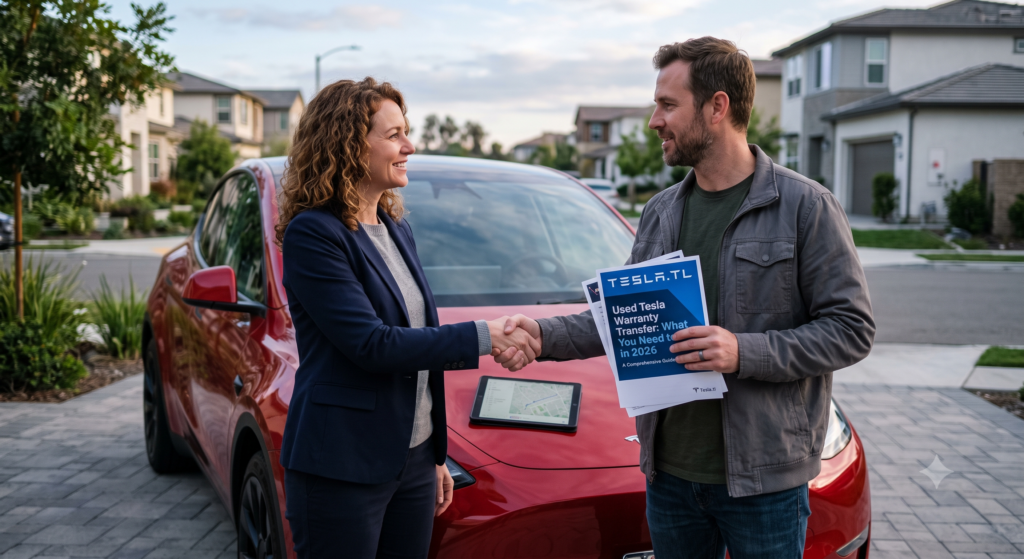
The warranty attached to a used Tesla is often worth more than the physical components you can see and touch. It is a financial shield that protects you from the single most expensive failures in electric vehicle ownership: a degraded battery pack, a failed drive unit, or a bricked Media Control Unit that can cost thousands of dollars to repair out of pocket. Yet the warranty transfer process for used Teslas remains one of the most misunderstood and frequently misrepresented aspects of the secondary market. Sellers routinely advertise their vehicles as “still under warranty” without understanding the distinction between the New Vehicle Limited Warranty, the Battery and Drive Unit Warranty, and the Extended Service Agreement. They often fail to disclose that salvage or rebuilt titles void all coverage permanently, or that certain aftermarket modifications can invalidate protection without the buyer ever realizing it until a catastrophic failure occurs.
In 2026, as the earliest Model S and Model X vehicles age out of their 8-year battery coverage and mid-generation Model 3 and Model Y units approach critical warranty milestones, understanding exactly what transfers, what does not, and how to verify your protection has never been more important. This comprehensive guide breaks down the Tesla warranty ecosystem as it applies to used vehicle purchases, explains the transfer mechanics for private party sales versus dealer transactions, identifies the title and history issues that permanently strip coverage, and provides the exact steps you must take within days of purchase to ensure your warranty is active and recognized by Tesla Service Centers worldwide.
The Three Layers of Tesla Warranty Protection
To navigate the used Tesla market intelligently, you must first understand that Tesla warranties are not a single monolithic document. They are three distinct layers of protection, each with different coverage periods, transferability rules, and expiration triggers. Confusing these layers is how buyers end up believing they are covered for a $15,000 battery replacement when in reality only the 4-year bumper-to-bumper coverage remains, and even that may expire within months.
The New Vehicle Limited Warranty is the comprehensive coverage that applies to virtually every component of the vehicle except wear items like tires and brake pads. For Model 3 and Model Y, this warranty extends for 4 years or 50,000 miles, whichever comes first. For Model S and Model X, the terms are identical. This is the warranty that covers your touchscreen, climate control system, suspension components, door handles, charging port, and the thousands of sensors and modules that make a Tesla function. When you buy a used 2022 Model Y with 25,000 miles in 2026, you may still have nearly two years of this comprehensive coverage remaining. When you buy a used 2019 Model S with 48,000 miles, this coverage has likely expired entirely, leaving you exposed to even minor repair bills that would have been free under the original warranty.
The Battery and Drive Unit Warranty is the second and most financially significant layer. This coverage guarantees that the high-voltage battery pack and the electric drive unit will remain free from defects and will retain a minimum capacity threshold for a specified period. For Long Range and Performance variants of the Model 3 and Model Y, this warranty extends to 8 years or 120,000 miles. For Standard Range variants, it is 8 years or 100,000 miles. For Model S and Model X, the coverage is generally 8 years or 150,000 miles depending on the exact model year and battery configuration. The critical guarantee within this warranty is that the battery will maintain at least 70% of its original capacity during the coverage period. If a 2021 Model 3 Long Range degrades to 65% State of Health at 80,000 miles, Tesla is obligated to repair or replace the battery under this warranty. Without it, that same repair becomes your $12,000 to $16,000 personal expense.
The third layer, increasingly rare on the used market in 2026, is the Extended Service Agreement, sometimes referred to as the Tesla Extended Warranty. This was an optional purchase available to original owners that extended certain coverages beyond the standard New Vehicle Limited Warranty. These agreements had specific terms, deductibles, and coverage limitations that varied by purchase date and region. They are fully transferable in most cases, but the remaining duration and covered components must be verified individually through Tesla directly, as they do not always appear in the standard vehicle warranty display.
What Transers Automatically and What Requires Action
One of the most persistent myths in the used Tesla market is that warranties automatically follow the vehicle regardless of how the sale occurs. While this is partially true, the reality is more nuanced and contains critical exceptions that can leave buyers unprotected through simple administrative oversights.
For private party sales conducted between individuals, the New Vehicle Limited Warranty and the Battery and Drive Unit Warranty generally transfer automatically to the new owner upon proper registration and title transfer. Tesla does not require the seller to notify them formally to maintain these statutory warranties. The coverage is tied to the Vehicle Identification Number and the in-service date, not to the specific individual who originally purchased the car. However, the new owner must add the vehicle to their personal Tesla Account through the mobile app or website to access warranty service, schedule appointments, and receive over-the-air software updates. If the previous owner never removes the vehicle from their account, or if the new owner delays creating their own account association, service centers may refuse to perform warranty work until ownership is properly documented in Tesla’s system.
The Extended Service Agreement, if present, typically requires formal notification to Tesla or the administering third party to complete the transfer. This is not automatic upon title transfer. The original owner must contact Tesla to initiate the transfer process, and the new owner must often pay a nominal administrative fee ranging from $50 to $200 depending on the region. If the seller is unaware of this requirement or unwilling to complete the paperwork, the extended coverage may lapse or become unenforceable despite having been paid for in full by the original owner. Always ask specifically whether an Extended Service Agreement exists and demand written confirmation that the transfer process has been initiated before finalizing payment.
For dealer sales, whether through independent used car lots or Tesla’s own used inventory, the transfer process is typically handled administratively by the selling entity. Tesla’s certified pre-owned program, when active, included its own warranty terms that sometimes differed from the original New Vehicle Limited Warranty. Independent dealers may offer third-party extended warranties that are not Tesla factory coverage. These third-party policies vary dramatically in quality, often exclude the battery and drive unit, and may require you to use specific repair shops rather than Tesla Service Centers. Never assume that a dealer’s promise of “warranty included” refers to factory Tesla coverage. Demand to see the actual warranty documents and verify whether they are manufacturer-backed or aftermarket insurance products.
The Title Status Trap: How Salvage and Rebuilt History Destroys Warranty
The most devastating warranty surprise in the used Tesla market is the salvage or rebuilt title. When a Tesla is declared a total loss by an insurance company due to collision damage, flood exposure, fire, or theft recovery, the title receives a salvage or rebuilt brand. Even if the vehicle is subsequently repaired to showroom condition by a skilled rebuilder, Tesla permanently voids all factory warranties the moment the salvage brand is applied. This includes the New Vehicle Limited Warranty, the Battery and Drive Unit Warranty, and any Extended Service Agreement. The coverage does not pause and resume. It evaporates entirely and cannot be reinstated under any circumstances.
This policy creates a brutal financial reality for buyers of rebuilt Teslas. A 2019 Model 3 Long Range with a rebuilt title may appear cosmetically flawless and drive perfectly, but if the battery fails six months after purchase, the owner faces a $14,000 replacement bill that would have been fully covered under warranty for a clean-title equivalent. Similarly, Supercharger access is frequently revoked for salvage-title vehicles, and software updates may be blocked, creating a cascading degradation of functionality that extends far beyond warranty concerns.
Sellers of rebuilt Teslas sometimes attempt to obscure this reality by advertising the vehicle’s remaining mileage as if the warranty still applies, or by claiming that the damage was “minor” and should not affect coverage. Tesla’s policy is absolute and does not distinguish between minor and catastrophic damage. If the title is branded, the warranty is dead. Verify the title status independently through a vehicle history report and confirm the clean status in writing before purchase. If the seller refuses to provide the title for inspection prior to payment, terminate the transaction immediately.
Even vehicles with clean titles can have hidden warranty restrictions. If a vehicle was previously used as a fleet vehicle, rental car, or taxi in certain jurisdictions, the warranty terms may differ from consumer-purchased equivalents. Some fleet vehicles carry reduced warranty periods or higher deductibles. Always verify the original in-service date and warranty classification through Tesla directly using the VIN, rather than relying on the seller’s interpretation.
Don’t risk buying a used Tesla with voided warranty coverage or hidden title issues. At Tesla.tl, every listing includes verified title status, warranty expiration dates, and Tesla factory coverage confirmation so you know exactly what protection you are inheriting. Browse inspected inventory with full warranty transparency at https://tesla.tl/.
Verifying Remaining Warranty Before You Buy
Because Tesla warranties are tied to the in-service date and mileage rather than the calendar date of your purchase, two vehicles with identical model years can have dramatically different remaining coverage. A 2022 Model Y that was placed in service in January 2022 and has 35,000 miles may have its comprehensive warranty expire in January 2026, leaving you with only battery coverage. An identical 2022 Model Y placed in service in December 2022 with 20,000 miles retains comprehensive coverage until December 2026. This in-service date gap of eleven months creates a real-world value difference of thousands of dollars that is invisible if you only look at the model year.
To verify remaining warranty accurately, obtain the VIN and contact Tesla directly through their customer service line or request that the seller provide a screenshot of the warranty information from their Tesla App. The app displays the exact expiration dates for both the New Vehicle Limited Warranty and the Battery and Drive Unit Warranty, along with the current mileage. Compare these dates against the vehicle’s current odometer reading. If the mileage is approaching the warranty threshold rapidly, calculate whether your expected annual driving will push the vehicle past the limit before the time component expires.
For Battery and Drive Unit Warranty verification, ask the seller to provide a recent battery health report from a Tesla Service Center or a reputable third-party diagnostic tool. If the battery has degraded below 70% and the vehicle remains within the warranty period, you are potentially buying a vehicle that qualifies for a free battery replacement or refurbishment. This is a hidden value opportunity that savvy buyers can exploit. Conversely, if the battery shows 72% State of Health and the vehicle has 119,000 miles on a 120,000-mile warranty, you are one road trip away from losing coverage entirely. Factor this proximity into your offer price.
Inspect the odometer carefully for evidence of tampering or rollback. While digital odometers are harder to manipulate than mechanical ones, rollback fraud still occurs in the used vehicle market. Cross-reference the current reading against service records, vehicle history reports, and the mileage recorded at the last registration renewal. Inconsistent mileage progression is a felony and a sign that the seller may be attempting to conceal over-mileage that would void remaining warranty protection.
Regional Differences: US, Europe, and Beyond
Tesla warranty terms are not uniform across all global markets, and buyers purchasing imported or cross-border used Teslas must pay particular attention to regional variations.
In the United States, the New Vehicle Limited Warranty is 4 years or 50,000 miles for all consumer vehicles. The Battery and Drive Unit Warranty varies by model and trim as described above. Extended Service Agreements were available in most states but are subject to state insurance regulations that affect transferability. Some states require the seller to provide explicit warranty disclosure documents at the time of sale, while others operate under “as-is” principles that place full responsibility on the buyer.
In Europe, warranty terms are heavily influenced by the EU Consumer Rights Directive and individual national laws. Many EU countries mandate a minimum 2-year seller’s warranty on used vehicle sales from dealers, which exists in addition to any remaining Tesla factory coverage. Private party sales in Europe often carry fewer statutory protections, but the Tesla factory warranties still transfer automatically if the title is clean. The Battery and Drive Unit Warranty terms in Europe are generally similar to the US, though specific mileage thresholds may differ slightly for vehicles with kilometer-based odometers.
In Canada, warranty terms mirror the US for most vehicles, though the Magnuson-Moss Warranty Act does not apply, and provincial consumer protection laws govern dealer sales. In Asia-Pacific markets, warranty durations and transfer procedures vary significantly by country, with some markets offering shorter battery warranties or requiring local registration before warranty service is honored.
If you are purchasing a Tesla that was originally sold in a different country from where you intend to register it, verify that Tesla will honor the remaining warranty in your jurisdiction. Gray-market imports, even with clean titles, sometimes encounter service restrictions if the vehicle was not originally homologated for the local market.
The Software Update Connection
An often-overlooked aspect of Tesla warranty ownership is the relationship between warranty status and over-the-air software updates. Tesla uses software updates not merely to add features but to diagnose issues, calibrate systems, and sometimes remotely address defects that would otherwise require physical service visits. A vehicle with voided or expired warranty may still receive software updates, but Tesla has been known to restrict update availability for vehicles with salvage history, outstanding safety recalls, or unresolved service campaigns.
More importantly, certain warranty repairs require the latest software version to be installed before Tesla Service Centers can perform diagnostic routines or authorize component replacements. If you purchase a used Tesla that has not been updated in years because the previous owner disabled Wi-Fi or ignored update prompts, you may face delays in warranty service until the vehicle is brought to current software. Ensure the vehicle is running a recent software version before your warranty expires, as some updates contain critical battery management improvements that affect long-term health and warranty eligibility.
Steps to Secure Your Warranty Immediately After Purchase
The days immediately following your used Tesla purchase are critical for ensuring your warranty protection is fully active and documented. Delaying these steps can create administrative gaps that complicate future service.
Step 1: Create or Update Your Tesla Account. If you do not already have a Tesla Account, create one immediately at tesla.com using the same email address you intend to use for all vehicle communications. If you already own a Tesla, ensure your account information is current.
Step 2: Add the Vehicle to Your Account. Use the VIN and your proof of purchase to add the vehicle to your account through the website or mobile app. This process may take 24 to 48 hours for Tesla’s system to recognize the ownership change, particularly for private party sales where documentation must be manually reviewed.
Step 3: Verify Warranty Display. Once the vehicle appears in your account, navigate to the vehicle details and confirm that the warranty expiration dates are displayed correctly. If the dates are missing, incorrect, or show expired coverage on a vehicle that should still be protected, contact Tesla customer support immediately with your purchase documentation.
Step 4: Schedule a Baseline Inspection. Book a Tesla Service Center appointment within the first 30 days of ownership for a comprehensive inspection. This establishes a service history baseline and allows technicians to identify any latent issues that may be covered under remaining warranty. Document any findings in writing.
Step 5: Address Open Recalls and Service Campaigns. Check the NHTSA database or Tesla’s recall page using your VIN. If any safety recalls or service campaigns are open, schedule the repairs immediately. These are performed at no cost regardless of ownership changes, but delaying them can affect your eligibility for future warranty claims if related components fail.
Step 6: Transfer Extended Coverage. If the vehicle has an Extended Service Agreement, contact Tesla or the plan administrator to complete the formal transfer. Do not assume this happens automatically.
Final Verdict
The warranty attached to a used Tesla in 2026 is not merely a line item on a spec sheet. It is a financial instrument that can determine whether your ownership experience is smooth and predictable or punctuated by catastrophic repair bills. The New Vehicle Limited Warranty protects you from the myriad electronic and mechanical failures that afflict complex luxury vehicles. The Battery and Drive Unit Warranty guards against the single most expensive component failure in automotive history. And the proper administrative handling of these warranties ensures that when you walk into a Tesla Service Center, you are greeted as a protected owner rather than a customer facing a five-figure invoice.
Understanding transferability, verifying title status, confirming remaining duration, and completing post-purchase registration are not optional formalities. They are essential risk management steps that every used Tesla buyer must execute with the same diligence they apply to inspecting tires or test-driving acceleration. A Tesla with six months of comprehensive warranty remaining is a fundamentally different product from an identical vehicle with expired coverage, and the market should price them accordingly. Do not let a seller’s casual assurance of “it’s still under warranty” substitute for your own independent verification. The four minutes you spend confirming warranty status with Tesla directly can save you from the four years of repair costs that destroy budgets and erode the joy of electric vehicle ownership.
Ready to find a used Tesla with verified, transferable warranty coverage? Search Tesla.tl for listings that include exact warranty expiration dates, title status verification, and battery health diagnostics. Filter by remaining coverage, model year, and trim to find the protected electric vehicle that matches your budget and your peace of mind. Visit https://tesla.tl/ and drive with warranty confidence today.
