
How to Buy a Used Tesla Model 3: Complete 2026 Buyer’s Guide
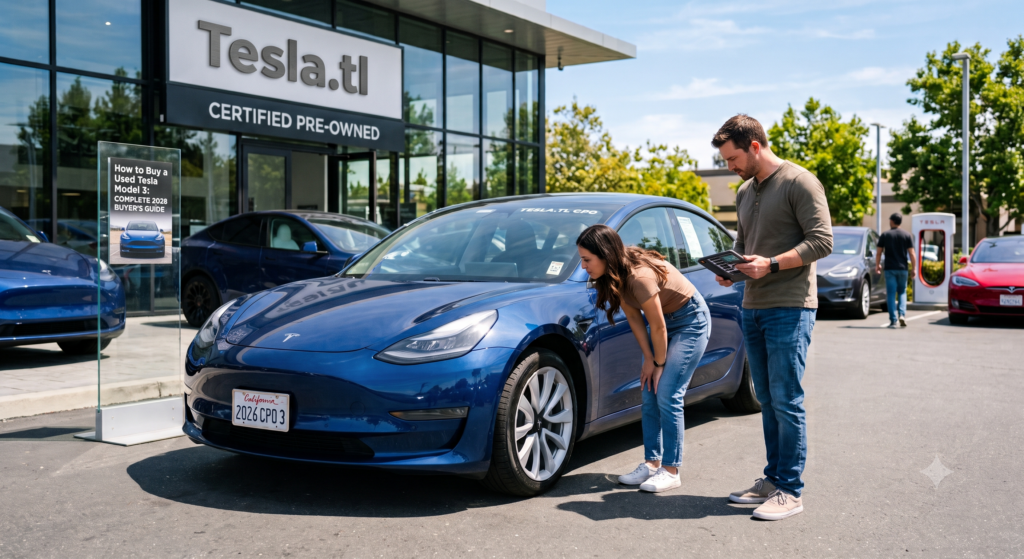
The used Tesla Model 3 remains one of the smartest and most financially sound entry points into premium electric vehicle ownership in 2026. With over six full years of production history behind it, the global secondary market is now flooded with a wide spectrum of options ranging from early 2018 examples with basic Autopilot to fully refreshed Highland variants equipped with the latest hardware and software capabilities. However, buying a pre-owned Model 3 is fundamentally different from purchasing a traditional used gasoline sedan or even a hybrid vehicle. Unlike internal combustion engine cars where you primarily worry about engine wear, transmission health, and oil leak history, a second-hand Tesla introduces entirely new variables that can dramatically impact your ownership satisfaction and long-term operating costs. Battery health, software-locked features, Autopilot hardware generation differences, and Supercharging status can genuinely make or break your entire ownership experience if you fail to investigate them properly before signing the purchase agreement.
This comprehensive guide walks you through every single critical step of securing a reliable, fairly priced used Tesla Model 3 without overpaying, without inheriting someone else’s hidden problems, and without discovering unpleasant surprises weeks after the money has already changed hands.
Why the Model 3 Dominates the Used EV Market
The Tesla Model 3 fundamentally changed the global automotive industry by proving beyond any doubt that an electric sedan could not only compete with but actually outsell established German premium brands like BMW and Mercedes-Benz in their own core segments. When you are shopping for a used Model 3 in 2026, this historic legacy works directly in your favor as a buyer. Replacement parts are now plentiful and widely available across multiple continents, the global Tesla service network has matured significantly with hundreds of service centers and thousands of mobile rangers, and online owner communities have meticulously documented nearly every possible failure point, software quirk, and maintenance requirement across every model year.
Key advantages of buying a used Tesla Model 3 in today’s market include a lower depreciation curve compared to purchasing brand new units straight from the factory, automatic and unrestricted access to the extensive Tesla Supercharger network without additional membership fees or complicated enrollment processes, continuous over-the-air (OTA) software updates that actively keep the car improving and gaining new features years after it originally left the assembly line, and minimal routine maintenance requirements since there are no oil changes, no spark plugs, no timing belts, and significantly reduced brake wear thanks to regenerative braking technology.
Pre-Highland vs. Highland: Know Your Generation
Before you even begin browsing online listings or visiting dealerships, it is absolutely essential to understand which Model 3 generation aligns with your personal budget, driving habits, and technological expectations. The difference between generations is not merely cosmetic—it affects range, noise levels, interior technology, charging speed, and long-term software support.
Pre-Highland (2017–2023)
The original design features distinctive chrome exterior trim, a traditional physical turn-signal stalk on the steering column, and an interior architecture that remained largely visually unchanged for six full model years. Early production builds from 2018 and 2019 may occasionally exhibit panel-gap inconsistencies or slightly thinner paint application, while 2021 and newer models introduced meaningful hardware improvements including the heat pump for more efficient winter heating, the redesigned center console with wireless charging, and generally improved overall build quality. These pre-Highland Model 3 vehicles remain exceptional value propositions on the used market and often deliver 90% of the driving experience at 60% of the cost of a new vehicle.
Highland (2024–Present)
The comprehensive refresh brought a sleeker, more aerodynamic front end without traditional fog light cutouts, an additional rear entertainment screen for backseat passengers, ventilated front seats for hot climates, improved suspension tuning for better ride comfort, and significantly enhanced aerodynamics that contribute to increased real-world range. A used Highland Model 3 will naturally command a substantial price premium over older examples, but the quieter cabin, additional rear passenger amenities, and modernized technology stack make it the superior choice for buyers who prioritize daily driving refinement and plan to keep the vehicle for many years.
Critical Inspection Points for a Used Model 3
Unlike traditional internal combustion engine vehicles, a used Tesla requires a fundamentally different inspection mindset and skill set. You can safely skip the exhaust sniff test, the transmission fluid check, and the engine bay leak inspection. Instead, focus your attention and limited inspection time on these specific areas that are unique to electric vehicles and particularly relevant to the Model 3 platform.
1. Battery Health and State of Charge
Open the Tesla mobile application or use the in-car energy consumption graph to evaluate current capacity. A healthy Model 3 Long Range with reasonable mileage should still display approximately 280 to 310 miles of estimated range at a 100% state of charge, depending heavily on the vehicle’s exact age, geographic climate history, and previous charging habits. If the private seller or dealer refuses to charge the battery to 100% for your verification or becomes evasive when asked about degradation percentages, consider this behavior an immediate red flag and strongly consider walking away from the deal.
2. Touchscreen and Electronics
The massive 15-inch central touchscreen controls virtually every vehicle function from climate control to glove box release to wiper speed adjustment. Carefully inspect the display for yellow border discoloration around the edges—a common issue on earlier production units caused by heat exposure—dead or stuck pixels in any zone, and consistently responsive touch input across the entire surface. A full touchscreen replacement at a Tesla Service Center can easily exceed $1,500, making this one of the most expensive single-component failures to inherit.
3. Glass and Roof Seals
Model 3 vehicles have developed a reputation for excessive wind noise at highway speeds if the door glass alignment or panoramic roof seals have shifted even slightly from factory specification. During your test drive, specifically accelerate to 65–75 mph on a smooth highway surface and listen carefully for whistling sounds around the A-pillars, side mirrors, and roofline. Realigning glass and replacing weatherstripping is possible but time-consuming.
4. Paint and Panel Gaps
Early production models, particularly those manufactured in 2018 and early 2019, frequently suffered from thin paint application and inconsistent panel alignment around the trunk, headlights, and door edges. While these issues are primarily cosmetic and do not affect structural integrity or safety, unusually poor gaps can sometimes indicate previous accident repairs or frame pulling that was not disclosed in the vehicle history report.
5. Tires and Alignment
Electric vehicles are inherently heavy due to their battery packs and deliver instantaneous torque to the wheels. This combination causes tires to wear significantly faster than on comparable gasoline sedans. Verify remaining tread depth across all four tires using a gauge, inspect for uneven wear patterns that indicate alignment problems, and test whether the steering wheel pulls to either side during straight-line driving. Alignment issues are extremely common after even minor curb strikes given the Model 3’s low-profile tire options.
Battery Degradation: The Only Number That Matters
Battery health represents the single most important numerical metric when evaluating any pre-owned Model 3, and it deserves significantly more attention than mileage alone. Tesla’s lithium-ion battery packs degrade at an approximate rate of 1% to 2% per year under normal operating conditions with responsible charging habits. By 2026, a 2019 model year vehicle with 50,000 carefully driven miles should realistically still retain between 85% and 90% of its original factory capacity, which is more than sufficient for daily commuting and regional road trips.
Before committing to any purchase, directly ask the seller to provide:
- A clear screenshot or photograph of the Battery Health diagnostic screen, accessible through third-party applications such as Scan My Tesla or TeslaFi
- The average watt-hours per mile consumption figure over the most recent 5,000 to 10,000 miles of driving
- Honest disclosure about whether the vehicle was frequently charged to 100% on a daily basis or routinely left sitting at extremely low states of charge for extended periods
Avoid vehicles that have spent multiple years parked in extreme heat environments such as Arizona, Nevada, or inland California without regular garage parking or cabin overheat protection enabled, unless the asking price has been substantially reduced to reflect the likely accelerated battery degradation.
Autopilot, FSD, and Hardware Versions
Tesla’s driver-assistance feature packages are notoriously confusing and frequently misrepresented on the used market, making verification absolutely critical before any money changes hands. You must independently confirm exactly what software capabilities are actually included with the specific vehicle you are considering.
- Basic Autopilot: Included as standard equipment on all Model 3 vehicles regardless of year or trim. Provides adaptive cruise control and basic lane-keeping assistance.
- Enhanced Autopilot (EAP): Adds Navigate on Autopilot for highway interchanges, automatic lane changes, Summon for parking lot maneuvering, and Autopark for perpendicular and parallel spaces.
- Full Self-Driving (FSD): The premium software package. On a used Model 3, an active FSD subscription or permanent license can legitimately add $5,000 to $10,000 in resale value, but only if the feature successfully transfers to your Tesla account upon purchase.
Critical Warning: Always verify the hardware version installed in the vehicle. Cars equipped with HW3 (produced 2019 through mid-2023) can run the current FSD software stack but may lack the enhanced camera resolution and processing power of HW4 (introduced in late 2023 and standard on all Highland models). Some very early HW2.5 vehicles received complimentary hardware retrofits, but many did not and are permanently locked out of modern FSD capabilities. Always confirm the exact hardware generation before paying any premium for FSD functionality.
Where to Buy: Private, Dealer, or Tesla Direct?
Your chosen purchase channel directly affects the final price you pay, the warranty coverage you receive, and the overall peace of mind you can expect during the first year of ownership.
Private Party
Private sales almost always offer the lowest absolute purchase prices but carry the highest risk. You inherit the vehicle in purely as-is condition with no recourse if problems emerge later. Use every section of this guide to inspect the car thoroughly, and whenever possible, arrange to meet the seller at an official Tesla Service Center to request a pre-purchase diagnostic inspection for a nominal fee.
Independent Dealer
Third-party dealerships offer the convenience of arranged financing, trade-in handling, and sometimes short-term warranties, but many traditional dealers poorly understand Tesla-specific issues. They frequently overprice vehicles advertising FSD that either does not actually transfer to new owners or requires an additional subscription payment to maintain.
Tesla Used Inventory
Previously marketed as the Certified Pre-Owned program, Tesla’s own used vehicle listings include a limited but meaningful warranty and verified software status disclosure. You will typically pay 10% to 15% more than private market prices, but the included battery and drive unit coverage provides significant financial security against the most expensive potential failures.
Ready to find your perfect used Tesla Model 3? Browse thousands of verified listings, filter by battery health percentage, FSD transfer status, and remaining warranty coverage at Tesla.tl. Every seller on our platform undergoes a vetting process, and every listing includes a complimentary vehicle history snapshot so you can buy with confidence. Start your search today at https://tesla.tl/.
Pricing Expectations in 2026
The used Tesla Model 3 market has finally stabilized after years of pandemic-related volatility, chip shortage disruptions, and new vehicle price fluctuations. As of mid-2026, buyers should expect the following approximate price ranges for clean-title vehicles with reasonable mileage and no major accidents:
- 2018–2019 Standard Range Plus: $16,000–$21,000
- 2020–2021 Long Range AWD: $22,000–$28,000
- 2022–2023 Performance: $29,000–$35,000
- 2024+ Highland Long Range: $34,000–$40,000
These figures fluctuate based on whether Full Self-Driving is permanently licensed to the vehicle, how much factory warranty remains, the vehicle’s geographic location, and current regional demand spikes. Always cross-reference any specific listing against live comparable sales on Tesla.tl before making a formal offer or deposit.
Final Pre-Purchase Checklist
Before transferring any funds, signing paperwork, or handing over payment, systematically confirm each of the following items:
- [ ] Vehicle history report is completely clean with no salvage, rebuilt, flood, or lemon law buyback branding
- [ ] Battery retains at least 85% of its original factory capacity according to diagnostic data
- [ ] Supercharging status is fully active and not banned due to previous salvage rebuild or unpaid idle fees
- [ ] All advertised software features match the actual listing description upon account transfer
- [ ] Two physical key cards are physically present and functional
- [ ] Mobile app access is successfully transferred to your account during the transaction
- [ ] No outstanding safety recalls remain unaddressed (verify via NHTSA or Tesla VIN lookup tool)
- [ ] Tires have at least 5/32 inch of tread depth remaining across all four contact patches
Take the car for an absolute minimum 30-minute test drive that includes varied city streets with stop-and-go traffic, sharp turning maneuvers in parking lots, and sustained highway speeds. Listen carefully for suspension clunks over bumps, test the smoothness and strength of regenerative braking at various speeds, and verify that Autopilot engages cleanly without calibration errors or phantom braking events.
Conclusion
Buying a used Tesla Model 3 in 2026 represents a genuinely low-risk, high-reward financial decision—but only if you enter the process knowing exactly what to look for and what questions to ask. Focus relentlessly on battery health as your primary metric, verify all software locks and feature transfers independently, and never skip the extended highway test drive that reveals wind noise, alignment issues, and Autopilot behavior. Whether your goal is an affordable daily commuter with basic Autopilot or a sub-4-second Performance sleeper that embarrasses sports cars at stoplights, the secondary market has never offered more variety, better pricing, or more available inventory.
Your next Tesla is waiting. Explore curated, inspected, and fairly priced used Model 3 inventory at Tesla.tl. Use our advanced filters to search by exact range, Autopilot version, battery health, and price to find the exact specification you want. Visit https://tesla.tl/ and start driving electric tomorrow.
