
Used Tesla Model 3 Highland vs Pre-Highland: Which One Should You Buy?
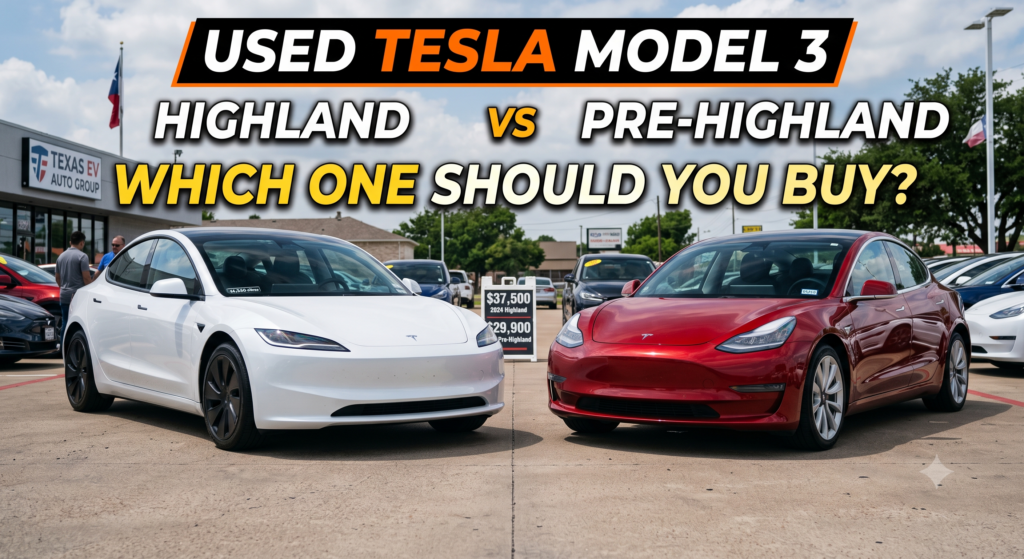
The Tesla Model 3 has been the cornerstone of the brand’s mass-market success since its debut, but in late 2023, Tesla quietly introduced the most significant overhaul the sedan had ever received. Codenamed Highland internally, this refresh transformed nearly every aspect of the vehicle from its nose to its taillights, creating a clear generational divide in the used Tesla Model 3 market. If you are shopping for a second-hand Model 3 in 2026, you will inevitably face a direct choice between a pre-Highland example from 2017 through mid-2023 or a Highland variant produced from late 2023 onward. Both generations share the same fundamental platform, battery architecture, and Supercharger access, yet the ownership experience differs far more dramatically than a typical mid-cycle facelift would suggest. Understanding these differences is essential because the price gap on the used market can range from a modest few thousand dollars to well over ten thousand depending on year, mileage, and specification.
This detailed comparison breaks down every meaningful distinction between the Highland and pre-Highland Model 3 to help you determine which generation aligns with your budget, driving habits, and long-term expectations.
Exterior Design: Subtle but Meaningful Changes
At first glance, both generations are unmistakably Model 3 vehicles, yet the Highland refresh introduced the most noticeable exterior redesign since the original 2017 launch. The front fascia was completely reimagined with a sleeker, lower nose that eliminated the traditional fog light cutouts and fake grille indentation found on pre-Highland cars. Instead, Tesla adopted a cleaner, more aerodynamic front end that reduces drag coefficient and improves high-speed efficiency. The headlights are slimmer and more aggressive, featuring redesigned LED signatures that give the Highland a distinctly modern face compared to the softer, friendlier appearance of earlier models.
Along the sides, the differences are less dramatic, though keen observers will notice revised mirror housings and slightly reshaped door sills that further smooth airflow. The rear of the vehicle remains largely identical in silhouette, but Highland models received updated taillight internals with a more sophisticated lighting pattern. For buyers who care about curb appeal and want their vehicle to look current rather than nearly a decade old, the Highland holds a clear advantage. However, if you prioritize value over aesthetics, the pre-Highland design has aged gracefully and remains instantly recognizable as a Tesla Model 3.
Interior Upgrades: Where the Highland Truly Shines
Step inside, and the generational gap becomes immediately apparent. While pre-Highland models featured the minimalist interior that defined Tesla’s early approach—essentially a steering wheel, a 15-inch central touchscreen, and little else—the Highland introduces meaningful material and technology upgrades that address long-standing owner complaints.
The most controversial change is the deletion of the traditional turn-signal stalk and the shift to capacitive buttons integrated into the steering wheel. On pre-Highland vehicles, physical stalks for signals, wipers, and gear selection remain intact, providing tactile feedback that many drivers prefer. The Highland instead relies on steering wheel buttons for signals and a touchscreen swipe for gear selection, a design choice that polarizes the community. Some owners adapt within days; others never fully embrace the change.
Beyond the stalk debate, Highland interiors feature upgraded materials with genuine aluminum trim, improved textile options, and a more premium overall feel. Ambient lighting now runs across the dashboard and doors, allowing customizable colors that give the cabin a modern atmosphere at night. Ventilated front seats—long requested by owners in hot climates—finally arrived with the Highland, working alongside the existing heated seats to provide genuine three-season comfort. Perhaps most significantly for families, a dedicated 8-inch rear touchscreen was added behind the center console, giving backseat passengers control over their own climate zone and access to entertainment apps during charging stops or road trips.
For buyers who frequently transport children or adult passengers in the rear, the Highland’s rear screen and improved rear legroom ergonomics alone may justify the price premium on the used market.
Driving Dynamics, Suspension, and NVH
One of the most underappreciated improvements in the Highland refresh is the complete retuning of the suspension and chassis components. Pre-Highland Model 3 vehicles, particularly early production examples, were often criticized for a firm ride that transmitted every road imperfection into the cabin. The suspension was sporty and engaging on smooth twisty roads but could become tiresome on broken urban pavement or long highway cruises.
The Highland addresses this directly with revised spring rates, updated damper tuning, and additional suspension bushings that isolate road noise more effectively. Combined with thicker acoustic glass for the front and side windows, the Highland delivers a noticeably quieter and more refined driving experience. Wind noise at highway speeds is reduced, tire roar is better suppressed, and the overall sense of isolation approaches that of luxury sedans costing significantly more when new.
That said, the pre-Highland chassis is by no means crude. Enthusiasts often praise the earlier cars for their more direct steering feel and slightly lighter curb weight, which translates to marginally sharper turn-in response. If you prioritize driving engagement and do not mind a firmer ride, a late-production pre-Highland from 2021–2023 with the heat pump and upgraded components may offer the best of both worlds at a lower price point.
Range, Efficiency, and Real-World Performance
Both generations utilize fundamentally similar battery pack architectures, but the Highland’s aerodynamic improvements and more efficient electric motors yield tangible gains in real-world range. A Highland Long Range typically delivers 10–15 miles more EPA-rated range than its pre-Highland equivalent, depending on wheel configuration and tire choice. While this difference may seem modest, it becomes meaningful during winter months when efficiency drops across all electric vehicles.
The Highland also charges slightly faster at peak DC fast-charging speeds thanks to improved thermal management of the battery pack. On road trips, this can shave precious minutes off charging stops when using Tesla Superchargers or compatible NACS stations. For daily commuting, however, both generations are more than adequate, and the range difference is unlikely to be a deciding factor unless your routine involves frequent 200-plus-mile drives without home charging access.
Performance variants of both generations deliver brutal acceleration, but the pre-Highland Performance remains the rawer, more visceral experience due to its slightly lighter weight and more aggressive torque delivery. The Highland Performance feels more polished and manageable, which may appeal to buyers using the car as a daily family vehicle rather than a weekend toy.
Hardware Generations: HW3 vs HW4 and Camera Systems
Perhaps the most technically significant difference between these two generations lies beneath the bodywork in the computing and sensor hardware. Pre-Highland vehicles are equipped with Hardware 3 (HW3), Tesla’s custom-designed Full Self-Driving computer that has powered Autopilot and FSD features since 2019. HW3 remains capable of running current FSD software and will likely receive updates for years to come, but it is fundamentally limited by the resolution and frame rate of the cameras connected to it.
The Highland introduced Hardware 4 (HW4) across all variants, featuring higher-resolution cameras, an upgraded forward-facing camera array with wider fields of view, and a more powerful processing unit. For buyers planning to subscribe to or purchase Full Self-Driving, HW4 represents a more future-proof investment. Tesla has indicated that certain advanced FSD capabilities planned for late 2026 and beyond may require HW4 hardware, meaning pre-Highland owners could eventually face a ceiling on autonomous features despite having paid for FSD.
Additionally, HW4 improves the clarity of Sentry Mode recordings and enhances the accuracy of Autopilot lane-keeping in challenging weather conditions. If you intend to keep your used Model 3 for five or more years and care about staying current with software capabilities, the Highland’s hardware advantage is difficult to ignore.
Used Market Pricing and Value Retention
As of mid-2026, the price delta between Highland and pre-Highland examples on the secondary market remains significant but has begun to narrow as more Highland vehicles enter the used pipeline. Early Highland Long Range models with low mileage typically command $5,000 to $8,000 more than comparable pre-Highland examples from 2022 or 2023. Base pre-Highland Standard Range Plus vehicles from 2019–2020 have depreciated into the high teens, making them exceptional entry points for first-time EV buyers.
However, value is not determined by purchase price alone. Pre-Highland vehicles from 2021 and later include the heat pump, revised center console, and powered trunk—upgrades that addressed many early complaints. These late pre-Highland cars often represent the sweet spot of the market, offering modern essentials at a substantial discount compared to Highland pricing.
Depreciation curves suggest that Highland models will retain value more aggressively over the next three years due to their newer hardware and contemporary styling. If resale value is a primary concern, the Highland is the safer financial bet despite its higher upfront cost.
Which One Should You Actually Buy?
The answer depends entirely on your priorities, budget, and intended ownership timeline.
Choose the Pre-Highland if:
- Your budget is under $28,000 and you need maximum value per dollar
- You strongly prefer physical turn-signal stalks and traditional gear selection
- You plan to own the car for 3–4 years and are not concerned about future FSD limitations
- You can find a well-maintained 2021–2023 example with the heat pump and low mileage
Choose the Highland if:
- Your budget allows for the $32,000–$40,000 used price range
- You prioritize cabin quietness, ride comfort, and modern interior technology
- You frequently carry rear passengers who would benefit from the rear touchscreen
- You want the most future-proof hardware for upcoming FSD and software updates
- You live in a hot climate where ventilated seats significantly improve comfort
Still debating Highland vs Pre-Highland? Compare real listings side by side at Tesla.tl. Filter by generation, battery health, and FSD status to see actual market prices in your region. Every listing includes detailed photos and verified specs so you can make an informed decision before contacting the seller. Start comparing now at https://tesla.tl/.
Final Verdict
Both the Highland and pre-Highland Tesla Model 3 are outstanding electric vehicles that deliver low operating costs, impressive performance, and access to the world’s most reliable fast-charging network. The pre-Highland remains one of the best values in the entire automotive market for buyers who want a genuine Tesla experience without stretching their budget. The Highland, meanwhile, justifies its premium through tangible improvements in comfort, technology, and hardware longevity that compound over years of ownership.
If you are a pragmatic buyer focused on transportation economics, a late pre-Highland from 2022 or 2023 will serve you brilliantly. If you are a technology-forward owner planning to keep the car for a decade and want every modern amenity available, the Highland is worth the stretch. Either way, the used Model 3 market in 2026 offers something for nearly every buyer—provided you know exactly what each generation delivers.
Find your ideal used Tesla Model 3 today. Whether you want the value-packed Pre-Highland or the tech-forward Highland, Tesla.tl has verified listings with transparent pricing and full history reports. Browse available inventory, compare trims, and connect with sellers directly at https://tesla.tl/.
