
Used Model 3 Long Range vs Standard Range Plus: Real-World Breakdown
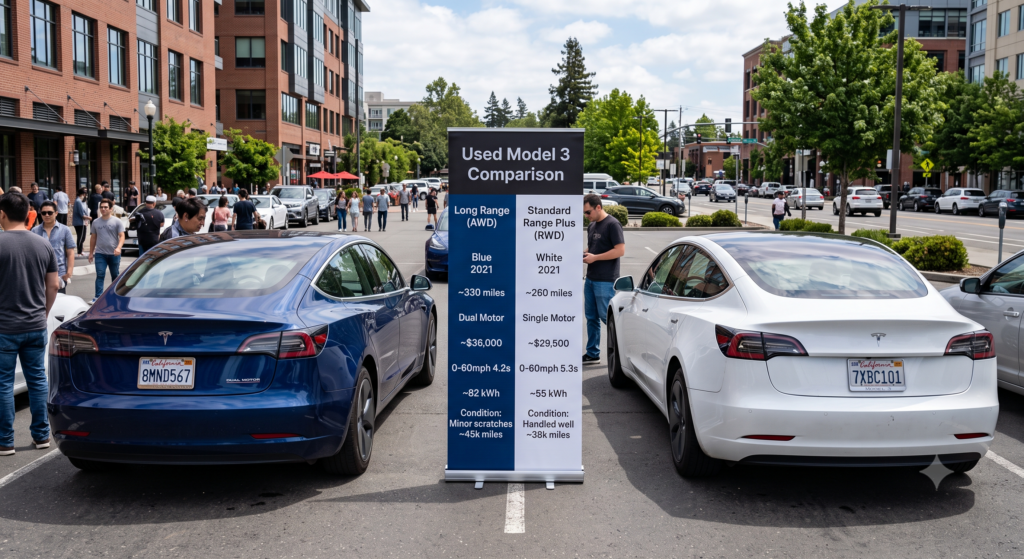
When shopping for a used Tesla Model 3, one of the first and most consequential decisions you will face is choosing between the Long Range and Standard Range Plus variants. On paper, the difference seems straightforward: the Long Range offers more miles per charge, quicker acceleration, and dual-motor all-wheel drive, while the Standard Range Plus provides a lower entry price and slightly lighter curb weight. But in the real world of 2026, where these vehicles have aged through multiple battery cycles, software updates, and varying climates, the gap between these two trims is far more nuanced than a simple spec-sheet comparison suggests. The used Model 3 market is flooded with both configurations, often separated by only a few thousand dollars, making the choice less obvious than it was when these cars were new.
This comprehensive real-world breakdown examines how the Long Range and Standard Range Plus actually perform in daily ownership after years of use. We will explore the tangible differences in battery degradation, winter efficiency, highway cruising comfort, tire wear patterns, insurance costs, and long-term reliability to help you determine which variant deserves your money in today’s secondary market.
Battery Architecture and Real-World Range in 2026
The most significant distinction between these two trims lies beneath the floorboards in their battery packs. The Model 3 Long Range launched with a 75 kWh nickel-cobalt-aluminum (NCA) battery pack, while the Standard Range Plus utilized a smaller 54 kWh pack of the same chemistry. When new, the EPA-rated difference was substantial: approximately 310 miles for the Long Range versus 240 miles for the Standard Range Plus. However, after six to eight years of real-world use, those numbers tell only part of the story.
In 2026, a well-maintained used Model 3 Long Range with 60,000 to 80,000 miles typically retains between 260 and 280 miles of real-world range at 100% charge, assuming temperate climate history and conservative charging habits. The Standard Range Plus, with its smaller pack, usually shows between 195 and 215 miles under identical conditions. While the absolute mileages differ, the percentage of retained capacity is remarkably similar across both variants—usually 85% to 90% of original capacity—because they share the same cell chemistry and thermal management architecture.
Where the real-world gap widens dramatically is in high-speed highway driving and cold weather. The Long Range’s larger buffer means that cruising at 75 mph for three hours still leaves you with meaningful reserve range upon arrival. The Standard Range Plus, by contrast, forces more frequent charging stops on road trips and can induce range anxiety during winter months when heating demands consume an additional 20% to 30% of available energy. For buyers in northern climates or those who regularly drive beyond their metropolitan area, the Long Range is not merely a luxury—it is a practical necessity that transforms the ownership experience from a constant calculation into effortless mobility.
Performance, Acceleration, and Driving Dynamics
Beyond range, the Long Range and Standard Range Plus deliver fundamentally different driving experiences thanks to their powertrain configurations. The Long Range employs a dual-motor setup with one electric motor powering the front wheels and another driving the rear, producing a combined output of approximately 346 horsepower and enabling a 0-to-60 mph sprint in roughly 4.4 seconds when new. The Standard Range Plus uses a single rear-mounted motor producing around 283 horsepower, achieving the same benchmark in about 5.3 seconds.
After years of ownership, these performance figures remain remarkably consistent because electric motors experience minimal wear compared to internal combustion engines. A used Model 3 Long Range still feels genuinely quick by any objective standard, with the instant torque delivery and all-wheel-drive traction making it a confident performer in rain, snow, and spirited cornering. The Standard Range Plus is by no means slow—it still out-accelerates most economy sedans—but the single-motor layout means that aggressive throttle application can more easily overwhelm the rear tires, particularly on wet or uneven surfaces.
The Long Range’s all-wheel-drive system also provides a significant safety and usability advantage in regions with harsh winters. Snow tires are still recommended for either variant, but the Long Range’s ability to distribute torque between axles reduces the likelihood of becoming stuck in moderate snow or icy inclines. For buyers who cannot garage their vehicle or who face unpredictable winter weather, this traction advantage alone often justifies the price premium on the used market.
Interior Features and Trim Differences
When these vehicles were new, Tesla differentiated the trims primarily through battery size and drivetrain rather than interior luxury. Both the Long Range and Standard Range Plus from the 2019–2020 model years share identical 15-inch touchscreens, vegan leather upholstery, glass roofs, and audio systems. However, there are subtle but meaningful differences that emerge in the used market.
Early Standard Range Plus models were occasionally delivered with the partial premium interior, which lacked features like heated rear seats, premium audio with immersive sound, and LED fog lamps. While Tesla later enabled some of these features through over-the-air updates, early builds may still lack the full premium experience unless the original owner paid for upgrades. The Long Range, by contrast, always shipped with the full premium interior as standard equipment, meaning used Long Range examples are more likely to include the upgraded audio system, heated steering wheel, and superior cabin materials.
In daily use, the premium audio difference is immediately noticeable. The Long Range’s 14-speaker system delivers rich, detailed sound that transforms highway cruising, while the Standard Range Plus’ base audio setup, while functional, lacks the depth and immersion that Tesla’s premium system provides. For audiophiles or commuters who spend hours in the car daily, this is not a trivial distinction.
Used Market Pricing and Value Retention in 2026
As of mid-2026, the price gap between used Long Range and Standard Range Plus Model 3 vehicles has narrowed considerably from when they were new. A 2019 Standard Range Plus with moderate mileage typically trades between $17,000 and $21,000, while a comparable Long Range from the same year commands $22,000 to $27,000. The $4,000 to $6,000 premium for the Long Range represents one of the best value propositions in the entire used EV market when you consider the additional range, performance, and all-weather capability it provides.
However, buyers must be cautious about how Full Self-Driving (FSD) and Enhanced Autopilot affect these prices. Some sellers of Standard Range Plus vehicles attempt to charge Long Range money because they paid for FSD years ago. While FSD can add value, it does not magically transform a rear-wheel-drive, shorter-range vehicle into a dual-motor tourer. Always compare vehicles based on their hardware and battery specifications first, then treat software features as a secondary consideration. A Long Range without FSD is still a fundamentally more capable car than a Standard Range Plus with FSD for buyers who prioritize range and performance over autonomous driving features.
Depreciation curves suggest that the Long Range will continue to hold value more aggressively over the next three to five years. As battery technology advances and new EVs offer 400-plus miles of range, the Standard Range Plus’ already modest 240-mile new rating will feel increasingly constrained, pushing its resale value downward faster than the more versatile Long Range.
Tire Wear, Maintenance, and Ownership Costs
One often-overlooked difference between these trims is the ongoing cost of consumables. The Long Range’s dual-motor layout and heavier curb weight place additional stress on tires, particularly the front pair, which must handle both steering and power delivery. Owners of used Model 3 Long Range vehicles frequently report needing tire replacements every 25,000 to 35,000 miles depending on driving style and alignment discipline. The Standard Range Plus, with its lighter weight and single-motor configuration, is somewhat gentler on rubber, often stretching tire life to 35,000–45,000 miles with conservative driving.
Brake wear is minimal on both variants thanks to regenerative braking, though the Long Range’s higher performance potential can lead to more frequent brake pad replacements if the previous owner frequently drove aggressively. Insurance costs also tend to favor the Standard Range Plus slightly, as its lower replacement value and less powerful drivetrain present marginally lower risk profiles to underwriters. The difference is typically only $20–$40 per month, but it accumulates over years of ownership.
Both variants share the same maintenance schedule: cabin air filter replacement every two years, brake fluid testing every four years, and air conditioning desiccant bag service every six years. Neither requires oil changes, spark plug replacements, or transmission services, meaning the overall maintenance burden remains dramatically lower than any comparable gasoline-powered sedan regardless of which trim you choose.
Don’t risk buying a used Model 3 without knowing the real differences between trims. At Tesla.tl, every listing clearly identifies Long Range vs Standard Range Plus, includes verified battery health reports, and shows actual range estimates based on climate history. Compare both variants side by side and buy with confidence at https://tesla.tl/.
When the Standard Range Plus Is the Right Choice
Despite the Long Range’s obvious advantages, the Standard Range Plus remains the correct choice for a specific subset of buyers. If your daily driving consists almost entirely of urban commuting under 50 miles round trip, you have reliable home or workplace charging, and you live in a temperate climate without harsh winters, the Standard Range Plus delivers everything you need at the lowest possible entry price into Tesla ownership. The lighter weight and rear-wheel-drive layout also provide a slightly more playful, engaging driving character on dry winding roads, appealing to enthusiasts who value handling purity over outright acceleration.
For rideshare drivers operating exclusively within a single metropolitan area, the Standard Range Plus’ lower purchase price and reduced tire costs can improve profit margins. The range is entirely adequate for a full day of city driving with a midday top-up charge, and passengers rarely notice or care about the absence of all-wheel drive.
When the Long Range Is Essential
The Long Range becomes essential rather than optional for buyers who fit several specific profiles. If you frequently undertake road trips exceeding 200 miles, live in regions with cold winters or mountainous terrain, cannot install home charging and rely on public infrastructure, or simply refuse to compromise on performance and all-weather security, the Long Range is worth every additional dollar. The peace of mind that comes from knowing you have 100 miles of reserve range beyond your immediate needs is difficult to quantify but profoundly affects daily satisfaction.
Families who use the Model 3 as their primary vehicle also benefit disproportionately from the Long Range. School runs, grocery trips, weekend activities, and unexpected detours accumulate quickly. The larger battery eliminates the need to plug in every single night or to carefully plan around the car’s limitations.
Shared Weaknesses: What Both Trims Face
Regardless of which variant you choose, both the Long Range and Standard Range Plus from the 2019–2021 model years share common age-related vulnerabilities that buyers must inspect for. The 15-inch touchscreen can develop yellow border discoloration or delamination. The door seals degrade and produce wind noise. The rear suspension bushings wear, causing clunks over bumps. The 12-volt auxiliary battery requires replacement every three to five years. And both variants are susceptible to front upper control arm wear if driven on rough roads.
Neither trim is immune to these issues, so your pre-purchase inspection checklist should remain equally thorough regardless of which badge is on the trunk. The key difference is that the Long Range’s higher initial purchase price often means previous owners had more financial resources to address maintenance proactively, resulting in cleaner service histories on average.
Final Verdict
Choosing between a used Model 3 Long Range and a Standard Range Plus in 2026 ultimately comes down to your driving patterns, climate, and budget flexibility. The Standard Range Plus is a brilliant urban commuter and the most affordable gateway into Tesla’s ecosystem, but it demands more careful planning and imposes real limitations on spontaneity. The Long Range is the more complete, versatile vehicle that eliminates range anxiety, delivers superior performance, and provides all-weather security that the rear-wheel-drive Standard Range Plus simply cannot match.
For most buyers in 2026, the modest price premium for a used Long Range represents better long-term value. It depreciates more slowly, serves a wider variety of use cases, and retains the hardware capabilities to remain relevant as charging infrastructure evolves. However, if your needs are genuinely modest and your budget is fixed, a well-maintained Standard Range Plus will still deliver years of low-cost, emissions-free transportation without disappointment.
Ready to choose between the Long Range and Standard Range Plus? Browse side-by-side listings with real battery health data, range estimates, and trim verification at Tesla.tl. Filter by drive type, range, and price to find the perfect used Model 3 for your lifestyle. Visit https://tesla.tl/ and start driving electric today.
