
Buying a Used 2019 Tesla Model 3: Common Issues & Red Flags
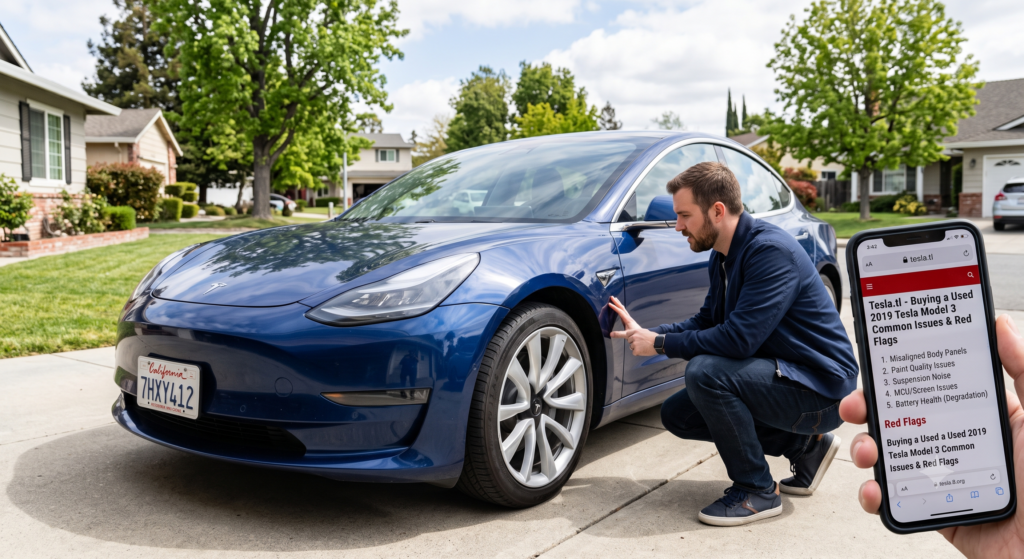
The 2019 Tesla Model 3 occupies a fascinating position in the used electric vehicle market of 2026. It represents the first full model year after Tesla’s infamous “production hell,” meaning build quality had measurably improved over the earliest 2018 examples, yet it still predates the major hardware revisions—like the heat pump and redesigned center console—that arrived in 2021. For budget-conscious buyers, the 2019 Model 3 often looks like the perfect compromise: more mature manufacturing than a 2018, significantly lower pricing than a 2021, and access to the same Supercharger network and over-the-air updates that make Tesla ownership appealing. But beneath this attractive surface lies a specific set of age-related weaknesses, factory defects, and potential scams that every prospective buyer must understand before transferring any money.
This guide provides an exhaustive breakdown of the most common issues affecting the 2019 Tesla Model 3 and the red flags that should send you walking away from a deal, no matter how tempting the price appears.
The 2019 Model Year: A Step Forward, But Not Perfect
By 2019, Tesla had largely resolved the panel-gap inconsistencies and paint-shop disasters that plagued the very first Model 3 builds. The assembly process at Fremont had stabilized, and the 2019 cars generally exhibit tighter tolerances, more consistent paint thickness, and fewer immediate delivery-day defects than their 2018 predecessors. However, 2019 was also a transitional year in which Tesla was simultaneously ramping production for Europe, introducing new trim levels, and quietly changing suppliers for various components without always documenting those shifts for future owners.
The result is a vehicle that is broadly more reliable than a 2018 but still susceptible to a well-documented roster of problems. Many of these issues are not immediately visible during a casual test drive. They emerge after weeks or months of ownership, often requiring visits to a Tesla Service Center or a specialized independent shop. Knowing what to look for during your pre-purchase inspection can save you thousands of dollars in deferred maintenance and prevent the heartbreak of discovering that your “great deal” was actually someone else’s headache disposal.
Common Issue 1: Rear Suspension and Upper Shock Mounts
Perhaps the most pervasive mechanical weakness across the 2019 Model 3 fleet involves the rear suspension, specifically the upper shock mounts and the associated rubber bushings. Over time—and particularly in regions with poor road surfaces—these mounts can degrade, producing a distinct clunking or knocking sound when driving over bumps, potholes, or expansion joints. The noise is often more pronounced in cold weather when rubber components stiffen.
While the sound itself is annoying, the underlying concern is that degraded shock mounts can eventually affect wheel alignment and tire wear. If left unaddressed, the constant pounding can also stress the rear subframe attachment points. A full rear suspension refresh, including shocks, mounts, and bushings, typically costs between $800 and $1,400 depending on whether you use Tesla OEM parts or high-quality aftermarket alternatives. During your inspection, push down firmly on each rear corner of the car and listen for squeaks or metallic clunks. A well-maintained 2019 should rebound silently.
Common Issue 2: Steering Rack, Tie Rods, and Alignment Drift
The 2019 Model 3 is known for premature wear in the steering system, particularly the inner and outer tie rod ends and the steering rack bushings. Owners frequently report a vague or “loose” feeling in the steering wheel, especially at highway speeds, along with a tendency for the car to wander within the lane unless constantly corrected. In more severe cases, a knocking sound can be felt through the steering wheel when turning at low speeds.
This issue is exacerbated by the Model 3’s curb weight and instant torque delivery, which place significant stress on steering components during aggressive acceleration from standstill. If the previous owner frequently launched the car or drove enthusiastically on winding roads, the steering system may be worn far beyond what the odometer suggests. Check for uneven tire wear patterns—particularly feathering on the inner edges of the front tires—and test for play in the steering by gently rocking the wheel back and forth while parked. Any delay between input and wheel response indicates rack wear.
Common Issue 3: Touchscreen Yellow Border and Delamination
While less prevalent than in the 2018 model year, the 2019 Model 3 still suffers from the infamous yellow border issue around the edges of the 15-inch center touchscreen. This discoloration is caused by heat degradation of the adhesive layers bonding the display, and it is particularly common in cars that spent years parked in direct sunlight or in hot southern climates. In addition to yellowing, some screens develop delamination bubbles or touch sensitivity dead zones.
Tesla officially addressed this problem with a free repair program for certain VIN ranges, but many 2019 vehicles either fell outside the eligibility window or had owners who never bothered to schedule the fix. A replacement MCU (Media Control Unit) or screen assembly can cost $1,200 to $1,800 if paid out of pocket. During your inspection, display a pure white background on the screen and examine the perimeter carefully. Also test every touch function, including map pinch-to-zoom and climate slider adjustments, to ensure full responsiveness.
Common Issue 4: Door Seal Degradation and Wind Noise
Tesla’s early door seal designs were not particularly robust, and the 2019 Model 3 frequently develops wind noise at highway speeds as the rubber seals compress and harden over time. The issue is most noticeable around the front door frames and the base of the A-pillars. In extreme cases, degraded seals can allow water intrusion during heavy rain or automated car washes, potentially damaging the carpet, footwell wiring, or the low-voltage battery compartment.
Replacing all four door seals is a relatively affordable fix—usually $300 to $600 in parts and labor—but diagnosing the exact source of the noise can be frustratingly difficult. During your test drive, accelerate to 70 mph on a smooth stretch of highway and listen for whistling or rushing air. Even minor wind noise at that speed suggests the seals are past their prime. Additionally, check the door cards and carpet edges for any musty odors or staining that might indicate past water leaks.
Common Issue 5: Charge Port Door and Pin Corrosion
The motorized charge port door on the 2019 Model 3 is prone to failure after years of exposure to the elements. The small plastic hinge can crack in freezing temperatures, and the release actuator may stop responding to the charging cable button or the in-app command. More seriously, the electrical pins inside the charge port can develop corrosion—particularly in coastal regions or areas with heavy road salt use—which leads to slow charging speeds, error messages, or complete refusal to charge.
A charge port replacement is not prohibitively expensive, typically running $400 to $700 including labor, but it is an inconvenience that can leave you stranded if the car refuses to accept a charge away from home. Inspect the charge port physically: the pins should be bright copper-colored, not green or blackened. Test the port door by pressing the button on a Tesla charging cable and verify that it opens smoothly every time. If the seller has been exclusively using one charging method (e.g., only home charging), ask whether they have recently tested public Supercharger functionality.
Common Issue 6: 12-Volt Battery Failures
Like all Teslas, the 2019 Model 3 relies on a traditional 12-volt lead-acid battery to power the vehicle’s computers, door locks, lights, and safety systems. This battery is separate from the main high-voltage drive battery and has a finite lifespan, typically three to five years depending on climate and usage. When the 12-volt battery begins to fail, owners experience a cascade of seemingly random errors: warnings about power steering, inability to shift into gear, failure of the touchscreen to boot, or complete inability to unlock the doors.
Because the 2019 model year is now well beyond that typical lifespan, you should assume the 12-volt battery is due for replacement unless the seller provides documentation proving otherwise. A replacement costs roughly $150 to $300 depending on whether you choose an OEM Tesla-branded battery or an aftermarket AGM equivalent. During your inspection, check the vehicle’s software for any low-voltage warnings and ask when the 12-volt battery was last replaced. If the seller hesitates or cannot answer, factor a replacement into your offer immediately.
Common Issue 7: Autopilot Hardware Confusion (HW2.5 vs HW3)
The 2019 Model 3 was produced during Tesla’s transition from Hardware 2.5 (HW2.5) to Hardware 3 (HW3). Early 2019 cars shipped with HW2.5, while later builds received HW3. The difference is not merely academic: HW2.5 vehicles cannot run modern Full Self-Driving (FSD) software and lack the processing power for Tesla’s latest visualizations and safety features. If you are considering paying a premium for a car advertised with FSD, you must verify that the hardware supports it.
Compounding the confusion, Tesla offered a complimentary HW3 retrofit to owners who purchased FSD, but many 2019 cars never received this upgrade because the original owner never bought the software package. A 2019 Model 3 with HW2.5 and no FSD is permanently capped in its autonomous capabilities. Verify the hardware version through the vehicle’s software menu under “Additional Vehicle Information” before negotiating. If the car has HW2.5, adjust your offer downward accordingly.
Major Red Flags: When to Walk Away
Beyond the predictable wear items, certain warning signs on a 2019 Model 3 indicate serious trouble that no discount can justify.
Salvage or Rebuilt Title Without Full Disclosure If the vehicle history report shows salvage, rebuilt, flood, or lemon law branding, demand exhaustive documentation of every repair. Many rebuilt Teslas have their Supercharging privileges permanently revoked by Tesla, meaning you lose access to the network that constitutes much of the brand’s value. Never take a seller’s word that “it drives fine”—have a Tesla-certified body shop inspect the frame and high-voltage system.
FSD Advertised but Not Transferable Sellers frequently list their cars at inflated prices because they “paid for FSD.” However, FSD does not always transfer to the new owner, particularly if the sale occurs outside Tesla’s official channels or if the software was tied to a subscription rather than a permanent license. Verify FSD status directly through the touchscreen and confirm with Tesla that it will remain active after ownership transfer.
Supercharger Ban or Outstanding Idle Fees Tesla can ban vehicles from the Supercharger network for various reasons, including association with salvage history or unpaid idle fees. Before buying, ask the seller to demonstrate a successful Supercharger session or check the vehicle’s account status through Tesla. A banned car is worth significantly less.
Refusal to Show Service History A complete service history is non-negotiable for any used Tesla. If the seller claims they “lost the records” or refuses to share the Tesla account service tab, assume they are hiding something. Walk away immediately.
Battery Degradation Beyond 15% If the car has lost more than 15% of its original range, the battery pack is aging abnormally. This could indicate previous damage, excessive fast-charging, or a defective module. Unless the price reflects a near-future battery replacement, this is a dealbreaker.
Don’t risk buying a 2019 Model 3 with hidden problems. At Tesla.tl, every listing includes verified service history, battery health reports, and Supercharger status checks. Browse inspected 2019 Model 3 inventory and buy with confidence at https://tesla.tl/.
Pre-Purchase Inspection Checklist for 2019 Model 3
Before finalizing any purchase, systematically verify the following:
- [ ] Battery retains 85% or more of original capacity
- [ ] No yellow border or delamination on the center touchscreen
- [ ] Rear suspension is silent over bumps and potholes
- [ ] Steering is precise with no wandering or knocking
- [ ] Charge port pins are clean and corrosion-free
- [ ] 12-volt battery has been replaced within the last two years
- [ ] Autopilot hardware version matches the seller’s claims
- [ ] Vehicle history report is clean with no salvage or flood branding
- [ ] FSD status is verified and transferable
- [ ] Supercharger access is active and unrestricted
- [ ] Door seals are intact with no wind noise or water stains
- [ ] Tires have even wear and at least 5/32″ tread depth remaining
Final Verdict
The 2019 Tesla Model 3 can be an excellent used EV purchase in 2026, but it demands more diligence than newer alternatives. It is old enough that wear items like suspension bushings, steering components, and the 12-volt battery are likely due for attention, yet new enough that a well-maintained example still delivers modern range, performance, and charging convenience. The key is distinguishing a car that has been proactively maintained from one that has been driven hard and cheaply patched together for a quick sale.
If you find a clean-title 2019 Long Range with documented service history, healthy battery metrics, and HW3 hardware, it remains a compelling value proposition that undercuts newer models by thousands while delivering 90% of the daily driving experience. Just never let a low price blind you to the red flags that separate a smart purchase from an expensive mistake.
Find a verified, inspected 2019 Tesla Model 3 without the guesswork. Search curated listings with transparent battery health, service records, and hardware verification at Tesla.tl. Your next electric sedan is waiting—start browsing today at https://tesla.tl/.
