
Used Tesla Model 3 Performance: Is the Speed Worth the Premium?
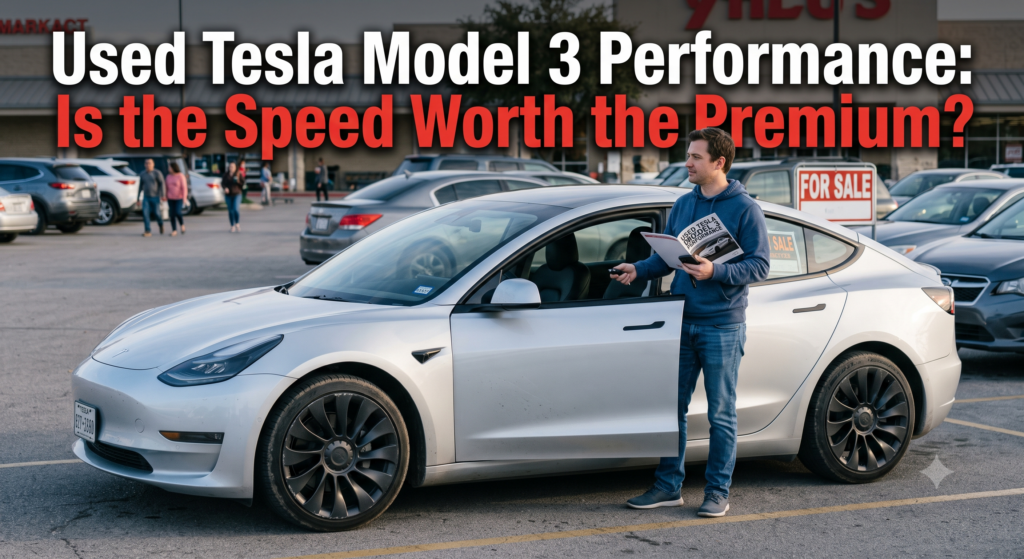
The Tesla Model 3 Performance has always occupied a unique and somewhat contradictory position in the automotive world. It is a compact sedan that can embarrass dedicated sports cars costing twice as much at a stoplight, yet it still functions as a practical daily driver with seating for five, a spacious trunk, and access to the world’s most reliable fast-charging network. In the used market of 2026, the Performance variant presents an especially compelling proposition for enthusiasts who crave acceleration without sacrificing utility or emptying their bank accounts on a brand-new supercar. But the critical question every prospective buyer must answer is whether the Performance premium—typically $4,000 to $8,000 above a comparable Long Range on the secondary market—truly justifies itself in real-world ownership, or whether the extra money simply buys bragging rights that fade after the first week of ownership.
This deep dive examines what the used Model 3 Performance actually delivers after years of daily use, how its track-ready hardware ages compared to the standard Long Range, whether the running costs and insurance premiums erode the initial excitement, and whether the average driver can even exploit the capabilities that make this variant special. By the end, you will know definitively whether the Performance badge belongs in your garage or whether your money is better spent elsewhere in the Model 3 lineup.
What Separates the Performance from the Long Range?
At a glance, the Model 3 Performance and Long Range appear nearly identical. They share the same dual-motor all-wheel-drive architecture, the same 75 kWh battery pack, and the same fundamental interior layout. But beneath the surface, Tesla made meaningful hardware changes that transform the driving character entirely. The Performance variant receives a more powerful rear motor, larger Brembo performance brakes, a lowered sport suspension, a carbon-fiber rear spoiler for aerodynamic stability at high speeds, and 20-inch Überturbine wheels wrapped in staggered performance tires. The result is a 0-to-60 mph time of roughly 3.2 seconds when new—nearly a full second quicker than the already rapid Long Range.
In the used market of 2026, these hardware differences remain fully intact because they are mechanical rather than software-dependent. A 2019 Performance with 60,000 miles still launches with the same violent immediacy it had when it left Fremont, assuming the battery and motors are healthy. The brakes still provide fade-resistant stopping power during aggressive mountain driving, and the lowered suspension still reduces body roll through corners compared to the softer Long Range setup. For buyers who genuinely value driving dynamics, these are not trivial upgrades—they fundamentally alter how the car interacts with the road.
However, the Performance also inherits all the same age-related vulnerabilities as any other Model 3 from its model year. The 15-inch touchscreen can develop yellow border discoloration, the door seals degrade, the rear suspension bushings wear, and the 12-volt battery requires periodic replacement. The performance hardware does not exempt the car from these common issues; if anything, the more aggressive driving style typical of Performance owners can accelerate wear on suspension components, tires, and brake pads despite the upgraded hardware.
Real-World Acceleration: Still Shocking After All These Years
There is no denying that the Model 3 Performance delivers one of the most visceral acceleration experiences available at any price point. The instant torque delivery of dual electric motors, combined with all-wheel-drive traction, produces a launch sensation that pins occupants into their seats and triggers involuntary laughter on the first few experiences. Even in 2026, after eight years of increasingly quick electric vehicles entering the market, a 3.2-second sprint to 60 mph remains genuinely shocking in a four-door family sedan.
But here is the reality that many buyers discover after the honeymoon period ends: opportunities to legally use this acceleration are extraordinarily rare in normal driving. Highway on-ramps become brief moments of exhilaration, but city streets, traffic congestion, and speed limits mean that the Performance spends 95% of its life accelerating no harder than a base Standard Range Plus. The capability is always there, lurking beneath your right foot, yet the contexts in which you can deploy it without risking your license or endangering others are vanishingly small.
For enthusiasts who track their cars or live near deserted canyon roads, the Performance justifies itself every single weekend. For commuters who simply want a comfortable electric sedan for urban and suburban driving, the extra acceleration is a party trick that loses its novelty within the first month. This is not a criticism of the car—it is a reflection of how modern traffic infrastructure simply cannot accommodate sub-four-second acceleration in any meaningful way.
Track Use, Overheating, and Durability Concerns
One of the most important distinctions between the Performance and Long Range is how they handle sustained high-speed driving on racetracks or during repeated aggressive launches. The Performance variant includes enhanced cooling for the battery and motors, larger brake rotors with performance pads, and Track Mode software that allows drivers to adjust torque vectoring, traction control, and regenerative braking settings for closed-course driving.
In practice, however, even the Performance is not a true track car. The battery thermal management system, while improved, still cannot sustain full power indefinitely during lapping sessions. After three to four hard laps on a warm day, power output begins to taper to protect the battery from overheating—a phenomenon known as thermal throttling. The brakes, while larger than the Long Range units, are still not full racing hardware and will fade under extreme track use without aftermarket fluid and pad upgrades.
For used buyers, this means you must investigate how the previous owner treated the car. A Performance that spent weekends at autocross events or drag strips may have experienced repeated thermal cycles that stressed the battery cooling system, warped the brake rotors, or flattened the contact patches of the performance tires. Ask specifically about track use, and inspect the tires for excessive shoulder wear that indicates hard cornering. If the seller is evasive about how they drove the car, assume the worst and adjust your offer accordingly.
Ride Quality, Tire Costs, and Daily Comfort
The Performance variant’s lowered sport suspension and 20-inch wheels with low-profile performance tires create a noticeably firmer ride than the Long Range. On smooth asphalt, this translates to razor-sharp handling and minimal body roll. On broken urban pavement, expansion joints, or frost-heaved roads, the ride becomes harsh and unforgiving. Every pothole transmits a sharp thump into the cabin, and the thin tire sidewalls offer little cushioning against impacts.
This firmness is not merely a comfort issue—it has financial implications. The 20-inch performance tires are staggered in width, meaning the rear tires are wider than the fronts, and they wear faster than the all-season tires found on Long Range models. A full set of replacement performance tires costs $1,200 to $1,800 depending on brand, and aggressive driving can consume a set in as little as 15,000 to 20,000 miles. The larger wheels are also more susceptible to curb rash and pothole damage, with replacement Überturbine wheels costing $400 to $600 each if bent or cracked.
For buyers who prioritize a plush, isolated daily driving experience, the Performance may prove exhausting over time. The Long Range offers 90% of the real-world acceleration with significantly better ride comfort, lower tire costs, and greater resistance to road imperfections. Unless you genuinely value the handling precision, the Performance compromises daily livability in ways that the spec sheet does not reveal.
Insurance, Depreciation, and Total Cost of Ownership
Insurance companies classify the Model 3 Performance as a high-performance vehicle, and premiums reflect that designation. In 2026, annual insurance costs for a Performance typically run $300 to $800 higher than an equivalent Long Range, depending on the driver’s age, location, and record. Younger drivers or those in urban areas may face even steeper surcharges because the Performance’s acceleration capability statistically increases the likelihood of at-fault accidents.
Depreciation curves also favor the Long Range slightly. Because the Performance appeals to a narrower buyer pool—enthusiasts rather than mainstream EV adopters—it can take longer to sell on the private market, forcing sellers to accept lower prices than they initially expected. The Long Range, by contrast, is the default choice for most buyers, ensuring stronger demand and faster sales when it is time to upgrade.
When you combine higher insurance, more frequent tire replacements, potentially greater brake wear, and slightly weaker resale value, the Performance can cost $2,000 to $4,000 more than the Long Range over a typical three-year ownership period. For buyers on tight budgets, this ongoing premium is a serious consideration that extends far beyond the initial purchase price.
Don’t risk buying a used Model 3 Performance with hidden track damage or degraded battery cooling. At Tesla.tl, every Performance listing includes verified service history, battery thermal health reports, and tire condition assessments so you know exactly how the previous owner treated the car. Browse inspected Performance inventory and buy with confidence at https://tesla.tl/.
When the Performance Is Absolutely Worth It
Despite the compromises, there are specific buyer profiles for whom the Model 3 Performance is not merely justified but essential. If you regularly attend track days, autocross events, or spirited driving meetups, no other Model 3 variant delivers the same level of engagement. The Track Mode software alone transforms the car’s personality, allowing you to drift through corners, adjust power distribution, and log telemetry data that no Long Range can provide.
Similarly, if you live in a region with spectacular mountain roads, coastal highways, or desert canyons where speed limits are generous and traffic is light, the Performance turns every Sunday morning drive into an event. The immediacy of the acceleration, the confidence of the upgraded brakes, and the precision of the sport suspension create a driving experience that genuinely rivals dedicated sports sedans costing far more.
For tech enthusiasts who simply want the fastest, most capable Model 3 regardless of whether they exploit its limits, the Performance also satisfies the psychological desire to own the top-tier variant. There is undeniable satisfaction in knowing your daily driver can out-accelerate a Porsche 911 from a stoplight, even if you rarely choose to demonstrate that fact.
When the Long Range Is the Smarter Choice
For the vast majority of used Model 3 shoppers in 2026, the Long Range represents the more rational and satisfying purchase. It delivers 4.4-second 0-to-60 acceleration that is still faster than 95% of vehicles on the road, combined with a softer ride, cheaper tires, lower insurance, and stronger resale demand. The dual-motor all-wheel-drive system provides identical winter traction and wet-weather security. The battery pack is the same size, meaning no range penalty for choosing the less aggressive variant.
If your driving consists primarily of commuting, school runs, grocery trips, and occasional highway cruising, the Performance’s extra capability is entirely theoretical. You will never miss the additional 1.2 seconds of acceleration, but you will notice the harsher ride every single time you cross a railroad track or hit a pothole. The money saved on purchase price, insurance, and tires can fund years of Supercharging or a significant home charging upgrade.
Inspecting a Used Performance: What to Check
If you decide the Performance is the right choice, your pre-purchase inspection must go beyond the standard Model 3 checklist. Specifically verify:
- Tire condition and brand: Avoid cars with cheap all-season tires replacing the original performance rubber, as this indicates cost-cutting by the previous owner.
- Brake rotor condition: Look for scoring, warping, or uneven wear that suggests repeated hard braking or track use without proper cooling periods.
- Wheel integrity: Inspect all four 20-inch wheels for bends, cracks, or curb rash that could cause vibrations or air leaks.
- Track Mode data: If accessible, check whether Track Mode has been frequently activated, which may indicate hard use.
- Battery thermal health: Request data on how often the battery has entered thermal limiting modes, which stresses long-term capacity.
- Alignment and suspension: The sport suspension is more sensitive to pothole damage; verify that the car tracks straight and handles bumps without unusual noises.
Final Verdict
The used Tesla Model 3 Performance in 2026 is a thrilling, capable, and surprisingly practical machine that delivers supercar acceleration in a sensible sedan wrapper. For enthusiasts who will genuinely exploit its track capabilities, canyon-carving potential, or simply savor the raw acceleration during every on-ramp merge, the premium over a Long Range is money well spent. The upgraded hardware is real, the driving character is distinct, and the emotional satisfaction is undeniable.
However, for mainstream buyers seeking an efficient, comfortable, and affordable electric daily driver, the Performance is largely wasted potential wrapped in a harsher, more expensive package. The Long Range offers nearly identical utility, superior comfort, lower running costs, and stronger resale prospects. Unless you know with certainty that you crave the Performance’s specific talents, your wallet and your spine will thank you for choosing the more civilized variant.
Ready to decide between the Performance and Long Range? Compare side-by-side listings with real acceleration data, tire condition reports, and verified service histories at Tesla.tl. Filter by trim, price, and driving history to find the used Model 3 that matches your actual needs, not just your fantasies. Visit https://tesla.tl/ and start driving today.
