
2020 Tesla Model 3 Buying Guide: What Changed & What to Inspect
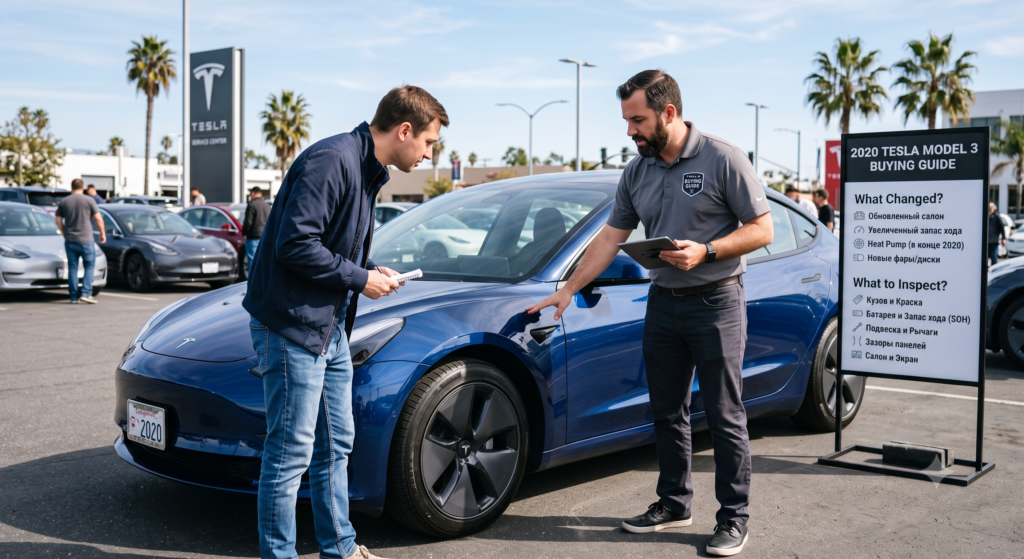
The 2020 Tesla Model 3 represents a pivotal inflection point in the sedan’s production history, sitting squarely between the chaotic early years of “production hell” and the comprehensive hardware refresh that arrived in late 2020 and early 2021. For buyers navigating the used Tesla market in 2026, the 2020 model year offers a compelling sweet spot that is often overlooked in favor of newer Highland examples or cheaper 2018–2019 bargains. By 2020, Tesla had largely resolved the panel-gap inconsistencies, paint-shop defects, and supplier chaos that plagued the earliest Fremont builds, yet these cars had not yet received the price premiums associated with the heat pump, revised interior, and chrome-delete exterior that defined the subsequent refresh. This unique positioning makes the 2020 Model 3 one of the most rational purchases in the entire secondary market—provided you know exactly what changed during this model year and which specific components require scrutiny after six years of real-world use.
This detailed buying guide examines the incremental but meaningful evolution of the 2020 Tesla Model 3, breaks down the exact inspection protocol you should follow before purchasing one in 2026, and explains why this particular vintage often delivers the best balance of mature manufacturing, modern hardware, and depreciated pricing.
The 2020 Model Year: Maturity Without the Refresh Premium
By the time the 2020 model year began production, Tesla had accumulated nearly three full years of Model 3 manufacturing experience. The frantic ramp-up of 2018, during which Tesla famously erected tent structures to supplement its factory lines, had given way to a more disciplined assembly process. The result was a measurable improvement in build consistency across every trim level. Door alignment became more uniform, paint application achieved industry-standard thickness consistency, and interior trim pieces exhibited fewer of the squeaks and rattles that characterized early builds.
Crucially, every 2020 Model 3 shipped standard with Hardware 3 (HW3), Tesla’s custom-designed Full Self-Driving computer. Unlike the 2018 and early 2019 vehicles that launched with Hardware 2.5 and required later retrofit, the 2020 model year guaranteed buyers the processing power necessary for modern Autopilot and Full Self-Driving features. In 2026, this hardware distinction is not merely technical—it directly affects software compatibility, resale value, and the vehicle’s ability to receive future functionality updates.
The 2020 model year also saw Tesla refine its thermal management software and introduce incremental efficiency improvements to the electric motors. While the dramatic heat pump hardware upgrade did not arrive until the 2021 refresh, 2020 vehicles benefited from optimized battery heating strategies that improved cold-weather range modestly compared to 2019 examples. Track Mode V2 debuted for the Performance variant, offering more granular control over torque vectoring, traction control, and regenerative braking settings for enthusiasts who planned to use their sedans on closed courses.
However, the 2020 model year was not defined by any single revolutionary change. Instead, it represented the maturation of the original Model 3 formula—a vehicle that looked nearly identical to a 2018 example but was built with tighter tolerances, better materials, and significantly fewer factory defects. For used buyers in 2026, this maturity translates into lower immediate maintenance costs and a higher probability of finding a well-assembled car that has aged gracefully.
Exterior and Interior: Subtle Refinements
To the untrained eye, a 2020 Model 3 is virtually indistinguishable from a 2019 or early 2021 pre-Highland example. The exterior retained the chrome window trim, the traditional front fascia with fog light cutouts, and the same overall proportions that defined the first generation. However, closer inspection reveals several refinements that Tesla implemented quietly during the 2020 production run.
The door seals and window glass alignment received attention, with later 2020 builds exhibiting better suppression of wind noise at highway speeds—a persistent weakness of earlier model years. The trunk seal design was slightly revised to reduce water intrusion during heavy rain, though this improvement was not universal across all 2020 production dates. Inside, the textile upholstery saw a minor upgrade in durability, and the adhesive compounds used to bond interior panels were reformulated to reduce the likelihood of separation after years of thermal cycling.
One important caveat for buyers: late 2020 production vehicles—particularly those manufactured after September 2020—occasionally shipped with early components of the forthcoming 2021 refresh. Some buyers received cars with the revised center console featuring a sliding cover rather than the open-piano-black design, or with double-pane front door glass for improved acoustic isolation. These transitional examples are highly desirable on the used market but can create confusion during price negotiations. Always verify the exact manufacturing date and option codes rather than assuming a late-2020 VIN carries standard 2020 equipment.
Battery Health and Range Expectations in 2026
The 2020 Model 3 was available with the same battery configurations as the 2019 model year: a Standard Range Plus with a 54 kWh usable pack, a Long Range with a 75 kWh pack, and the Performance variant sharing the Long Range battery but with higher power output. All 2020 batteries utilized nickel-cobalt-aluminum (NCA) chemistry, as the lithium-iron-phosphate (LFP) transition for standard-range vehicles did not begin until later.
After six years of typical ownership, a 2020 Long Range Model 3 with 40,000 to 70,000 miles should retain between 265 and 285 miles of real-world range at 100% charge, down from the original EPA rating of 322 miles. The Standard Range Plus typically shows between 200 and 220 miles, depending on climate history and charging habits. These figures assume the previous owner avoided habitual 100% charging, minimized DC fast-charging dependence, and did not leave the vehicle parked at extremely low states of charge for extended periods.
The 2020 model year introduced slightly more aggressive battery preconditioning logic for Supercharging sessions, which reduced charging times and minimized thermal stress on the cells. As a result, well-maintained 2020 batteries sometimes exhibit marginally better health than comparable 2019 examples with identical mileage. During your inspection, request a third-party battery health report or use the Tesla app’s energy consumption data to verify that the pack has retained at least 87% of its original capacity. Anything below 85% suggests either harsh prior use or a developing cell imbalance that may require attention.
Critical Inspection Points for a Used 2020 Model 3
While the 2020 model year is generally more robust than its predecessors, six years of exposure to road salt, UV radiation, and thermal cycling means that every component deserves careful evaluation. Do not allow the improved reputation of this vintage to lull you into a cursory inspection.
1. Rear Suspension Bushings and Upper Mounts
The rear suspension design remained largely unchanged from 2019, and the upper shock mounts continued to be a weak point. By 2026, most 2020 Model 3 vehicles will require or have already received replacement rear bushings if driven on rough roads. Listen for clunking noises when driving over speed bumps or expansion joints. A silent rear suspension indicates either recent maintenance or gentle prior use—both are positive indicators worth a price premium.
2. Steering Rack Precision and Tie Rod Wear
The steering system in 2020 vehicles benefited from slightly improved manufacturing tolerances, but the tie rod ends and inner rack bushings remain wear items. Test for vagueness on center by gently rocking the steering wheel at highway speeds; any delay between input and response suggests bushing degradation. Check the front tires for feathering on the inner edges, which is the telltale signature of toe misalignment caused by worn steering components.
3. Touchscreen Condition and Responsiveness
While less prevalent than in 2018–2019, the yellow border issue still affects some 2020 touchscreens, particularly those that spent years in hot climates without cabin overheat protection enabled. Display a white background and examine the perimeter for discoloration. Test every touch function, including the climate sliders, map gestures, and media controls. A replacement MCU or screen assembly remains a $1,200–$1,500 expense that should be reflected in your offer if defects are present.
4. Door Seal Integrity and Water Intrusion
Tesla improved the door seal rubber compound in 2020, but six years of compression and UV exposure still degrade these components. Inspect the lower door edges and carpet footwells for any musty odors, staining, or corrosion that might indicate past water leaks. During your test drive, accelerate to 70 mph and listen for wind whistles around the A-pillars and mirror bases.
5. Charge Port and High-Voltage Connections
The charge port door actuator and internal pins should operate smoothly in all weather conditions. Corrosion on the charge pins—visible as green or black discoloration—indicates either coastal exposure or frequent use of damaged public charging cables. This can cause slow charging speeds or intermittent connection failures that are frustrating and potentially expensive to resolve.
6. 12-Volt Battery and Auxiliary Systems
The 12-volt lead-acid battery that powers the vehicle’s computers, locks, and lights has a finite lifespan of roughly three to five years. A 2020 model is almost certainly due for its second battery by 2026. Ask for replacement documentation; if none exists, budget $150–$300 for an immediate swap. A failing 12-volt battery causes cascading error messages that can mimic far more serious problems.
Don’t risk buying a 2020 Model 3 with hidden suspension wear or degraded battery cells. At Tesla.tl, every listing includes verified service history, battery health diagnostics, and detailed inspection reports so you know exactly what you are getting before you negotiate. Browse inspected 2020 inventory and buy with confidence at https://tesla.tl/.
Pricing Landscape for 2020 Models in 2026
As of mid-2026, the 2020 Tesla Model 3 occupies a narrow but attractive price band between the bargain-basement 2018–2019 examples and the heat-pump-equipped 2021+ vehicles. Fair market pricing for clean-title, average-mileage vehicles in private sales breaks down as follows:
- 2020 Standard Range Plus: $20,000–$24,500
- 2020 Long Range: $24,000–$29,000
- 2020 Performance: $29,500–$34,500
These figures assume no accidents, documented service history, and battery retention above 85%. Dealer listings and Tesla used inventory typically add 8% to 12% to these baselines. Late-2020 production examples with transitional refresh features—such as the revised center console or double-pane glass—can command premiums of $1,000 to $2,000 above early 2020 builds.
When comparing against 2019 pricing, expect to pay roughly $2,500 to $4,000 more for a comparable 2020 model. This premium is justified by the guaranteed HW3 hardware, improved build quality, and slightly better battery preconditioning. Against 2021 models, the 2020 typically undercuts by $4,000 to $6,000, sacrificing only the heat pump and interior refresh—trade-offs that many warm-climate buyers find entirely acceptable.
2020 vs. 2019 vs. 2021: The Practical Comparison
Choosing between these three adjacent model years requires honest assessment of your climate, budget, and feature priorities.
The 2019 Model 3 is cheaper and mechanically similar, but it carries a higher risk of early-production quirks and occasional HW2.5 hardware that limits future software support. It is the choice for absolute bargain hunters willing to accept more uncertainty.
The 2020 Model 3 eliminates the hardware lottery, offers measurably better assembly quality, and sits at a price point that feels rational rather than speculative. It is the default recommendation for buyers who want modern Tesla capabilities without paying for the 2021 refresh features they may not need.
The 2021 Model 3 introduced the heat pump, revised interior with wireless charging and a sliding console cover, chrome-delete exterior, and double-pane glass as standard. For buyers in cold climates or those who prioritize cabin refinement, the extra cost is worthwhile. For warm-climate commuters, the 2020 delivers 95% of the experience at a significant discount.
Final Verdict
The 2020 Tesla Model 3 is the used market’s best-kept secret—a vehicle that benefits from Tesla’s hard-won manufacturing maturity without yet commanding the nostalgia or refresh premiums of other model years. It is old enough to have depreciated into genuine affordability, yet new enough to guarantee Hardware 3, improved assembly tolerances, and battery management refinements that matter in daily use.
For buyers in 2026, the 2020 model year represents a calculated, low-risk entry into Tesla ownership. It demands the same thorough inspection as any used EV, but the probability of discovering catastrophic factory defects or obsolete hardware is dramatically lower than with 2018–2019 examples. If your budget lands between $22,000 and $30,000 and you want a Model 3 that balances modern capability with depreciated value, the 2020 should be at the very top of your search list.
Ready to find a well-maintained 2020 Tesla Model 3? Search verified listings with detailed build dates, battery health reports, and confirmed hardware versions at Tesla.tl. Filter by trim, mileage, and inspection status to find the perfect 2020 example for your budget. Visit https://tesla.tl/ and drive electric with confidence today.
