
Buying a Used 2017 Tesla Model S: The Real Sweet Spot Year?
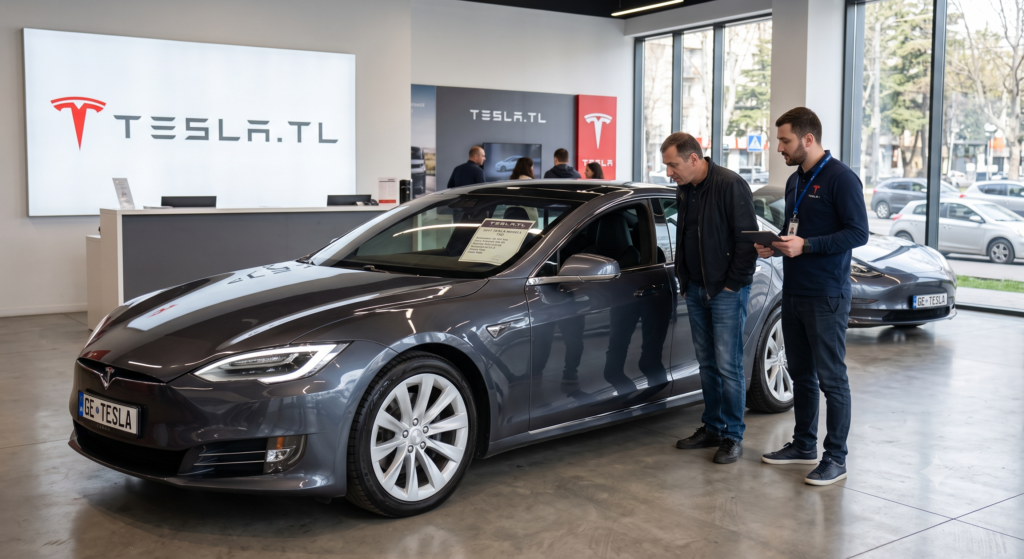
In the vast and often intimidating ecosystem of the used Tesla Model S, certain model years acquire an almost mythical reputation among enthusiasts and bargain hunters alike. The 2017 Tesla Model S is frequently whispered about in these circles as the potential “sweet spot”—a vehicle that has depreciated far enough to be genuinely attainable, yet new enough to avoid the most egregious first-generation sins that plagued the 2012–2014 builds. It sits at a fascinating intersection of Tesla’s history: the year after the 2016 facelift eliminated the controversial nose cone, the year that introduced Autopilot Hardware 2.0 with its promise of future full autonomy, and the year when battery options ranged from the practical 75D to the ludicrous P100D. But does this reputation hold up under scrutiny in 2026, or is the 2017 Model S merely a romanticized compromise that saddles buyers with obsolete hardware, failing door handles, and the dreaded MCU1 eMMC time bomb?
This deep dive examines whether the 2017 Model S truly deserves its sweet-spot status. We dissect the exact improvements it carried over earlier cars, the critical weaknesses it inherited and failed to resolve, the real-world cost of ownership after nearly a decade, and whether your money is better spent on this specific vintage or on adjacent model years that offer fewer headaches for marginally more investment.
The Case for 2017: Why Enthusiasts Love This Year
By 2017, Tesla had accumulated five full years of Model S production experience, and it showed in measurable ways. The 2016 facelift that carried into 2017 replaced the black plastic nose cone with a cleaner, grille-less front fascia that aligned the Model S with the then-upcoming Model 3 design language. This was not merely cosmetic; the new front end improved aerodynamic efficiency marginally and gave the car a modern face that still looks contemporary in 2026. For buyers who cannot stomach the dated appearance of early nose-cone cars, the 2017 represents the oldest affordable entry point into the post-facelift aesthetic.
More importantly, 2017 was the year Tesla standardized Autopilot Hardware 2.0 (HW2) across the lineup. Unlike the 2014–2016 vehicles that relied on Mobileye’s EyeQ3 chip for Autopilot 1.0 (AP1), the 2017 Model S shipped with Tesla’s own camera suite, radar, and NVIDIA Drive PX 2 processing platform. This hardware was explicitly designed as a blank canvas for Tesla’s future Full Self-Driving ambitions. In theory, an HW2 vehicle could eventually receive software capabilities that AP1 cars could never support. For tech-forward buyers in 2017, this was an exciting promise. For used buyers in 2026, it is a historical footnote that requires careful parsing.
The 2017 model year also benefited from incremental improvements in build quality. Panel gaps tightened compared to the chaotic early years. The interior materials—while still not matching German luxury standards—showed better consistency. The next-generation seats, introduced in 2015, were standard by 2017 and offered vastly superior lateral support and long-distance comfort than the flat, unsupportive thrones found in 2012–2014 cars. For drivers planning road trips or simply commuting without back pain, this is a meaningful upgrade that is difficult to retrofit economically.
Battery options in 2017 were also at their most diverse. Buyers could choose the 75D (75 kWh, dual motor), the 90D (90 kWh), the 100D (100 kWh, introduced late in the year), and the range-topping P100D with Ludicrous Mode. This range allowed the 2017 Model S to serve everyone from efficiency-focused commuters to performance absolutists. The 100D, in particular, offered over 335 miles of EPA-rated range when new—a figure that remained competitive well into the 2020s and makes used examples genuinely practical for long-distance travel even after battery degradation.
The Hardware 2.0 Reality: Promise vs. Performance
The most consequential decision Tesla made for the 2017 Model S was the wholesale switch to Autopilot Hardware 2.0. On paper, HW2 was a massive leap. It featured eight cameras instead of AP1’s single forward camera, providing 360-degree visual coverage. It included a forward-facing radar and a more powerful NVIDIA computer. Tesla claimed this suite would eventually enable full autonomy through over-the-air updates.
In practice, the transition was rocky. When 2017 vehicles first shipped, HW2’s actual capabilities were inferior to AP1. The Mobileye-based AP1 system had years of refinement and delivered smooth, confident adaptive cruise control and lane-keeping. HW2, by contrast, initially felt raw, hesitant, and occasionally erratic. It took Tesla nearly two years of software updates to achieve parity with AP1, and even longer to surpass it.
For used buyers in 2026, this history matters because HW2 vehicles require careful verification of their software status. A 2017 Model S that was never updated beyond its factory software load is essentially a beta product. However, if the vehicle received consistent updates through 2019–2020, its HW2 suite eventually matured into a capable highway driving assistant. It will never run modern FSD Beta—that requires HW2.5 or HW3 retrofits—but it handles basic Autopilot duties competently.
Crucially, HW2 is not HW2.5 or HW3. Tesla offered an HW2.5 upgrade for some vehicles and later an HW3 retrofit for owners who purchased Full Self-Driving. But many 2017 cars never received these upgrades because the original owners did not pay for them. If you are buying a 2017 Model S with autonomous driving dreams, verify the exact hardware revision. An HW2 car without retrofit is permanently limited to early Autopilot features. Do not pay a premium for “Full Self-Driving” unless the seller can prove an HW3 retrofit was completed and the license is transferable.
MCU1: The Screen That Destroys Dreams
If there is one single issue that should give every prospective 2017 Model S buyer pause, it is the Media Control Unit (MCU1). Despite all the exterior and Autopilot improvements, Tesla continued installing MCU1—the original NVIDIA Tegra-based infotainment system—in the 2017 Model S. This unit relies on an embedded 8GB eMMC memory chip that stores the vehicle’s logging data, and this chip has a finite number of write cycles. After years of operation, the eMMC wears out, causing the touchscreen to slow down, reboot randomly, develop yellow border discoloration around the edges, or fail entirely.
An MCU1 failure is not merely an inconvenience. In a Model S, the touchscreen controls virtually every vehicle function: climate control, navigation, media, Bluetooth pairing, suspension settings, and even the glove box release. When the screen dies, the car becomes deeply frustrating to operate. Tesla offered an MCU2 retrofit that replaces the entire unit with a modern Intel-based system, but the upgrade costs $1,500 to $2,500 depending on whether performed at a service center or by an independent specialist.
For used buyers in 2026, the MCU1 situation creates a clear financial fork in the road. If you find a 2017 Model S with a confirmed MCU2 upgrade, you are looking at a vehicle whose infotainment system will remain responsive and functional for years. If the car still has MCU1, you must either negotiate the upgrade cost into your purchase price or accept that you will eventually face a $2,000 repair bill. Many sellers of 2017 cars are unaware of this issue or hope buyers will not ask. Always verify the MCU generation before making an offer.
Door Handles, Air Suspension, and the Usual Suspects
The 2017 Model S did not escape the door handle curse that defined early Tesla luxury. While the handles were incrementally improved compared to the 2012–2014 units, they remained complex motorized assemblies with microswitches and gear trains that degrade with use. By 2026, a 2017 Model S with original door handles is likely on its second or third set. When functioning, the handles present elegantly and feel futuristic. When failing, they refuse to extend, trap you outside the vehicle, or require you to use the smartphone app as a crutch.
Replacement costs remain steep. Each handle assembly runs $800 to $1,200 at a Tesla Service Center, and with four doors, a complete refresh approaches $5,000. Independent shops can sometimes rebuild the internal mechanisms for less, but this is still a $300 to $500 per-door expense. When evaluating a 2017 Model S, test every handle repeatedly. If any show hesitation, grinding, or failure to present, factor immediate replacement into your offer.
The air suspension, standard on higher trims and common on mid-range 2017 builds, is another known weakness. The system delivers a genuinely plush ride and adjustable ride height, but after seven to nine years, the air struts develop leaks, the compressor works overtime, and the ride height sensors drift. A failing air suspension drops the car to its bump stops, creates an embarrassing spectacle in parking lots, and generates repair quotes of $3,000 to $5,000 if multiple corners need attention. During your inspection, cycle the suspension through all height settings and listen for compressor strain. Park the car overnight and check whether any corner has sagged by morning.
Don’t risk buying a 2017 Model S with a dying MCU1 or failing door handles. At Tesla.tl, every listing includes verified MCU generation, door handle functionality checks, and air suspension health reports so you know exactly what you are inheriting. Browse inspected 2017 Model S inventory and buy with confidence at https://tesla.tl/.
Battery Options: Choosing the Right Cell for Your Needs
The 2017 Model S offered four primary battery configurations, and the choice between them dramatically affects both purchase price and long-term satisfaction.
75D (75 kWh) The base dual-motor option provided approximately 259 miles of EPA range when new. By 2026, a well-maintained 75D with 60,000 to 80,000 miles typically shows 210 to 235 miles at 100% charge. This is adequate for urban commuting and regional travel but can induce anxiety on longer highway journeys. The 75 kWh pack uses the same NCA chemistry as larger packs and degrades at a similar rate, but its smaller capacity means each percentage point of loss is more keenly felt. 75D examples are the cheapest 2017 cars on the market, often trading below $20,000, making them tempting entry points. However, buyers must honestly assess whether 210 miles of real-world range meets their needs.
90D (90 kWh) The 90D offered a meaningful step up in range—approximately 294 miles when new—but introduced a battery chemistry that proved slightly less durable than the 85 kWh it replaced. Some 90D owners reported faster degradation, particularly in hot climates, though Tesla mitigated this through software updates. In 2026, a 90D typically retains slightly worse percentage capacity than a comparable 75D or 100D, making it a middle-ground choice that does not excel in either value or longevity.
100D (100 kWh) Introduced in mid-2017, the 100D is the hidden gem of the lineup. With 335 miles of EPA range when new, it delivers 280 to 310 miles of real-world range in 2026 even after degradation. This is genuine road-trip territory, eliminating the range anxiety that plagues smaller packs. The 100D also benefits from improved cell chemistry and thermal management compared to the 90D. On the used market, 100D examples command a $4,000 to $8,000 premium over 75D cars, but for buyers who drive long distances, this premium pays for itself in convenience.
P100D (Performance, Ludicrous) The range-topping P100D with Ludicrous Mode is a supercar in sedan clothing, launching to 60 mph in approximately 2.5 seconds. It is thrilling, absurd, and expensive to maintain. The performance drivetrain stresses the battery and motors, the 21-inch wheels destroy tires, and the air suspension works harder to manage the vehicle’s mass during aggressive launches. For enthusiasts with deep pockets, a used P100D is a bargain compared to its original six-figure price. For pragmatic buyers, it is an overkill liability.
Pricing Landscape for 2017 Model S in 2026
By mid-2026, the 2017 Model S has depreciated into a price bracket that makes it genuinely accessible to mainstream buyers who previously could only dream of Tesla ownership. Fair private-party pricing for clean-title vehicles with average mileage breaks down as follows:
- 75D: $18,000–$24,000
- 90D: $22,000–$28,000
- 100D: $28,000–$36,000
- P100D: $35,000–$45,000
These figures assume no accidents, functional air suspension, and either an MCU2 upgrade or a price reduction to account for the pending retrofit. Vehicles with original MCU1, failing door handles, or degraded batteries should trade at the bottom of these ranges or below. P100D prices vary wildly based on whether the vehicle has been tracked, how many launch control events it has endured, and whether the battery contactors show signs of stress.
The Adjacent Year Comparison: 2016 vs. 2017 vs. 2018
To truly determine if 2017 is the sweet spot, you must compare it with its neighbors.
2016 vehicles represent the first year of the facelift and are mechanically similar to 2017. However, they are one year older, often have higher mileage, and suffer from the same MCU1 and door-handle issues. Prices are $2,000 to $4,000 lower than 2017, but the additional year of aging and lack of any meaningful hardware advantage make them less attractive unless the price is exceptionally low.
2018 vehicles introduced HW2.5, a modest but meaningful Autopilot hardware upgrade that added more computing power and a secondary processing unit. They also benefited from another year of manufacturing refinement. However, 2018 prices are typically $3,000 to $6,000 higher than 2017, and they still use MCU1. The HW2.5 advantage is real but minor for buyers who do not prioritize autonomous driving. For most shoppers, the 2017 offers 95% of the 2018 experience at a significant discount.
2019 brought the Raven update, which is a fundamentally different vehicle with new motors, new suspension, and dramatically improved efficiency. Raven cars command $10,000+ premiums over 2017 and are in a different league entirely. If your budget stretches to Raven territory, you should buy a Raven. If your budget caps out in the mid-$20,000s, the 2017 is a more realistic target than a 2019.
Final Verdict: Sweet Spot or Compromise?
The 2017 Tesla Model S is a conditional sweet spot. It is not an unqualified bargain, nor is it a trap to be avoided. It occupies a precise niche: the most affordable way to own a post-facelift Model S with a modern exterior design, dual-motor all-wheel drive, and a battery large enough for genuine highway travel. For buyers who understand its limitations and budget accordingly, it delivers a luxury EV experience that remains unmatched by any gasoline sedan at the same price point.
However, the 2017 demands diligence. You must verify the MCU generation and budget for an upgrade if it is still MCU1. You must test every door handle and assume replacement costs. You must inspect the air suspension for leaks and sag. You must confirm the exact Autopilot hardware revision and have realistic expectations about its autonomous capabilities. And you must choose the battery wisely, recognizing that a cheap 75D may cost more in frustration than a pricier 100D saves in purchase price.
If you are a hands-on buyer willing to research, inspect, and negotiate, the 2017 Model S is indeed a sweet spot—a gateway into Tesla’s flagship sedan at a price that feels almost too good to be true, provided you see the compromises coming. If you want a trouble-free, warranty-backed, turn-key luxury experience, save for a 2019+ Raven or buy a newer Model 3. The 2017 rewards the informed and punishes the impulsive.
Ready to find a 2017 Model S that has already been inspected and upgraded? Search Tesla.tl for listings with verified MCU2 status, door handle condition reports, and battery health diagnostics. Filter by battery size, trim, and service history to find the sweet-spot sedan that matches your budget and your tolerance for adventure. Visit https://tesla.tl/ and own a piece of Tesla history today.
