
Used Model S 75D vs 100D: Range, Battery Degradation & Value
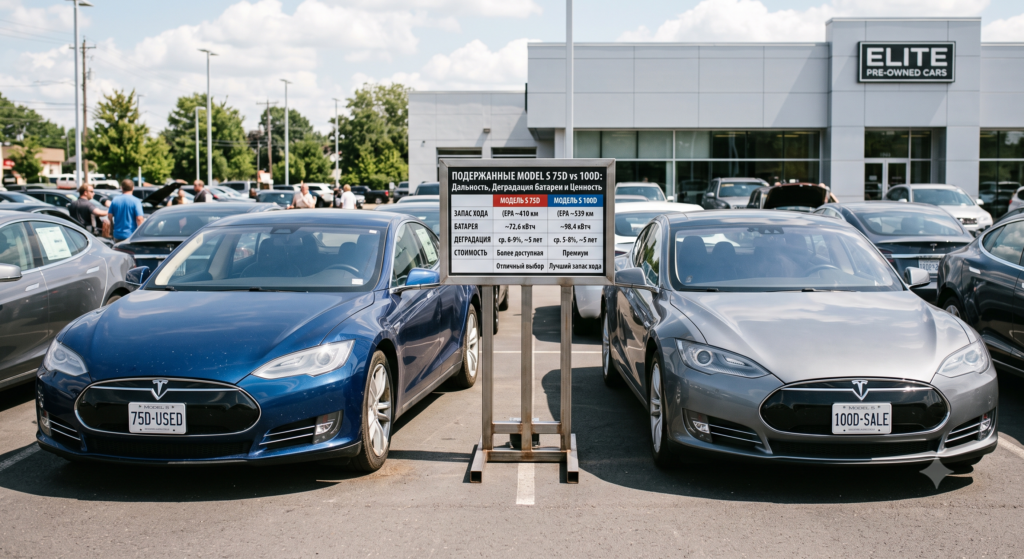
When shopping for a used Tesla Model S from the 2016–2019 production era, buyers inevitably confront a binary choice that defines the entire ownership experience: the 75D or the 100D. These two badges represent fundamentally different philosophies of electric mobility, separated not merely by 25 kilowatt-hours of battery capacity but by the psychological freedom of knowing you can drive for hours without planning your life around charging stops. On the used market in 2026, both variants trade at prices that seem tantalizingly close—often separated by only $6,000 to $10,000 for vehicles of similar age and mileage. Yet that modest upfront gap masks a profound divergence in real-world utility, degradation trajectory, long-distance capability, and ultimately, whether the vehicle serves as a versatile daily driver or a constrained urban commuter that happens to wear a luxury sedan body.
This comprehensive analysis examines how the 75D and 100D actually perform after years of real-world use, how their batteries age differently, what the range numbers mean in practical 2026 driving conditions, and whether the 100D’s premium is justified or merely a luxury tax on anxiety-prone buyers. If you are considering a used Model S, understanding this comparison is not optional—it is the foundation upon which every other purchasing decision rests.
The Range Reality: New vs. 2026
When these vehicles were new, the range gap between the 75D and 100D was already significant. The 75D carried an EPA rating of 259 miles, while the 100D was rated at 335 miles. That 76-mile delta was substantial on paper, but in the showroom, many buyers rationalized the smaller battery. They imagined themselves as disciplined commuters who rarely left the city, and the $20,000+ price difference when new seemed excessive for occasional road trips.
Fast forward to 2026, and the gap has widened in ways that spec sheets do not capture. After 60,000 to 90,000 miles of charge cycles, climate exposure, and calendar aging, the 75D’s usable capacity has typically diminished to a point where its real-world range becomes a daily consideration rather than an afterthought. A well-maintained 75D with moderate mileage now shows approximately 210 to 235 miles at 100% charge in temperate weather. That figure drops to 160 to 190 miles in freezing winter conditions once cabin heating, battery preconditioning, and reduced chemical efficiency are factored in. For a vehicle that was marketed as a luxury grand tourer, these numbers are sobering. A 180-mile winter range means that a 150-mile round trip to a ski resort becomes a white-knuckle exercise in energy conservation, with the heater turned down and the driver praying that headwinds do not materialize.
The 100D, by contrast, has aged far more gracefully in terms of absolute utility. Even with comparable percentage degradation, its larger starting capacity preserves a buffer that the 75D simply cannot match. A 100D with similar mileage and maintenance history typically displays 280 to 310 miles at 100% charge in temperate weather. In winter, this falls to 230 to 260 miles—still enough for a full day of mixed driving without charging anxiety. The 100D owner thinks about charging infrastructure occasionally; the 75D owner thinks about it constantly.
This difference transforms how each vehicle is used. The 100D remains a genuine highway cruiser capable of intercity travel with minimal planning. The 75D becomes a regional commuter that demands foresight for any journey exceeding 150 miles. If your life involves regular airport runs, weekend getaways, or visits to relatives two towns over, the 75D’s limitations will become a source of friction that erodes the joy of ownership.
Battery Chemistry and Degradation Patterns
Both the 75D and 100D utilize nickel-cobalt-aluminum (NCA) lithium-ion cells, but the specific cell formulations and thermal management strategies differed between the packs, producing subtly distinct aging characteristics.
The 75 kWh pack introduced in the 75D was essentially a software-locked and physically revised version of the older 70 kWh architecture, using cells with slightly different chemistry than the 100D’s newer formulation. While robust, the 75 kWh pack has shown a tendency toward marginally faster degradation in hot climates compared to the 100D’s cells. After six to eight years, it is common to see 75D batteries hovering around 85% to 88% State of Health (SOH), with some examples that were habitually charged to 100% or subjected to relentless DC fast charging dipping below 83%.
The 100 kWh pack, introduced as a flagship technology showcase, employed improved cell chemistry with enhanced thermal stability and energy density. In practice, this translates to slightly better resistance to calendar aging and cycle degradation. 100D batteries at comparable mileage more typically retain 87% to 91% SOH, with well-cared-for examples still showing above 90% after 70,000 miles. The larger pack also experiences shallower depth of discharge for the same driving distance, reducing the per-mile stress on each individual cell.
However, both packs share a critical vulnerability: the 2016–2019 era of Model S production did not yet include the advanced preconditioning logic found in the Raven refresh and later vehicles. This means that DC fast charging sessions, particularly on Superchargers, generate more heat in the battery than newer Teslas would experience. Over hundreds of fast-charging sessions, this cumulative thermal stress contributes to accelerated degradation in both pack sizes. A 75D that was road-tripped extensively via Supercharger networks may show worse health than a 100D that was primarily charged at home on Level 2, but both will show worse health than equivalent 2020+ vehicles with superior thermal management.
For buyers in 2026, the inspection protocol should be identical regardless of pack size: demand third-party SOH readings, verify the vehicle’s charging history if available through the previous owner’s Tesla account, and be particularly wary of any battery that has degraded below 85% at moderate mileage. But understand that a 75D at 85% SOH is a fundamentally more compromised vehicle than a 100D at the same percentage, because the absolute remaining range crosses critical usability thresholds sooner.
Real-World Efficiency and Charging Behavior
Beyond raw capacity, the 75D and 100D exhibit different efficiency characteristics that affect how often you interact with charging infrastructure. The 100D is not merely a larger battery; it is a more efficient vehicle per mile in certain driving scenarios because its greater energy reserve reduces the frequency of high-C-rate charging sessions that stress cells and generate heat losses. The 75D owner, by contrast, finds themselves charging more frequently, often to higher percentages, and more likely to dip into lower states of charge where efficiency suffers.
This creates a compounding effect. The 75D driver charges to 100% more often out of necessity, which accelerates degradation, which reduces range further, which necessitates even more frequent charging. It is a cycle that the 100D owner largely avoids because they can operate comfortably in the 20% to 80% daily charge window that battery chemists recommend, knowing that even 60% of a 100D pack provides more usable range than 60% of a 75D.
On road trips, the difference becomes stark. The 100D can skip Supercharger stops that the 75D must make. It can charge from 10% to 60%—the fastest portion of the charging curve—and then drive for two hours before stopping again. The 75D must stop more frequently, charge to higher percentages where charging speeds taper, and spend more total time plugged in per mile traveled. Over a 500-mile journey, the 100D might save an hour or more in charging time, which is not merely a convenience but a quality-of-life improvement that justifies itself repeatedly.
Pricing and Value Retention in 2026
The used market in 2026 has priced these two variants in a way that reflects their diverging utility, though not always as aggressively as the underlying hardware differences would suggest.
A 2017 Model S 75D with 60,000 to 80,000 miles typically trades between $18,000 and $24,000, depending on condition, MCU status, and whether the door handles have been refreshed. It is the cheapest entry point into a post-facelift Model S, and for buyers with strict budgets, it represents a genuine luxury EV experience at a price that undercuts most new economy sedans.
A 2017 Model S 100D with comparable mileage commands $28,000 to $36,000, a premium of roughly $8,000 to $12,000 over the 75D. This gap has narrowed from the $20,000+ difference when new, but it still represents a significant jump for buyers financing their purchase.
The critical question is whether that premium delivers proportional value. For buyers who drive fewer than 50 miles daily, have home charging, and never leave their metropolitan area, the 75D is arguably the smarter financial choice. The $10,000 saved can fund years of electricity, insurance, maintenance, and even a future battery replacement if necessary. For buyers who drive 100+ miles daily, lack home charging, or frequently undertake road trips, the 100D’s premium is not an expense but an investment in daily convenience and reduced charging friction.
Depreciation curves also favor the 100D slightly. As the used EV market matures, buyers are increasingly educated about battery size and its impact on usability. The 75D is perceived as a compromised city car, while the 100D retains its grand-tourer credibility. This means that when you eventually sell, the 100D will likely find buyers faster and hold its value more stubbornly than an equivalent-age 75D.
Don’t risk buying a used Model S with a degraded battery that turns every highway trip into a charging strategy session. At Tesla.tl, every listing includes verified battery State of Health, real-world range estimates, and charging history so you can compare 75D and 100D examples with complete transparency. Browse inspected Model S inventory and buy with confidence at https://tesla.tl/.
Total Cost of Ownership: Beyond the Sticker Price
When comparing these two variants, savvy buyers look beyond the purchase price to the total cost of ownership over their intended holding period.
The 75D saves money upfront but may cost more in time and charging expenses. If you rely on public DC fast charging because the limited range forces you to charge away from home more often, the per-mile cost of electricity increases significantly. Supercharger pricing in 2026 often runs 2x to 3x the cost of home charging. A 75D owner who charges publicly twice weekly spends substantially more per year than a 100D owner who charges at home once weekly.
Tire and brake costs are roughly identical between the two variants, assuming similar driving styles. Insurance costs are also comparable, though some carriers rate the 100D marginally higher due to its greater replacement value. The 100D’s only meaningful ongoing cost disadvantage is the opportunity cost of the higher initial outlay—but even this is partially offset by stronger resale value.
For buyers planning to keep the vehicle for five years or more, the 100D’s larger battery also provides a longer useful lifespan before the range drops below a practical threshold. A 75D that shows 210 miles today may show only 170 miles in five years, at which point it becomes difficult to sell and frustrating to live with. A 100D that shows 290 miles today may still deliver 250 miles in five years, remaining a viable primary vehicle.
When to Choose the 75D
Despite the 100D’s advantages, the 75D remains the correct choice for specific buyer profiles.
If your daily driving is strictly urban, your round-trip commute is under 40 miles, and you have reliable home or workplace Level 2 charging, the 75D is more than sufficient. You will rarely exceed 50% battery depth of discharge, the smaller pack charges faster from empty to full on Level 2, and the purchase price savings can be allocated to other priorities.
If you view the Model S as a second vehicle or a weekend luxury cruiser rather than a primary long-distance tool, the 75D delivers the prestige, performance, and interior space of the flagship sedan without the 100D’s price premium. For city dwellers who primarily use public transit or ride-sharing during the week and drive only on weekends, the 75D is a rational indulgence.
When the 100D Is Essential
The 100D becomes essential rather than optional for buyers who fit several specific profiles.
If you live in a cold climate where winter range drops by 25% to 30%, the 100D’s larger buffer is the difference between a usable winter vehicle and a seasonal garage occupant. A 75D that delivers 190 miles in July may deliver only 140 miles in January, which is barely adequate for a suburban commute plus errands.
If you frequently drive between cities, visit family in neighboring states, or take road trips without meticulously planning charging stops, the 100D preserves the spontaneity that makes car ownership enjoyable. The 75D forces you to become an energy manager, calculating range and charging stops for journeys that a 100D handles effortlessly.
If you plan to keep the vehicle for more than five years, the 100D’s slower degradation curve and greater remaining range at the end of your ownership period make it a more durable investment.
Inspection Points Specific to Each Variant
Regardless of which battery you choose, your pre-purchase inspection should include battery-specific checks.
For the 75D, pay particular attention to high-mileage degradation. Because the pack is smaller, any degradation is more immediately consequential. Verify that the vehicle still delivers at least 200 miles at 100% charge in temperate weather. Below this threshold, the battery is aging abnormally and may require warranty attention or eventual replacement.
For the 100D, verify that the previous owner did not abuse the larger pack with constant 100% charging. Paradoxically, some 100D owners became complacent about charging habits precisely because the large buffer masked the impact. Request charging history showing regular operation in the 20% to 80% window rather than habitual full charges.
For both variants, confirm that the battery warranty is still active and that the vehicle has not been declared salvage or rebuilt, which voids Tesla’s 8-year/infinite-mile battery and drive unit coverage for 75D models, or 8-year/unlimited-mile coverage for 100D models of this era.
Final Verdict
The used Tesla Model S 75D vs. 100D debate is not about which vehicle is objectively superior. It is about which vehicle aligns with your driving patterns, climate, budget, and tolerance for planning. The 75D is a compromised but still capable luxury sedan that offers the Model S experience at the lowest possible entry price. It demands more foresight, more frequent charging, and more acceptance of limitations. The 100D is the true grand tourer that Tesla originally envisioned, preserving the range, freedom, and spontaneity that make electric luxury sedans compelling.
For most buyers in 2026, the 100D justifies its premium. The additional $8,000 to $12,000 upfront is amortized over years of reduced charging anxiety, faster road trips, stronger resale value, and a longer useful vehicle lifespan. But if your needs are genuinely modest and your budget fixed, a well-maintained 75D with a healthy battery and upgraded MCU2 can still deliver years of satisfying, emissions-free driving—provided you understand exactly what you are signing up for.
Ready to choose between a 75D and 100D? Compare verified Model S listings with real battery health data, range estimates, and warranty status at Tesla.tl. Filter by battery size, model year, and price to find the exact Model S that matches your driving needs and your budget. Visit https://tesla.tl/ and drive electric with confidence today.
