
Is a 2018 Tesla Model 3 Still Worth Buying in 2026?
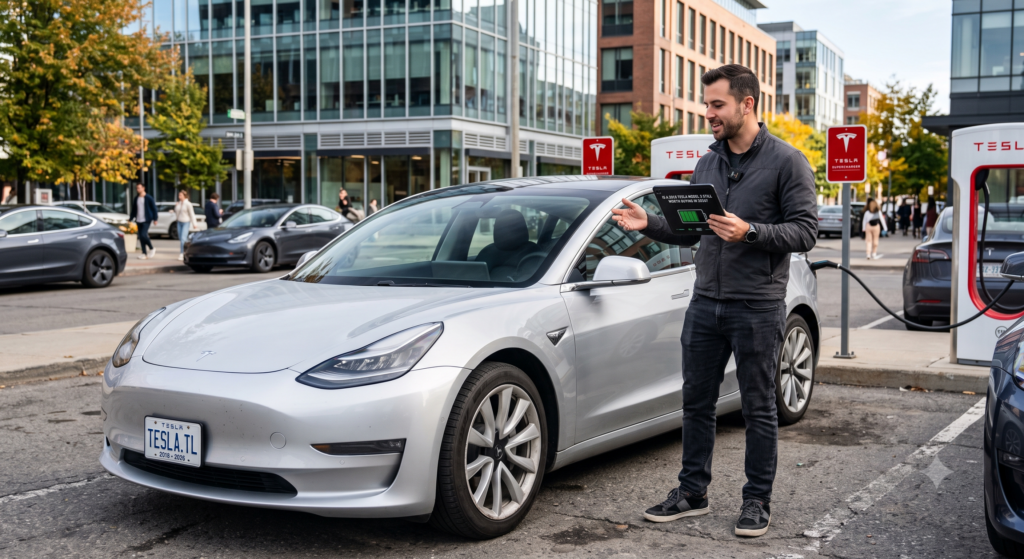
The 2018 Tesla Model 3 represents a unique moment in automotive history. It was the year Elon Musk’s “production hell” finally began to ease, the year Tesla proved it could build hundreds of thousands of electric sedans, and the year the Model 3 first started appearing in driveways across North America, Europe, and Asia. Fast forward to 2026, and these earliest Model 3 examples are now eight years old, many have crossed the 100,000-mile threshold, and their market prices have fallen to levels that make them genuinely tempting for first-time EV buyers, rideshare drivers, and budget-conscious commuters. But the question that echoes through every used car forum and Reddit thread is simple yet critical: does an eight-year-old 2018 Tesla Model 3 still make sense as a daily driver, or has time and technology rendered it an expensive relic?
This comprehensive analysis examines the real-world ownership experience of the 2018 Model 3 in 2026, exploring what still works brilliantly, what has aged poorly, which hidden costs await unsuspecting buyers, and whether the rock-bottom asking prices justify the compromises you will inevitably face.
The 2018 Model 3: A Pioneer with Baggage
When the 2018 Tesla Model 3 first launched, it was nothing short of revolutionary. It offered zero-to-sixty acceleration in under five seconds, a minimalist interior dominated by a 15-inch touchscreen, and access to Tesla’s rapidly expanding Supercharger network. No other manufacturer in 2018 could match the combination of range, performance, and charging infrastructure at the Model 3’s price point. However, 2018 was also Tesla’s first real attempt at mass production, and the company was still learning how to manufacture cars at scale with consistent quality.
This learning curve is visible in nearly every 2018 Model 3 that hits the used market today. Panel gaps that would never pass a 2024 quality audit, paint thickness that varies by body panel, and interior trim pieces that squeak after years of thermal cycling are all common characteristics of this vintage. None of these issues necessarily make the car unreliable or unsafe, but they do mean that a 2018 Model 3 requires a different mindset than a pristine late-model used vehicle. You are buying a piece of automotive history that happens to still transport you efficiently, not a luxury sedan that pampers you with flawless fit and finish.
Battery Health After Eight Years: The Critical Question
The single most important factor determining whether a 2018 Tesla Model 3 is worth your money in 2026 is the condition of its battery pack. These early cars were equipped with either a Long Range 75 kWh battery or a Mid Range 62 kWh pack, both using nickel-cobalt-aluminum (NCA) chemistry. After eight years and potentially 80,000 to 150,000 miles, what should you realistically expect?
In temperate climates with responsible charging habits—meaning the previous owner avoided routinely charging to 100% and rarely let the state of charge drop below 10%—a 2018 Long Range Model 3 typically retains between 82% and 88% of its original capacity. This translates to a real-world range of approximately 220 to 240 miles at full charge, down from the original EPA rating of 310 miles. For drivers with predictable daily commutes under 100 miles round trip, this remains entirely adequate. However, if your lifestyle demands frequent 300-mile road trips or you lack reliable home charging, the reduced range and slower charging curve of an aged NCA battery may prove frustrating.
It is also worth noting that 2018 Model 3 vehicles lack the heat pump introduced in 2021. In freezing winter conditions, the resistive cabin heater draws significantly more power, potentially reducing your effective range by another 20% to 30%. Buyers in northern climates must factor this seasonal penalty into their range calculations and seriously consider whether a newer heat-pump-equipped model is worth the extra cost.
Common 2018-Specific Issues and Aging Components
Beyond battery degradation, the 2018 Model 3 suffers from several well-documented age-related problems that have become increasingly expensive to address as these vehicles exit warranty coverage. The most notorious is the yellow border discoloration that develops around the edges of the 15-inch center touchscreen. Caused by heat and adhesive breakdown in the display layers, this issue is purely cosmetic but extremely common. A replacement screen from Tesla can cost between $1,200 and $1,500, though some independent repair shops now offer more affordable refurbishment options.
The door seals and window regulators are another weak point. Early Model 3 vehicles used rubber seal designs that degrade faster than later revisions, leading to wind noise at highway speeds and, in severe cases, water intrusion during heavy rain. Replacing all four door seals and adjusting the window glass alignment typically runs $400 to $800 at a specialist shop.
Suspension components also deserve scrutiny. The front upper control arms are known to develop clunks and premature bushing wear, particularly on cars that have spent years on rough urban roads. The rear toe links can corrode in regions that use road salt. While neither issue is catastrophic, a full suspension refresh on a high-mileage 2018 Model 3 can easily exceed $2,000 if deferred maintenance has allowed multiple components to deteriorate simultaneously.
Autopilot and Software: Stuck in Time?
The 2018 Model 3 launched with Hardware 2.5 (HW2.5) and an early iteration of Enhanced Autopilot. While Tesla eventually offered complimentary upgrades to Hardware 3 (HW3) for owners who purchased Full Self-Driving (FSD), many 2018 cars on the used market never received this upgrade and remain on HW2.5. This has significant implications for buyers in 2026.
HW2.5 vehicles cannot run the modern FSD Beta stack and are limited to basic Autopilot features: adaptive cruise control, lane keeping, and emergency braking. They also lack the processing power for Tesla’s latest visualizations and navigation enhancements. If you dream of a car that drives itself through city streets, a base 2018 Model 3 with HW2.5 will never deliver that experience, even if you pay for an FSD subscription today.
However, for buyers who view Autopilot as a convenience feature rather than a transformational technology, the basic cruise and lane-assist functions still work reliably on highways. The 2018 Model 3 remains a perfectly competent road-trip companion for hands-on-the-wheel highway cruising, even if it lacks the sophistication of newer hardware generations.
Total Cost of Ownership in 2026
One of the strongest arguments for buying a cheap 2018 Model 3 is the ongoing cost savings compared to any gasoline-powered alternative. Electricity remains significantly cheaper per mile than gasoline in virtually every global market, and the Model 3’s maintenance schedule is still minimal. There are no oil changes, no spark plugs, no transmission services, and brake pads last 80,000 to 100,000 miles thanks to regenerative braking.
That said, the 2018 Model 3 is no longer under Tesla’s new vehicle warranty, and the battery and drive unit warranty has either expired or is nearing expiration depending on exact purchase date and mileage. This means that any major failure—from a battery module replacement to a drive unit failure to a touchscreen failure—becomes your financial responsibility. While catastrophic battery failures are rare, they are not impossible, and a replacement pack can cost more than the entire market value of the car.
Insurance is another variable to consider. Some carriers have begun charging higher premiums for older Teslas due to expensive aluminum body repairs and the proprietary nature of Tesla’s collision repair network. Shop for insurance quotes before committing to a purchase, as your monthly premium may erode the fuel savings that initially attracted you to the EV.
What to Inspect Before Handing Over Cash
If you are seriously considering a 2018 Tesla Model 3, treat the pre-purchase inspection as non-negotiable. These vehicles are old enough that hidden problems are common, and the low asking price often reflects deferred maintenance or undisclosed issues.
Start by requesting a full battery health report. If the seller cannot provide one, use a third-party diagnostic tool or schedule an appointment at a Tesla Service Center for a paid inspection. Verify that the battery retains at least 80% of its original capacity; anything below this threshold suggests either harsh prior use or a pack that will need attention sooner rather than later.
Check the touchscreen carefully for yellow border discoloration, dead pixels, or touch responsiveness issues. Test every door seal by running a garden hose over the windows during your inspection, or at minimum, listen carefully for wind noise during an extended highway test drive. Inspect the tires for uneven wear that indicates alignment problems, and ask for service records that show whether the suspension bushings, 12-volt battery, and cabin air filters have been replaced on schedule.
Finally, verify the Autopilot hardware version through the vehicle’s software menu. If the car is equipped with HW2.5 and you had your heart set on modern driver-assistance features, adjust your offer accordingly or continue searching for an HW3-upgraded example.
Looking for a used 2018 Model 3 that has already been inspected and verified? Browse our curated inventory of early Tesla sedans with transparent battery health reports and full service histories at Tesla.tl. Skip the guesswork and buy from sellers who disclose everything upfront. Start your search today at https://tesla.tl/.
The Verdict: Bargain or Money Pit?
So, is a 2018 Tesla Model 3 still worth buying in 2026? The answer is a qualified yes—but only for the right buyer under the right circumstances.
If you are a mechanically savvy enthusiast who understands EVs, has access to affordable independent Tesla repair shops, and views the car as a short-to-medium-term commuter rather than a long-term family hauler, a well-maintained 2018 Long Range with decent battery health is an absolute steal at current prices. You gain access to the Supercharger network, enjoy instant torque, and pay pennies per mile for energy.
However, if you need a trouble-free daily driver with modern refinement, plan to keep the car for another eight years, or expect cutting-edge autonomous driving capabilities, the 2018 Model 3 will disappoint. The ride is firmer than newer cars, the technology is dated, the warranty is gone, and the battery is only getting older. In these cases, stretching your budget to a 2021 or newer Model 3 with the heat pump, HW3, and remaining warranty coverage is almost certainly the wiser financial decision.
Ultimately, the 2018 Model 3 in 2026 is not a luxury purchase—it is a calculated utility buy. Treat it as such, inspect it ruthlessly, and it can still deliver exceptional value. Treat it carelessly, and you may inherit someone else’s eight-year-old problems.
Ready to find a budget-friendly used Tesla? Whether you want a well-loved 2018 pioneer or a newer certified example, Tesla.tl connects you with verified sellers and transparent listings. Filter by year, battery health, and price to find the perfect match for your budget. Visit https://tesla.tl/ and drive electric for less.
