
Is the 7-Seat Used Model Y Worth It? Space & Resale Tested
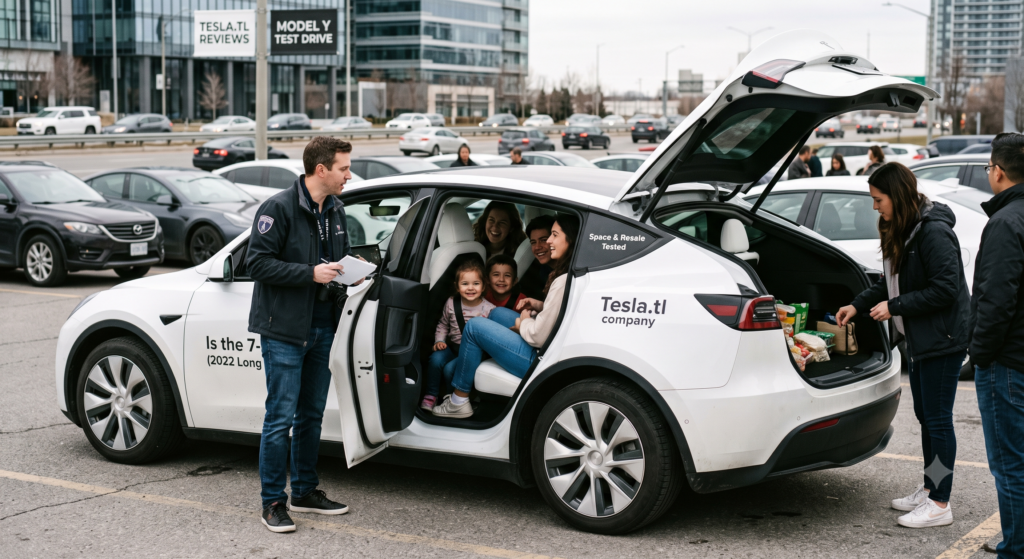
The Tesla Model Y has always been celebrated as the practical family hauler in the brand’s lineup, offering crossover utility without the bulk of the larger Model X. But buried within the configurator for years sat an option that polarized owners and confused shoppers alike: the third-row seating package that transformed the standard five-seat Model Y into a compact seven-passenger electric crossover. On paper, this $3,000 option when new promised genuine three-row versatility in a footprint barely larger than a Honda CR-V. In reality, the 7-seat Model Y became one of the most divisive configurations in Tesla’s history, with owners either defending it as a brilliant solution for young families or condemning it as a cynical marketing exercise that sacrificed cargo space for legroom that only a toddler could tolerate.
By 2026, the used 7-seat Model Y market is filled with examples that have aged through family road trips, school carpool duty, and the inevitable wear that comes from children climbing over second-row seats. For buyers considering this configuration, the question is no longer about the novelty of three-row electric seating. It is about whether the third row is genuinely usable for your specific family, how dramatically the cargo space is compromised, and whether the resale value penalty makes this a financially prudent choice or an expensive niche gamble. This comprehensive analysis tests the 7-seat Model Y in real-world conditions to determine whether it deserves a place in your garage.
What the 7-Seat Option Actually Includes
The 7-seat Model Y was offered primarily on the Long Range variant, though a limited number of Performance examples were also configured with the option. The package added two small jump seats in the rear cargo area, complete with three-point seatbelts, adjustable headrests, and ISOFIX anchor points for child seats. Unlike the Model X’s spacious and power-operated third row, the Model Y’s rear seats are manually folded, significantly smaller, and positioned directly against the rear hatch glass.
Critically, the 7-seat configuration did not extend the Model Y’s wheelbase or overall length. The third row occupies space that would otherwise serve as deep cargo storage behind the second row. This means that when the third row is in use, the remaining cargo area behind the seats is reduced to a narrow sliver barely capable of accommodating a folded stroller or a few grocery bags. When folded flat, the third row creates a stepped cargo floor that is neither fully flat nor as deep as the standard five-seat configuration.
The option also added second-row seat release mechanisms that allowed easier access to the rear, though these mechanisms are purely manual and require more dexterity than the sliding and tilting seats found in traditional minivans or three-row SUVs. For families with young children, this access limitation is not a minor inconvenience—it fundamentally shapes how the vehicle is used on a daily basis.
Third-Row Space: The Brutal Reality
Let us address the uncomfortable truth immediately: the third row of the Model Y is not designed for adults. The legroom measures roughly 26 to 28 inches depending on how far forward the second row is slid, which is comparable to the cramped rearmost seats in a compact Mitsubishi Outlander or the old Nissan Rogue third row. Headroom is equally constrained because the sloping roofline and rear glass meet directly above the outboard passengers’ heads. An average-sized adult seated in the third row will find their knees pressed against the second-row seatbacks, their head brushing the headliner or glass, and their feet tucked awkwardly into a footwell that lacks depth.
For children, however, the equation changes significantly. A child under 4’10” (approximately 12 years old or younger) can sit in the third row without the same spatial indignities. The ISOFIX anchors allow for secure installation of booster seats or forward-facing child seats, and the proximity to the rear glass actually gives children a panoramic view that many find exciting rather than claustrophobic. Families with three or four children under the age of 12 often report that the 7-seat Model Y works brilliantly as a school-run vehicle, with older children banished to the third row while younger siblings occupy the second row in car seats.
But the moment your children enter their teenage growth spurts, the third row becomes effectively unusable for them. This creates a narrow usage window—roughly ages 4 to 12—during which the 7-seat configuration genuinely adds value. After that, the third row becomes either folded cargo space or a source of complaints during family road trips. Buyers in 2026 must honestly assess whether their children’s current ages and projected growth trajectories align with this brief window of utility.
Cargo Space: The Compromise That Hurts
The standard 5-seat Model Y offers 76 cubic feet of total cargo volume with the second row folded and approximately 30 cubic feet behind the upright second row. These figures are competitive with compact luxury crossovers and make the Model Y genuinely practical for airport runs, IKEA trips, and family vacations.
The 7-seat Model Y, with its third row erected, reduces the cargo area behind the rear seats to roughly 12 to 14 cubic feet—a figure more comparable to a small sedan’s trunk than a family crossover. This means that a family of seven using all three rows simultaneously cannot fit seven people’s luggage for a weekend trip. They cannot fit a large stroller back there. They cannot even fit a full grocery run for seven people without stacking bags on passengers’ laps.
When the third row is folded flat, cargo capacity improves, but the floor is no longer the deep, continuous well found in the 5-seat version. Instead, you inherit a stepped load floor with the third-row seatbacks creating an angled transition between the main cargo area and the space where the rear passengers would sit. This angled surface makes loading large, flat items like furniture boxes or suitcases more awkward and reduces the usable height at the rear of the vehicle.
For buyers who prioritize cargo versatility—dog owners who need a flat space for a crate, cyclists who transport bikes inside, or contractors who haul equipment—the 7-seat configuration is a significant step backward from the standard layout. The third row does not simply add seating; it fundamentally redefines what the Model Y can carry.
Range and Efficiency Impact
The 7-seat Model Y carries additional weight compared to its 5-seat equivalent. The third-row seats, their mounting hardware, and the reinforced floor structure add approximately 80 to 100 pounds to the vehicle’s curb weight. While this seems trivial in a vehicle that weighs over 4,300 pounds, the added mass and altered aerodynamics do produce a measurable impact on efficiency.
In real-world testing, the 7-seat Long Range typically delivers 5 to 10 miles less range than an equivalent 5-seat Long Range under identical driving conditions. This difference is more pronounced at highway speeds, where the disrupted airflow around the raised third-row headrests and the slightly higher rear profile create marginally more drag. For daily commuters, the loss is negligible. For families planning cross-country road trips while fully loaded with passengers and gear, the reduced efficiency means slightly more frequent Supercharger stops and less margin for error in rural areas with sparse charging infrastructure.
The Performance variant with the third row suffers an even greater penalty because its larger wheels and stickier tires already compromise efficiency. A 7-seat Performance represents the worst of both worlds: harsh ride quality from the sport suspension and reduced range from the added weight and aerodynamic disruption. Very few of these combinations were produced, and they remain oddities on the used market that most buyers should avoid unless they specifically need both track capability and occasional child transport.
Don’t risk buying a used 7-seat Model Y with worn rear seat mechanisms or hidden cargo area damage. At Tesla.tl, every listing includes verified interior condition reports, third-row functionality checks, and detailed cargo space assessments. Browse inspected 7-seat Model Y inventory and buy with confidence at https://tesla.tl/.
Resale Value: The Niche Penalty
Perhaps the most financially consequential aspect of choosing a 7-seat Model Y is how the configuration affects resale value and market liquidity. The used market in 2026 demonstrates a clear pattern: 5-seat Model Y vehicles sell faster and command higher prices than equivalent-mileage 7-seat examples. The reason is simple demand dynamics. The vast majority of Model Y shoppers are either single drivers, couples, or small families of four who prioritize cargo space over maximum seating. They actively avoid the 7-seat configuration because it compromises the very utility that drew them to a crossover in the first place.
For the subset of buyers who genuinely need three rows, the 7-seat Model Y is often compared against more capable alternatives like the Kia EV9, Rivian R1S, or even a used Model X. In these comparisons, the Model Y’s cramped third row and nonexistent cargo space behind it look decidedly uncompetitive. A family that truly needs seven seats on a regular basis typically gravitates toward larger vehicles with longer wheelbases, leaving the 7-seat Model Y in a no-man’s land: too small for serious three-row duty, yet compromised for the two-row buyers who form the core market.
This means that 7-seat Model Y owners often face longer selling timelines and must accept lower offers than they anticipated. A 2021 7-seat Long Range might list for $2,000 to $4,000 less than an equivalent 5-seat example with identical mileage and battery health. For buyers in 2026, this creates an opportunity: if you specifically need the third row for young children, you can acquire a 7-seat example at a meaningful discount compared to the standard configuration. But you must enter the purchase with eyes open, knowing that your eventual resale will likely require patience and a price concession.
Who Should Actually Buy the 7-Seat Model Y?
Despite its compromises, the 7-seat Model Y is not without a legitimate audience. It excels in specific scenarios that buyers should honestly evaluate against their own lives.
Young Families with Three or Four Children If your children are currently between the ages of 4 and 12, the 7-seat configuration genuinely works. The third row becomes the domain of older siblings who have outgrown booster seats but do not yet need adult legroom. The second row accommodates younger children in car seats. The daily school run, soccer practice carpools, and short neighborhood trips are all handled with ease, provided you do not need to haul significant cargo simultaneously.
Occasional Third-Row Users Some buyers rarely transport more than four people but want the flexibility to carry grandparents, nieces, or friends’ children on occasion. For these users, the third row is a safety net rather than a daily tool. The seats fold flat for the 360 days per year they are not needed and deploy quickly for the occasional large group outing. This usage pattern minimizes the cargo compromise while preserving emergency capacity.
Urban Dwellers with Parking Constraints In dense European cities or congested American urban centers where parking a larger three-row SUV is impractical, the 7-seat Model Y offers a rare combination: compact exterior dimensions with occasional seven-passenger capability. It fits in standard parking spaces while still allowing a family to travel together without taking two vehicles.
Who Should Avoid It Entirely
Conversely, several buyer profiles should actively steer clear of the 7-seat configuration.
Families with Teenagers The moment your children approach teenage height, the third row becomes a human rights violation. Long drives with six-foot adolescents folded into the rear seats will generate complaints, reduce the likelihood of family trips, and eventually force you to leave someone behind or take a second vehicle.
Road-Trip-Oriented Buyers If your family travels long distances with luggage, the 7-seat configuration is fundamentally incompatible with your lifestyle. You cannot fit seven people and seven people’s belongings. The choice becomes either leaving the third row down and carrying only five passengers, or erecting the third row and strapping luggage to the roof rack—an inelegant solution that defeats the Model Y’s aerodynamic efficiency.
Cargo-Priority Users Dog owners, cyclists, gardeners, and anyone who regularly transports bulky items will find the 7-seat cargo floor endlessly frustrating. The stepped load floor, reduced depth, and angled seatbacks create a space that is less versatile than a compact hatchback when the third row is folded.
Inspection Points Specific to 7-Seat Models
If you decide the 7-seat Model Y fits your needs, your pre-purchase inspection must include checks that are irrelevant to the standard 5-seat configuration.
Third-Row Seat Mechanisms Fold and unfold the third row multiple times. The latches should operate smoothly without excessive force. Listen for squeaks or grinding that indicate worn pivot points. Check that the headrests rise and lock securely; loose headrests are a safety hazard and expensive to replace.
Second-Row Release Levers The second row must tilt and slide forward easily to allow third-row access. Test both sides repeatedly. Stiff or jammed release mechanisms indicate either wear or prior damage from children kicking the levers.
Cargo Area Floor Condition With the third row folded, inspect the carpet and load floor for stains, cuts, or indentations caused by heavy cargo resting on the folded seatbacks. The third-row seats are thinner and less robust than the main cargo floor; damage here is common and difficult to repair.
Rear Hatch Glass Proximity Because third-row passengers sit directly against the rear glass, inspect the interior side of the hatch for scuff marks, footprints, and scratches from shoes and bags. Also verify that the rear defroster lines are intact, as the glass is more heavily used in this configuration.
ISOFIX Anchor Integrity If you plan to install child seats in the third row, verify that the ISOFIX anchors are present, accessible, and free of debris or damage. Some owners report difficulty accessing these anchors beneath the seat cushions.
Final Verdict
The used 7-seat Tesla Model Y is a specialized tool, not a universal solution. For families with young children who need occasional third-row capacity and do not prioritize cargo volume, it is a genuinely clever and efficient package that takes advantage of the Model Y’s compact footprint. The ability to carry seven people—however snugly—in a vehicle that parks like a compact crossover is a unique proposition in the electric market.
However, for buyers who expect traditional three-row SUV utility, who transport teenagers, who road-trip with luggage, or who simply want maximum cargo flexibility, the 7-seat configuration is a compromise that will disappoint. The cargo penalty is severe, the resale market is thin, and the usage window for children small enough to fit comfortably is fleeting.
In 2026, the smart play is to buy a 7-seat Model Y only if you specifically need its narrow band of capabilities—and to demand a purchase price that reflects its resale disadvantage. If you are uncertain whether the third row is necessary, buy the 5-seat version. It is more practical, more valuable, and more pleasant to live with every single day.
Ready to find the perfect used Tesla Model Y? Whether you need the 7-seat flexibility or the 5-seat cargo versatility, Tesla.tl has verified listings with detailed interior condition reports, third-row functionality checks, and transparent pricing. Filter by seating configuration, battery health, and family-ready features to find your ideal match. Visit https://tesla.tl/ and drive electric with confidence today.
