
Should You Buy a Used Model S with Free Unlimited Supercharging?
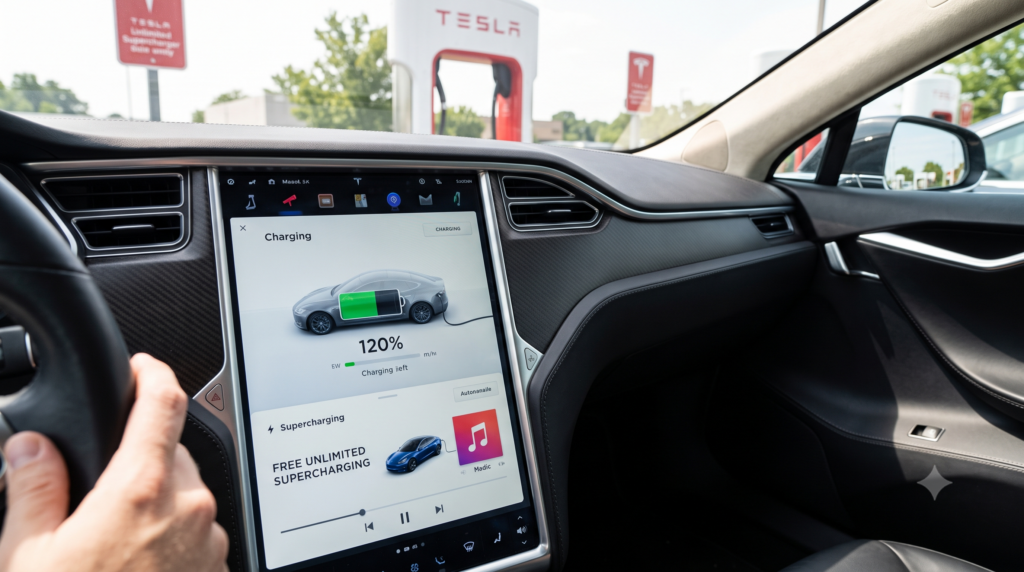
The phrase “Free Unlimited Supercharging” carries an almost mythical weight in the Tesla community. For early adopters and loyalists, it represents the golden age of Tesla ownership—a promise that once you bought the car, the energy to power it would never cost you another dime at Tesla’s proprietary fast-charging network. In an era where gasoline prices fluctuate wildly and public DC fast-charging rates have climbed steadily year over year, the idea of pulling into any Supercharger, plugging in, and driving away without tapping a credit card or opening an app is undeniably seductive. But as the used Tesla Model S market has matured into 2026, the reality of Free Unlimited Supercharging (FUSC) has become far more complicated than the simple promise of free electrons. The feature is tied to specific vehicles, specific model years, specific ownership transfer rules, and specific conditions that can cause it to vanish overnight if you are not meticulous about verification.
This comprehensive guide examines whether purchasing a used Model S specifically for its Free Unlimited Supercharging is a financially sound decision in 2026, how much the feature is actually worth based on your driving habits, which vehicles legitimately carry transferable FUSC and which do not, and the hidden traps that can turn a supposedly free-charging dream into a costly mistake. We separate the nostalgia from the numbers so you can decide whether the premium that FUSC-equipped vehicles command is money well spent or merely an emotional tax on the fantasy of never paying for fuel again.
What Free Unlimited Supercharging Actually Means
To understand the value proposition, you must first understand what Free Unlimited Supercharging is and, just as importantly, what it is not. When Tesla first launched the Model S in 2012, the company included lifetime Supercharger access as a standard feature for vehicles equipped with the 85 kWh battery pack or larger. The logic was straightforward: Tesla needed to eliminate range anxiety as a barrier to EV adoption, and offering free fast charging for road trips was the most visible proof that electric vehicles could replace gasoline cars for long-distance travel. This policy continued in various forms through 2016, with Tesla gradually restricting the benefit to the first owner only, then offering it as a referral incentive, then removing it entirely for new sales, then briefly bringing it back as a promotional tool for specific inventory vehicles.
By 2026, FUSC exists primarily as a legacy benefit attached to older vehicles. It is not a subscription. It is not a software package you can purchase and add to a vehicle that did not originally include it. It is a hardware-linked entitlement baked into the vehicle’s VIN and Tesla’s backend systems at the time of manufacture. When you buy a used Model S with FUSC, you are not buying a feature; you are buying a specific piece of automotive history that happens to include a charging privilege that Tesla no longer offers on new vehicles.
Critically, FUSC is tied to the vehicle, not the owner, but with important caveats. For vehicles manufactured before January 15, 2017, the FUSC benefit generally remains with the car through private-party sales and transfers to new Tesla accounts. For vehicles produced after that date, Tesla implemented policies that sometimes restricted FUSC to the original owner only, depending on exactly when and how the vehicle was purchased. Additionally, any vehicle that has ever carried a salvage, rebuilt, or total-loss title is at risk of having its Supercharger access revoked entirely by Tesla, regardless of whether it originally had FUSC. This means that a seemingly perfect 2016 Model S 90D with FUSC could become a permanently crippled vehicle the moment Tesla’s systems flag its title history.
The Financial Math: Is FUSC Actually Worth a Premium?
The romantic appeal of Free Unlimited Supercharging often clouds the economic reality. To determine whether you should pay extra for a vehicle with this feature, you must calculate your actual charging costs without it and compare that against the premium sellers demand.
As of 2026, Supercharger pricing in the United States averages between $0.30 and $0.50 per kWh, depending on location, time of day, and local electricity rates. In Europe, the range is roughly €0.35 to €0.60 per kWh. A Model S with a 100 kWh battery pack, charged from 10% to 90% at a Supercharger, consumes approximately 80 kWh of energy. At $0.40 per kWh, that single charging session costs $32. If you rely on Superchargers for 80% of your annual mileage and drive 15,000 miles per year, you might visit a Supercharger 40 to 50 times annually, spending roughly $1,200 to $1,600 per year on fast charging.
A Model S with FUSC eliminates these costs entirely, provided you actually use the Supercharger network frequently. However, if you have home charging and only use Superchargers for occasional road trips—say, ten times per year—your annual savings drop to perhaps $300 to $400. Over five years of ownership, that is $1,500 to $2,000 in savings, which may not justify a $5,000 to $10,000 purchase premium that FUSC-equipped vehicles often command.
Conversely, if you are an apartment dweller without home charging, a rideshare driver, or a road-trip fanatic who lives on the interstate, FUSC can save you $2,000+ per year, paying for itself within two to three years even with a steep upfront premium. The value of FUSC is entirely dependent on your charging infrastructure and driving patterns. It is not universally valuable; it is valuable only to specific lifestyles.
Which Model S Vehicles Have Transferable FUSC?
Not every Model S built before 2017 carries transferable Free Unlimited Supercharging, and not every vehicle marketed as having FUSC actually retains it in 2026. The entitlement landscape is a minefield of policy changes and exceptions.
2012–2016 Model S (85 kWh and above) Vehicles from this era that were originally sold with FUSC generally retain it through private-party sales. The benefit is linked to the VIN and transfers automatically when the vehicle is added to a new Tesla account. However, if the vehicle was ever used for commercial purposes—such as a taxi, limousine, or rideshare vehicle—Tesla may have retroactively removed FUSC under its commercial use policy. Sellers rarely disclose this, and Tesla does not always provide clear documentation of commercial deactivation until you attempt to charge.
2017 Model S (Early Production) Tesla announced the end of free unlimited transfers for new orders placed after January 15, 2017. However, vehicles ordered before that date but delivered afterward sometimes retained FUSC. These “grandfathered” vehicles are rare and desirable, but verifying their status requires checking the original order date, not just the build date or delivery date.
Inventory and CPO Vehicles Tesla occasionally offered FUSC as an incentive on certified pre-owned and inventory vehicles in 2018 and 2019. These vehicles may have FUSC that is technically transferable, but Tesla’s policies on inventory FUSC have shifted multiple times. Some inventory vehicles retained FUSC only for the original CPO buyer and lost it upon subsequent resale. Others retained it permanently. The only way to verify is to contact Tesla with the VIN and request a formal entitlement check.
Salvage and Rebuilt Titles This is the most dangerous category. Any Model S with a salvage, rebuilt, flood, or total-loss title is at high risk of Supercharger ban, regardless of original FUSC status. Tesla actively monitors vehicle history and disables Supercharger access for rebuilt vehicles as a safety and liability measure. A seller may genuinely believe their rebuilt 2015 P85D still has FUSC because the touchscreen shows no warnings, but the moment the vehicle attempts to initiate a charging session, the system may reject it. Never pay an FUSC premium for a salvage-title vehicle.
Don’t risk paying extra for Free Unlimited Supercharging that doesn’t actually transfer or has been revoked. At Tesla.tl, every listing includes verified Supercharger entitlement status, title history checks, and commercial-use verification so you know exactly what charging privileges you are buying. Browse inspected FUSC-equipped Model S inventory and buy with confidence at https://tesla.tl/.
The Hidden Costs and Limitations of FUSC
Even when FUSC is legitimate and transferable, it is not without limitations that buyers often overlook until after purchase.
Idle Fees Tesla introduced idle fees for vehicles left plugged in at Superchargers after charging is complete. These fees—typically $0.50 to $1.00 per minute—are charged to the owner’s account even if the vehicle has FUSC. Free Supercharging covers the electricity, not the parking. If you habitually leave your Model S plugged in while eating a leisurely dinner, FUSC will not protect you from a surprise bill.
Network Congestion and Charging Speeds FUSC grants you access to the Supercharger network, but it does not grant you priority over other vehicles. At busy urban Superchargers or during holiday travel rushes, you may wait in line for a stall. Additionally, older Model S vehicles charge more slowly than newer Model 3 or Model Y vehicles on the latest V3 Superchargers. A 2016 Model S might peak at 120 kW on a V2 stall, while a 2024 Model Y can pull 250 kW on V3. FUSC does not accelerate your charging; it merely makes it free.
Geographic Restrictions Some early FUSC vehicles were sold with regional restrictions—North American FUSC did not always work seamlessly in Europe, and vice versa, depending on the vehicle’s original market and adapter compatibility. If you are buying a gray-market import or a vehicle with non-standard configuration, verify that FUSC functions in your region.
Battery Degradation Impact A Model S with FUSC is still subject to battery degradation. If the vehicle has lost 15% of its capacity, you are getting 15% less free energy per charge than the original owner did. The FUSC benefit is diminished by a degraded battery, meaning you stop more frequently and spend more time charging even though the electrons themselves cost nothing.
When FUSC Justifies the Premium
There are specific buyer profiles for whom a used Model S with verified, transferable FUSC is a genuinely brilliant financial decision.
High-Mileage Road Warriors If you drive 25,000 to 30,000 miles annually, primarily on highways, and rely on Superchargers for 70% or more of your energy, FUSC can save you $2,500 to $3,500 per year. Over a four-year ownership period, that is $10,000 to $14,000 in fuel savings, easily justifying a $5,000 to $8,000 purchase premium.
Apartment and Condo Dwellers Buyers without access to home charging must rely entirely on public infrastructure. In many urban areas, Level 2 charging costs $0.20 to $0.35 per kWh, and DC fast charging costs even more. For these buyers, FUSC transforms the Model S from an expensive-to-fuel luxury car into a genuinely economical daily driver.
Tesla Enthusiasts and Collectors Some buyers value FUSC not for the savings but for the exclusivity. As Tesla continues to move toward pay-per-use and subscription models, FUSC-equipped vehicles become increasingly rare collector’s items. A well-maintained 2016 Model S P90D with verified FUSC may appreciate in desirability among enthusiasts even as newer Teslas depreciate.
When FUSC Is Not Worth the Extra Cost
Conversely, many buyers should actively avoid paying a premium for FUSC.
Home Charging Owners If you have a Level 2 wall connector at home and your electricity rate is $0.10 to $0.15 per kWh, charging at home costs roughly $8 to $12 for a full charge versus $32 at a Supercharger. Your savings from FUSC are marginal if you rarely use public charging. Paying $5,000 extra for FUSC when you charge at home 90% of the time is mathematically indefensible.
Low-Mileage Drivers If you drive fewer than 10,000 miles per year, your annual Supercharging costs without FUSC might total only $400 to $600. The payback period on an FUSC premium stretches to a decade or more, by which point the vehicle itself may have been retired.
Buyers in Cold Climates with Degraded Batteries A Model S with FUSC but a degraded battery in a cold climate requires frequent charging stops where the benefit of free electricity is offset by the inconvenience of time lost. The psychological burden of babysitting a degraded battery at charging stops can outweigh the financial savings.
Verification Checklist Before You Pay
Before paying any premium for Free Unlimited Supercharging, demand verification of the following:
- [ ] VIN-based entitlement check: Contact Tesla directly or use a third-party service to confirm the VIN carries active FUSC.
- [ ] Title status: Verify clean title with no salvage, rebuilt, flood, or commercial branding.
- [ ] Commercial use history: Confirm the vehicle was never registered as a taxi, livery, or rideshare vehicle.
- [ ] Account transfer demonstration: Ask the seller to show the vehicle charging successfully at a Supercharger immediately before sale, with zero cost displayed.
- [ ] Regional functionality: If importing or buying across regions, confirm FUSC works at local Superchargers.
- [ ] Idle fee awareness: Understand that FUSC does not cover idle fees or parking charges.
If the seller cannot or will not provide this verification, treat the FUSC claim as worthless and negotiate the price of the vehicle as if it had no free charging whatsoever.
Final Verdict
A used Tesla Model S with legitimate, transferable Free Unlimited Supercharging can be an exceptional value—but only for the right buyer under the right conditions. The feature is not a universal gold mine; it is a lifestyle-dependent asset that rewards high-mileage drivers, apartment dwellers, and road-trip enthusiasts while offering minimal benefit to low-mileage homeowners with garage charging. The premium that FUSC commands on the used market is often inflated by seller nostalgia and buyer emotion rather than rational financial analysis.
Before you pay extra, calculate your actual charging costs without FUSC over your planned ownership period. Verify the entitlement with Tesla directly. Inspect the title history with paranoia. And remember that a degraded battery, a salvage branding, or a commercial-use history can vaporize the benefit entirely, leaving you with an overpriced sedan and a charging bill you did not expect.
For buyers who do their homework, a verified FUSC Model S remains one of the best bargains in the automotive world: a luxury sedan that refuels for free at one of the most reliable fast-charging networks on the planet. For buyers who skip the verification, it is a trap disguised as a perk.
Ready to find a used Model S with verified, transferable Free Unlimited Supercharging? Search Tesla.tl for listings that include Tesla-entitlement verification, title history reports, and real Supercharger access confirmation. Filter by FUSC status, battery health, and price to find the exact Model S that delivers free energy without the hidden risks. Visit https://tesla.tl/ and drive for free today.
