
Used Tesla Model S Buying Guide: From 2012 to 2024
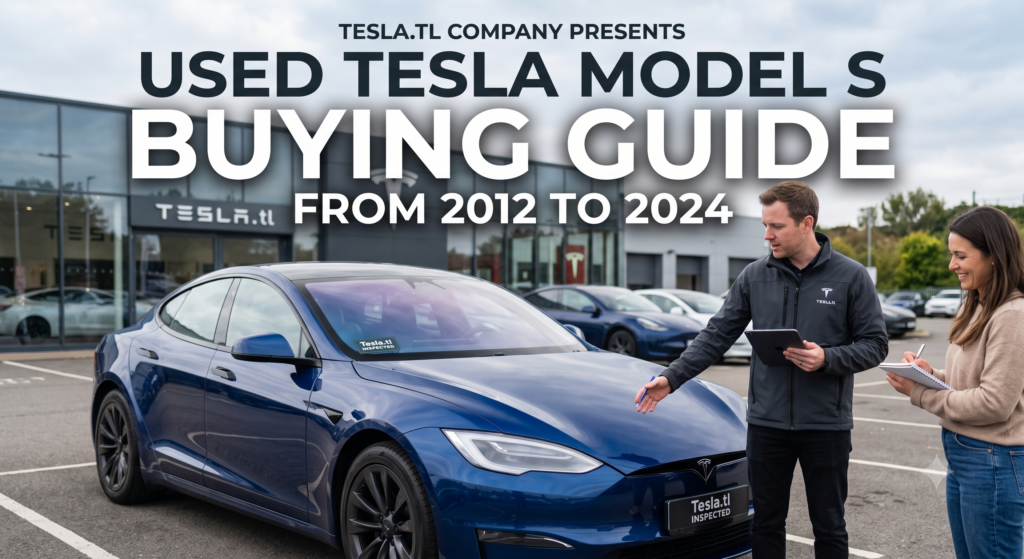
The Tesla Model S is not merely a used electric sedan—it is a piece of automotive history that spans more than a decade of relentless technological evolution. From the original 2012 Signature Edition that proved electric vehicles could be desirable luxury products, to the tri-motor Plaid that redefined acceleration benchmarks in the early 2020s, the Model S has undergone transformations so profound that a 2012 example and a 2024 example share little beyond their silhouette and badge. For buyers entering the used Model S market in 2026, this twelve-year production span creates both extraordinary opportunity and genuine peril. Opportunity, because patient shoppers can find everything from sub-$20,000 early adopters to nearly new Plaid missiles at fractions of their original cost. Peril, because the Model S has accumulated more generational changes, known defects, and expensive failure points than perhaps any other Tesla product line. Buying the wrong year without understanding its specific weaknesses can saddle you with repair bills that exceed the purchase price of the vehicle itself.
This comprehensive guide walks you through every significant era of Model S production, identifies the exact problems that plague each generation, explains which upgrades are essential and which are merely nice to have, and provides the inspection framework necessary to distinguish a collectible bargain from a financial trap. Whether you are drawn to the analog charm of the early cars or the hypercar performance of the latest Plaid, understanding the full arc of Model S history is the only way to buy with confidence.
The Original Era: 2012–2014
The 2012–2014 Model S represents Tesla’s adolescence—a period of breathtaking ambition paired with manufacturing inexperience that produced vehicles of remarkable drivetrain sophistication wrapped in bodies that sometimes seemed assembled at midnight by exhausted engineers. These earliest cars were available with 40 kWh, 60 kWh, and 85 kWh battery packs, with the latter being by far the most common and desirable. The P85 performance variant delivered 0-to-60 mph in approximately 4.2 seconds, a figure that shocked the automotive world when a silent electric sedan could outrun a BMW M5.
However, the original Model S carries baggage that no amount of nostalgia can erase. The door handles are legendary for their failure rate. These retractable, motorized units extend automatically when you approach the vehicle, but their internal microswitches and gear mechanisms degrade rapidly. By 2026, any 2012–2014 Model S that has not had its door handles replaced multiple times is either a garage queen or a ticking time bomb. Each handle replacement costs $800 to $1,200 at a service center, and with four doors, a complete refresh can approach $5,000.
The Media Control Unit (MCU1) in these early cars is another critical weakness. Built around an NVIDIA Tegra processor with an embedded 8GB eMMC memory chip, the MCU1 is prone to screen delamination, yellow border discoloration, and eventual total failure as the eMMC chip wears out from excessive logging. A failed MCU1 leaves you without climate control, navigation, or vehicle settings. Tesla offered an MCU2 retrofit for a fee, and by 2026, any early Model S still running MCU1 should be priced accordingly or avoided unless you immediately budget for the upgrade.
The 85 kWh battery packs from this era have developed a reputation for cell imbalance and premature degradation. While many examples soldier on with acceptable range, a significant subset suffered from manufacturing variances that caused certain modules to drift out of voltage alignment with their neighbors. This results in reduced range, slower charging, and eventual battery replacement needs. The 60 kWh packs are even more constrained, offering barely 200 miles of real-world range when new and significantly less after a decade of aging. For 2026 buyers, the 60 kWh variants are essentially city cars, not highway tourers.
The 2012–2014 cars also used an older single-speed drive unit design that, while robust, can develop milling noise or bearing wear at higher mileages. The air suspension, standard on higher trims and optional on base models, is prone to compressor failures and strut leaks after ten years of service. When functioning, it delivers a genuinely plush ride. When failing, it drops the car to its bump stops and generates repair quotes that exceed $3,000.
Despite these issues, the original Model S possesses an analog charm that later cars lost. The interior is simpler, the steering feel is more direct, and the driving experience is less filtered by software. For enthusiasts who enjoy wrenching on their vehicles or who view Tesla ownership as a hobby rather than an appliance purchase, a well-maintained 2013 P85 with refreshed door handles, an MCU2 upgrade, and a healthy battery can be an absolute bargain and a genuine collector’s item.
The Autopilot Era: 2015–2016
The 2015 and 2016 Model S years marked Tesla’s transition from a niche luxury EV maker to a technology company obsessed with autonomous driving. These vehicles introduced Autopilot Hardware 1.0 (HW1), featuring a single forward-facing camera and Mobileye-based processing. While primitive by modern standards, HW1 delivered competent adaptive cruise control and lane-keeping that felt futuristic in 2015.
Styling evolved during this period. The 2012–2014 cars featured a distinctive nose cone—a black plastic oval where a traditional grille would sit. In 2016, Tesla switched to a cleaner, grille-less front fascia that aligned with the then-new Model 3 design language. This facelift is generally considered more attractive and modern, though nose-cone purists argue the original has more character.
The 2015 model year introduced the P85D, featuring dual motors and Insane Mode acceleration that could launch the sedan to 60 mph in 3.1 seconds. 2016 brought the P90D with a larger battery and the infamous Ludicrous Mode upgrade, shaving another tenth of a second off the sprint. These performance variants are thrilling but place enormous stress on the drivetrain. By 2026, high-mileage P85D and P90D vehicles may show signs of differential wear, half-shaft replacement needs, and accelerated tire consumption.
The door handle problems persisted through this era, though Tesla incrementally improved the design. The MCU1 remained standard, meaning the eMMC and yellow-border issues are still present. However, the 2015–2016 cars benefit from slightly improved build quality, better interior materials, and the introduction of the next-generation seat design that offered more lateral support and durability than the early chairs.
Battery options expanded to include the 70 kWh and 90 kWh packs. The 90 kWh battery, while offering more range, introduced a new chemistry that proved somewhat less durable than the 85 kWh in certain climate conditions. Some 90D owners reported faster degradation than expected, though this was partially addressed through software updates that revised how the battery management system balanced the cells.
For used buyers in 2026, the 2015–2016 era offers a middle ground. These cars are old enough to be affordable—often trading between $18,000 and $28,000 depending on trim and condition—but new enough to have benefited from Tesla’s early manufacturing learning curve. The key is verifying whether the MCU2 retrofit has been completed and whether the door handles have been refreshed with the latest revision.
The Raven Refresh: 2019–2020
If the early Model S was Tesla’s adolescence, the Raven update represented its arrival as a mature luxury automaker. Introduced in 2019, the Raven was not merely a facelift but a comprehensive mechanical overhaul that addressed virtually every weakness of the original design. The name derived from the new permanent magnet reluctance motors—codenamed “Raven” internally—that replaced the older induction motors. These new motors delivered better efficiency, reduced heat generation, and improved regenerative braking feel.
The Raven also introduced an entirely new air suspension system with adaptive damping, transforming the Model S from a vehicle that floated competently over smooth highways into a genuine competitor for German luxury sedans. The ride became more composed, body control improved dramatically, and the system could adjust damping rates in real time based on road conditions. For buyers who prioritize comfort, the Raven is the dividing line between “early Tesla” and “modern Tesla.”
The Media Control Unit was upgraded to MCU2, finally eliminating the eMMC failure risk and delivering a responsive, modern touchscreen experience. The Long Range variant achieved over 370 miles of EPA-rated range when new, and the Performance variant could still demolish supercars at stoplights while delivering a more refined daily driving experience than any previous Model S.
Build quality during the Raven era reached its zenith for the pre-refresh platform. Panel gaps tightened, interior materials improved, and the overall sense of solidity approached that of established luxury brands. For used buyers in 2026, a 2019 or 2020 Raven represents perhaps the best value in the entire Model S lineup: modern enough to avoid the door-handle nightmares and MCU1 obsolescence, yet depreciated into the $30,000 to $45,000 range depending on mileage and battery health.
The primary weakness of the Raven era is not mechanical but technological. These vehicles shipped with Hardware 2.5 or early Hardware 3 for Autopilot, depending on exact production date. HW2.5 vehicles cannot run modern Full Self-Driving Beta and face the same software obsolescence concerns as early Model 3 vehicles. If you are buying a Raven with autonomous driving aspirations, verify the hardware generation meticulously.
The Refresh and Plaid Era: 2021–2024
In 2021, Tesla unveiled the most radical Model S redesign since the original. The exterior remained familiar, but the interior was completely reimagined. The traditional steering wheel was replaced by an optional yoke—a controversial rectangular control device that divided owners and critics. The 17-inch center touchscreen was reoriented to landscape mode and gained the processing power of a modern gaming console. Rear passengers received their own entertainment screen. The overall cabin aesthetic shifted from minimalist Scandinavian to spaceship cockpit.
Mechanically, the 2021+ Model S introduced the Plaid tri-motor powertrain, delivering 1,020 horsepower and a 0-to-60 mph time of under two seconds when new. This is not merely fast; it is violently, absurdly fast in a way that redefined what a four-door sedan could do. The Long Range variant, later renamed simply Model S, received a dual-motor setup with over 400 miles of EPA range when new.
By 2026, these refreshed Model S vehicles are beginning to enter the used market as early leases expire and wealthy owners trade up to newer models. They command premium prices—typically $55,000 to $85,000 for Plaid variants with low mileage—but they offer technology and performance that remains at the absolute bleeding edge of the automotive industry.
However, the refresh introduced its own controversies. The yoke, while visually striking, proved divisive for daily driving. Many owners retrofitted traditional steering wheels, and Tesla eventually made the round wheel a no-cost option. The steering-by-wire system and integrated turn-signal buttons required an adjustment period that some drivers never completed. The Plaid’s brutal acceleration, while exhilarating, places extraordinary stress on tires and drivetrain components. A used Plaid with a history of frequent launch control use may have experienced accelerated wear on the rear motors and battery contactors.
For buyers considering a used refreshed Model S, the primary question is whether you need the extreme performance of Plaid or whether the standard dual-motor Long Range provides sufficient capability at a lower price. For 99% of driving, the Long Range is already faster than necessary, and its slightly softer suspension and smaller wheels deliver a more comfortable daily experience.
Don’t risk buying a used Model S with failing door handles, a degraded MCU1, or an obsolete Autopilot computer. At Tesla.tl, every listing includes verified hardware generation, battery health diagnostics, and documented service history so you know exactly which era of Model S you are buying. Browse inspected Model S inventory from 2012 to 2024 at https://tesla.tl/.
Critical Inspection Points for Every Era
Regardless of which Model S generation you pursue, certain inspection steps are non-negotiable.
Door Handles (2012–2016 Essential, 2017+ Worth Checking) Test every handle multiple times. They should extend smoothly and present the door for opening without hesitation. If any handle feels sticky, makes grinding noises, or fails to present consistently, budget for immediate replacement.
Air Suspension (If Equipped) Cycle the suspension through all height settings. Listen for compressor strain or air leaks. The car should rise and fall smoothly without error messages. A sagging corner overnight indicates a leaking air strut.
MCU Version and Screen Condition Verify whether the vehicle has MCU1 or MCU2. MCU1 vehicles should be priced significantly lower or avoided unless an upgrade is already completed. Check the screen for yellow border discoloration, touch dead zones, and boot speed. A slow-booting screen indicates eMMC degradation.
Battery Health and Chemistry For 85 kWh packs, request detailed cell balance data. For 90 kWh packs, verify degradation is within normal parameters. For 100 kWh packs in Raven and later vehicles, expect better longevity but still verify through diagnostic tools. A Model S with a failing battery is worth only its parts value, regardless of how pristine the interior appears.
Drive Unit Noise Listen for milling, whining, or clunking from the front and rear motors during acceleration and regeneration. Early drive units are particularly susceptible to bearing wear. Replacement costs can exceed $5,000 if performed at a Tesla Service Center.
Panoramic Roof and Glass The Model S panoramic roof can develop stress cracks at the edges or leaks around the seal. Inspect the headliner for water stains and test the roof for unusual wind noise at highway speeds.
Charging Port and Supercharger Access Verify that the charge port door opens reliably and that the vehicle can successfully initiate a charging session. For rebuilt or salvage-title vehicles, confirm that Supercharger access has not been revoked by Tesla.
Pricing Expectations in 2026
The used Model S market in 2026 spans an enormous range, reflecting the vehicle’s twelve-year production history.
- 2012–2014 (60/85/P85): $15,000–$24,000
- 2015–2016 (85D/P85D/P90D): $20,000–$32,000
- 2017–2018 (75D/100D/P100D): $28,000–$42,000
- 2019–2020 Raven (Long Range/Performance): $35,000–$52,000
- 2021–2024 Refresh (Long Range/Plaid): $55,000–$85,000
These ranges assume clean titles, no accidents, and functional batteries. Plaid variants with low mileage and remaining warranty can exceed these figures, while salvage or high-mileage early cars may fall below them.
Final Verdict
The used Tesla Model S market in 2026 offers something for every buyer, from budget-conscious enthusiasts willing to wrench on early cars to performance seekers who want Plaid acceleration without the new-car price premium. The key is matching your budget and tolerance for maintenance with the correct generation.
For pure value, a 2019–2020 Raven Long Range with MCU2, refreshed air suspension, and verified battery health delivers 90% of the modern Tesla experience at a fraction of the cost of a new vehicle. For collectors and hobbyists, a well-sorted 2013 P85 with documented door-handle replacements and an MCU2 upgrade offers historical significance and analog charm. For performance absolutists, a 2022 Plaid remains one of the fastest four-door vehicles ever built, though the purchase price and tire costs demand serious financial commitment.
Avoid the trap of buying the cheapest listing simply because it wears a Tesla badge. A 2014 Model S with original door handles, MCU1, and a degrading 85 kWh battery will deliver more headaches than joy. Invest in the right generation, verify the critical components ruthlessly, and the Model S rewards you with a driving experience that has no true equivalent in the automotive world.
Ready to find your perfect used Tesla Model S? Search Tesla.tl for curated listings spanning every generation from 2012 to 2024, with verified battery health, hardware generation confirmation, and documented service history. Filter by year, trim, and budget to find the Model S that matches your ambition. Visit https://tesla.tl/ and own a piece of electric history today.
