
Used Tesla Model X with 6 Seats vs 7 Seats: Which Layout Wins?
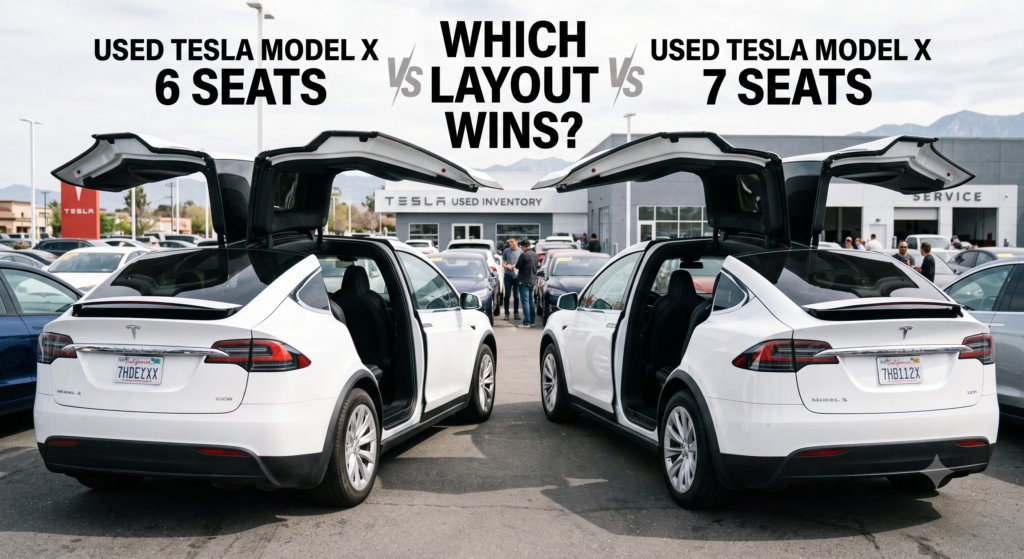
The Tesla Model X is one of the few electric vehicles on the planet that can genuinely transport six or seven passengers in a single charge, but the moment you begin searching the used market, you face a decision that will shape every road trip, school run, and Costco haul for years to come: six seats or seven seats? At first glance, the difference seems trivial—one less seat, one extra aisle. But in the reality of Model X ownership, where Falcon Wing doors dictate ingress patterns, where the third row is reached through a narrow portal, and where cargo space behind the rear seats is already at a premium, the choice between these two configurations is far more consequential than a simple headcount. It affects how your children climb aboard, how much luggage you can carry with all seats occupied, how comfortable your adult passengers will be on long drives, and ultimately, how much the vehicle will be worth when it is time to sell.
This comprehensive comparison examines the used Tesla Model X six-seat and seven-seat layouts as they exist in 2026 after years of family duty. We analyze real-world access, cargo versatility, child-seat logistics, passenger comfort, and resale implications to determine which configuration actually wins for your specific needs.
The 6-Seat Configuration: The Captain’s Chairs and the Walkthrough
The six-seat Model X features two individual captain’s chairs in the second row, separated by a wide central aisle that allows passengers to walk from the front of the vehicle to the third row without folding, sliding, or otherwise disturbing the middle seats. This walkthrough is the defining characteristic of the six-seat layout, and it transforms how the Model X functions as a family vehicle.
When the Falcon Wing doors rise, the second-row captain’s chairs present themselves with unobstructed side access. The aisle between them is approximately 18 inches wide—enough for an adult to squeeze through, for a child to dart between rows during a parking lot stop, and for a parent to reach a toddler in the third row without exiting the vehicle. This walkthrough is genuinely useful in daily life. It allows front-seat parents to hand snacks, toys, or tablets directly to third-row children without the contortionist routine required in traditional SUVs. It means that if one second-row seat is occupied by a rear-facing infant seat, the other seat remains fully accessible without tilting or sliding mechanisms blocking the path.
However, the captain’s chairs are not without compromise. Each chair is mounted on a fixed pedestal that does not fold flat into the floor. This means that even when unoccupied, the second-row seats consume the same footprint. Unlike the seven-seat bench, which can fold forward to create a pass-through for long cargo, the six-seat captain’s chairs create a hard limit on what can pass between the front seats and the rear hatch. A Model X with six seats cannot accommodate a sheet of plywood, a full-length mirror, or even a particularly long piece of flat-pack furniture without removing the seats entirely—a procedure that requires tools and is not designed for quick roadside adjustments.
The captain’s chairs themselves are more comfortable than the outboard positions of the seven-seat bench. They offer individual armrests, more lateral support, and a greater range of recline and fore-aft adjustment. For adult passengers on long journeys, the difference is noticeable. The six-seat configuration is the preferred choice for families who frequently transport adults in the second row, such as grandparents on weekend outings or colleagues on airport runs.
The 7-Seat Configuration: Maximum Occupancy, Maximum Compromise
The seven-seat Model X replaces the captain’s chairs with a three-person bench in the second row, adding a narrow middle seat that transforms the vehicle from a spacious six-passenger lounge into a genuine seven-passenger people-mover. On paper, this is an unambiguous advantage. More seats means more flexibility for carpooling, larger families, or the occasional extra passenger on group outings. But the reality of the seven-seat Model X is more complicated than the spec sheet suggests.
The second-row bench in the Model X is a 40/20/40 split-folding design, meaning the outboard sections are wider and more comfortable than the narrow center perch. The center seat itself is significantly less accommodating than the outboard positions. It is narrower, lacks the same level of cushioning and support, and sits slightly higher than the window seats, creating a less natural seating position for adults. For children in booster seats, the center position is workable, but for adults, it is a penalty box suitable only for short distances.
More importantly, the bench eliminates the walkthrough aisle. Access to the third row requires either folding and sliding one section of the second-row bench forward—a process that is slower and more awkward than simply walking between captain’s chairs—or entering through the opposite side Falcon Wing door and squeezing past the folded seat. In daily practice, this means that third-row access becomes a logistical event rather than a casual transition. If the second row is occupied by adults or bulky child seats, reaching the third row requires those passengers to unbuckle, exit, or contort themselves to allow passage.
The bench does offer one significant advantage: it folds forward. When not carrying seven passengers, the folded bench creates a larger, flatter load floor than the fixed captain’s chairs of the six-seat configuration. This improves cargo versatility for bulky items, though the Model X’s sloping roofline and third-row headrests still limit vertical space compared to a traditional boxy SUV.
Third-Row Access: Where the Falcon Wings Meet Reality
The Falcon Wing doors are the great equalizer in this comparison because they affect both configurations identically—and they are the primary means by which all passengers reach the second and third rows. The doors rise upward and outward, creating a large aperture that, in theory, allows easy access even in tight parking spaces. In practice, the opening is generous but not infinite, and the choreography of entering the third row differs dramatically between the six-seat and seven-seat layouts.
In the six-seat configuration, third-row passengers can simply walk down the central aisle from either side. The Falcon Wing door on either side provides direct access to this aisle, and the walkthrough is wide enough that an adult can board through the left door, walk to the right side of the third row, and sit down without disturbing second-row occupants. This is the Model X at its most functional—a private jet cabin on wheels where movement between zones is fluid.
In the seven-seat configuration, third-row access requires folding the second-row bench. The seat slides forward on its track and tilts, creating a narrow portal through which passengers must climb. This process is manageable for agile children and tolerable for adults in a pinch, but it is undeniably less graceful than the walkthrough. If the second row is occupied by rear-facing infant seats or bulky boosters, the folded seat may not move fully forward, further constricting the passage. For families with multiple children in car seats, the seven-seat layout can transform the simple act of buckling a third-row child into a daily exercise in spatial reasoning.
Cargo Space: The Numbers Behind the Seats
With all seats upright, the Model X offers modest cargo capacity behind the third row—roughly 12 to 14 cubic feet depending on how aggressively you pack to the roofline. This is enough for a stroller and a few grocery bags, or several roller bags for an airport run, but it is not generous. The six-seat and seven-seat configurations are identical in this regard when all rows are occupied.
The divergence appears when you begin folding seats. In the seven-seat configuration, both the second-row bench and the third row can fold flat(ish), creating a continuous load floor that accommodates larger items. The bench folds forward and down, while the third row folds electrically into the floor well. The result is a cargo area that, while not perfectly flat due to the stepped transition between rows, is significantly more versatile than the six-seat setup.
In the six-seat configuration, the third row still folds flat, but the second-row captain’s chairs remain fixed in place. This creates a permanent barrier between the front cabin and the rear cargo area. You cannot slide a surfboard, a ladder, or a full-length mirror through the middle of the vehicle. You cannot create a pass-through for skis or lumber. The only way to carry truly long items is to remove the captain’s chairs entirely—a process that involves unbolting them from the floor and leaving them in your garage. For buyers who occasionally need to transport large cargo, this is a genuine limitation that the seven-seat bench does not impose.
Child Seats, Boosters, and Family Logistics
For families with young children, the seat configuration choice is often decided by car seat logistics rather than passenger count.
The six-seat configuration excels when you have multiple children in rear-facing infant seats or forward-facing harness seats. Each captain’s chair is an independent island, meaning you can install a bulky rear-facing seat on one side without rendering the other side unusable. The walkthrough aisle remains open, allowing parents to reach the third row or attend to a second-row child from the center of the vehicle. The LATCH anchors on the captain’s chairs are easily accessible, and the fixed pedestals provide a stable mounting point.
The seven-seat bench complicates this picture. The center position of the bench is narrow, and installing a wide child seat there can encroach on the outboard positions. If you have three children across the second row, the center child seat often forces the outboard passengers into uncomfortable positions. However, the seven-seat configuration offers more total LATCH and seatbelt positions across the vehicle, allowing you to distribute children across both rows more flexibly. A family with four children might prefer two in the second-row bench and two in the third row, a layout that the six-seat configuration cannot accommodate without using the third row for at least two children.
For booster seats, the six-seat captain’s chairs are superior because their individual armrests and defined seating surfaces help keep boosters properly positioned. The seven-seat bench, particularly the center position, can cause boosters to shift or tilt on its flatter, less contoured surface.
Don’t risk buying a used Model X with the wrong seat configuration for your family. At Tesla.tl, every listing clearly identifies 6-seat vs 7-seat layouts, includes interior condition photos of each row, and verifies seat mechanism functionality so you can choose the perfect fit. Browse inspected Model X inventory and buy with confidence at https://tesla.tl/.
Adult Comfort: The Third-Row Reality Check
Neither the six-seat nor the seven-seatModel X is a comfortable place for adults in the third row on long journeys, but the six-seat configuration mitigates the discomfort slightly. Because third-row passengers in the six-seat layout can extend their legs into the central aisle between the captain’s chairs, they gain a few precious inches of legroom that the seven-seat configuration denies. The walkthrough creates a more open, less claustrophobic environment, and the ability to stretch one leg forward makes a noticeable difference on trips exceeding an hour.
In the seven-seat configuration, third-row passengers are fully boxed in by the bench in front of them. The bench does not slide as far forward as the individual captain’s chairs, and its continuous surface blocks any chance of leg extension into the aisle. The result is a more confined, more traditional third-row experience that feels closer to the cramped rearmost seats of a compact crossover than the spacious interior the Model X’s exterior dimensions suggest.
For adult passengers in the second row, the captain’s chairs of the six-seat configuration are unequivocally superior. They offer more adjustability, better support, and a sense of individual space that the bench cannot replicate. If your Model X will frequently transport adults in the second row—whether for business, social outings, or elderly family members—the six-seat layout is the clear winner.
Resale Value and Market Demand in 2026
The used Model X market in 2026 shows a clear preference pattern that buyers should understand before committing. The six-seat configuration is generally more desirable among Model X enthusiasts and families who prioritize comfort and walkthrough convenience. It is perceived as the “premium” interior layout, and it commands a modest price premium on the secondary market—typically $1,000 to $3,000 more than an equivalent seven-seat vehicle of the same year, trim, and mileage.
The seven-seat configuration appeals to a narrower but more specific audience: large families who genuinely need that seventh position. Buyers with four or more children, carpool coordinators, or buyers who view the Model X as a minivan replacement are willing to sacrifice the walkthrough for the extra headcount. However, this audience is smaller than the pool of buyers who want the captain’s chairs, which means seven-seat examples can take longer to sell and may require slightly more price flexibility when it is time to move on.
From a depreciation perspective, both configurations lose value at roughly the same rate, but the six-seat layout tends to attract more initial interest and faster sales. If resale speed and liquidity are priorities, the six-seat configuration is the safer bet.
Which Layout Should You Choose?
The decision ultimately hinges on your family structure, passenger mix, and cargo needs.
Choose the 6-Seat Configuration if:
- You have two to three children and prioritize easy access between rows.
- You frequently transport adults in the second row who deserve individual comfort.
- You value the walkthrough aisle for handing items, attending to children, or simply creating an open cabin feel.
- You rarely need to carry seven people simultaneously.
- You want the configuration with the strongest resale demand.
Choose the 7-Seat Configuration if:
- You have four or more children and need every available seating position.
- You regularly carpool or transport groups where that seventh seat prevents taking a second vehicle.
- You need the ability to fold the second row flat for large cargo.
- You view the Model X primarily as a people-mover rather than a luxury lounge.
- The purchase price is significantly lower than an equivalent six-seat example.
Pre-Purchase Inspection Checklist for Seat Configurations
Regardless of which layout you choose, verify the following during your inspection:
- [ ] Second-row seat mechanisms: Slide, tilt, and fold each seat section repeatedly. Listen for grinding or motor strain.
- [ ] Third-row access: Climb into the third row from both sides and evaluate ease of entry.
- [ ] LATCH anchors: Verify that all LATCH points are present, accessible, and free of debris or damage.
- [ ] Seat upholstery: Check for excessive wear, staining, or tears on high-contact surfaces.
- [ ] Walkthrough width (6-seat): Measure or visually confirm that the aisle is unobstructed by aftermarket accessories or damage.
- [ ] Bench folding (7-seat): Ensure the bench folds flat without binding and that the release mechanisms operate smoothly.
- [ ] Third-row legroom: Sit in the third row with the second row in its normal driving position to assess real-world comfort.
Final Verdict
The six-seat Tesla Model X wins for the majority of buyers in 2026. It offers superior second-row comfort, effortless third-row access through the walkthrough aisle, and stronger resale demand. It transforms the Model X from a traditional SUV into something closer to a private jet cabin, where movement and interaction between rows are fluid and intuitive. The loss of one seating position is a worthwhile trade for the daily convenience that the captain’s chairs provide.
The seven-seat configuration is the correct choice only for buyers who genuinely need that seventh position on a regular basis. If your family size or carpool obligations demand maximum occupancy, the bench delivers. But for everyone else, the compromises in comfort, access, and cargo versatility outweigh the benefit of an occasional extra passenger.
Ready to find the perfect used Model X with the right seat configuration for your family? Search Tesla.tl for listings that clearly identify 6-seat and 7-seat layouts, include detailed interior photos of every row, and verify seat mechanism functionality. Filter by configuration, battery size, and price to find your ideal family electric SUV. Visit https://tesla.tl/ and drive with room for everyone today.
